
Alternative protein research – new analysis reveals Europe’s lead narrows as China steps up
New analysis finds that early investment has enabled Europe to build the world’s largest community of alternative protein researchers, but China is rapidly catching up.
25 November 2026
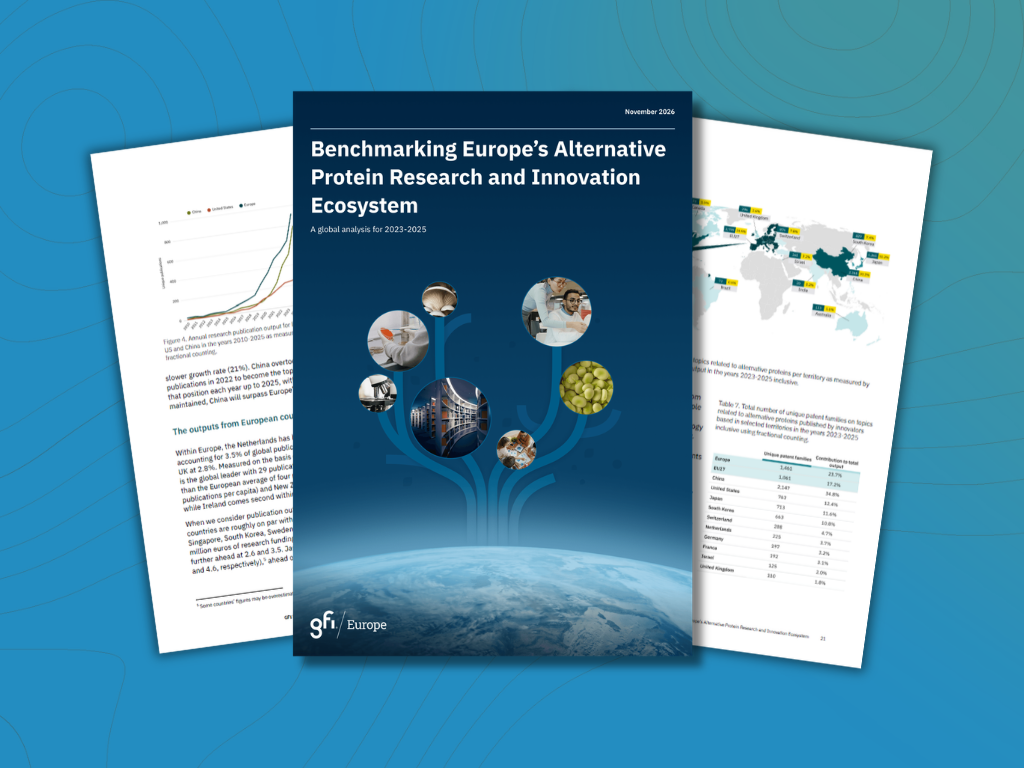
New analysis finds that early investment has enabled Europe to build the world’s largest community of alternative protein researchers, but China is rapidly catching up.
The report by nonprofit think tank the Good Food Institute Europe (GFI Europe) is the first to compare European research into plant-based foods, cultivated meat and ingredients made through fermentation against international efforts.
With global demand for meat projected to grow by at least 52% by 2050 compared to 2012 levels, these foods can help diversify how we produce protein, reduce the environmental footprint of food production, and strengthen supply chain resilience. However, research is needed to develop tastier, more affordable options capable of realising these benefits.
The report provides insights into how Europe must now avoid losing its world-leading position by strengthening technical research, building links between science and industry, and mobilising untapped talent.
Europe’s head start established a significant lead
European leaders and philanthropic organisations have invested €1.3 billion in alternative protein research since 2020, and the region is now home to 30% of the world’s researchers in this field, compared with 25% in China and 7% in the United States.
The lead is even more impressive when considering population size – in Europe, there are 11 alternative protein researchers per million people, compared with just four in China and the United States.
European academics also lead in output, publishing 30% of all alternative protein studies between 2010 and 2025, against 19% in China and 9% in the United States.
The European Commission is the world’s single largest funder, having invested a total of €454 million since 2020, while European countries dominate the top 10 global funders – although China is absent from that list because data is unavailable.
When considering public funding alone, the United Kingdom (€148 million) is the third-highest global funder, following the United States (€191 million), while the Netherlands (€95 million) and Germany (€82 million) also stand out as European leaders.
The Nordic region is well represented, with Finland spending €78 million, Norway €59 million, and Sweden €51 million, while if philanthropic funding is included, Denmark has invested €164 million – or €28 per capita.
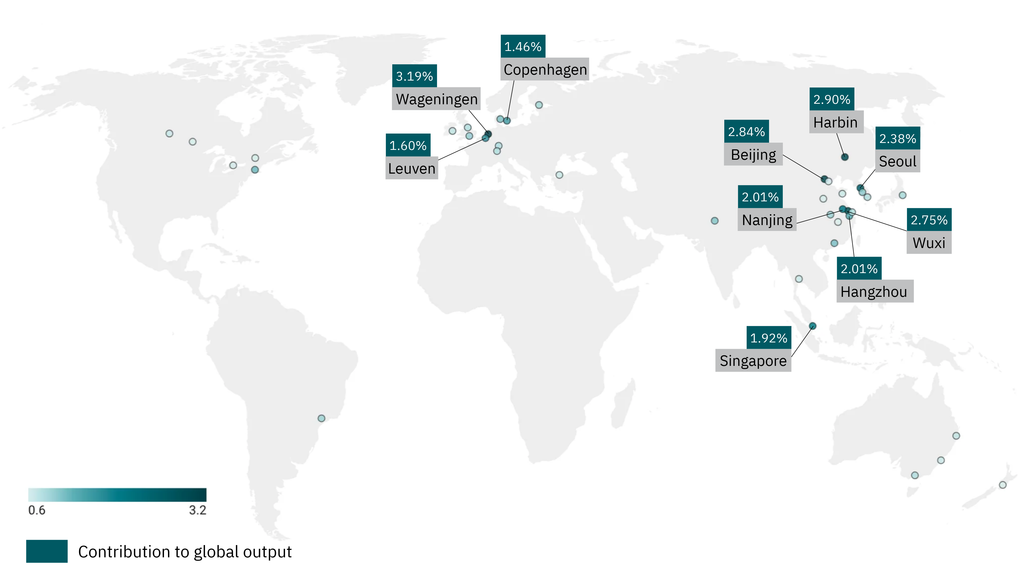
China currently hosts more of the world’s top 100 alternative protein research institutions – 35% against Europe’s 27%. However, zooming out to the top 1,000 reveals that 29% are in Europe and only 17% in China, reflecting that China’s expertise is mainly concentrated around a small number of regions, while Europe’s is spread across a larger number of clusters:
- The world’s largest alternative protein research hotspot is based around Wageningen in the Netherlands, which includes institutions in and around Delft and Utrecht and produced 3.2% of global alternative protein studies in 2023-2025.
- A Dutch-Flemish cluster, including institutions in and around the Belgian cities of Ghent and Leuven and Maastricht in the Netherlands, ranks eighth in the world.
- Denmark’s Copenhagen region is ninth.
China catches up with more focused research
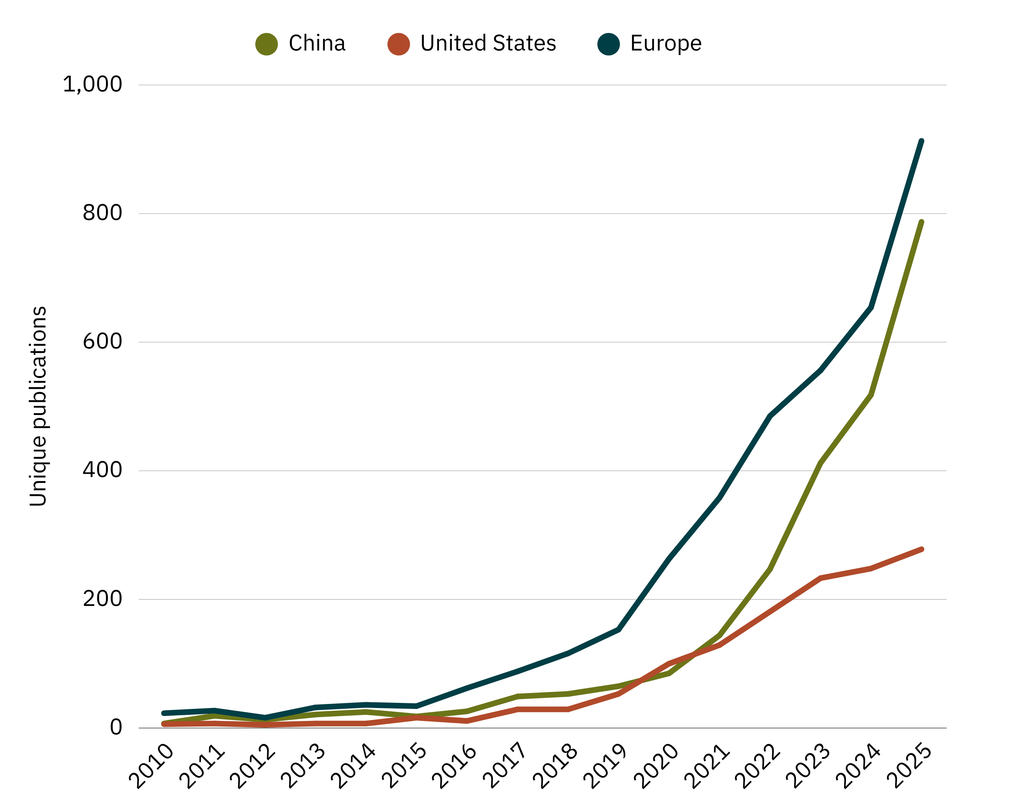
The increasing pace of China’s research is evident in the period between 2023 and 2025, when 7,775 papers were published globally – more than half of all alternative protein research since 2010. China played a significant role in this acceleration, with the number of papers jumping by 92%, while European output grew by only 60%.
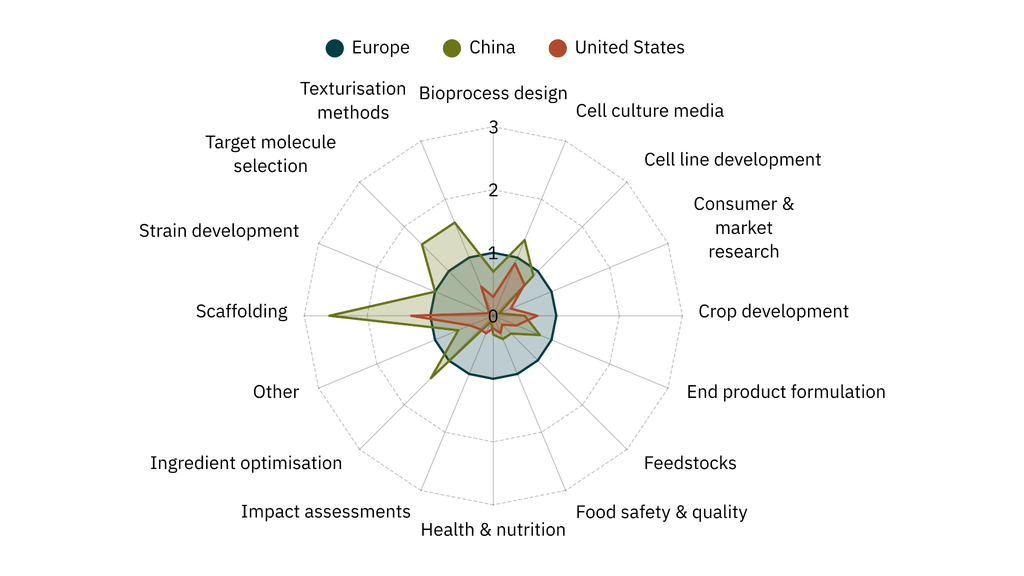
85% of China’s publications looked at technical areas such as cell lines – the building blocks of cultivated meat – and innovative methods to develop plant-based and fermentation-made ingredients with the taste and texture of animal-based foods.
By contrast, these areas accounted for 61% of Europe’s output, likely because around a third of European research funding is dedicated to examining the societal impact of alternative proteins, including environmental impacts, health benefits, and consumer acceptance.
While this work is crucial for providing the transparency needed to strengthen public trust, it must be balanced with investment in technical research to ensure that Europe can develop innovations contributing to economic growth and food security.
Europe lags behind in innovation efforts
Chinese universities and research institutions also play a much greater role in translating research into innovation.
European innovators filed more than a third of global alternative protein patents between 2023 and 2025, compared with 20% in China and 17% in the United States.
However, when looking at unique families – collections of patents covering the same or similar technology by the same inventor – Europe published patents relating to just 1,461 families, compared with China’s 2,147.
This provides a more accurate picture, showing that China is excelling in the total number of new inventions and is protecting the intellectual property generated by its research as a step towards commercialising these innovations.
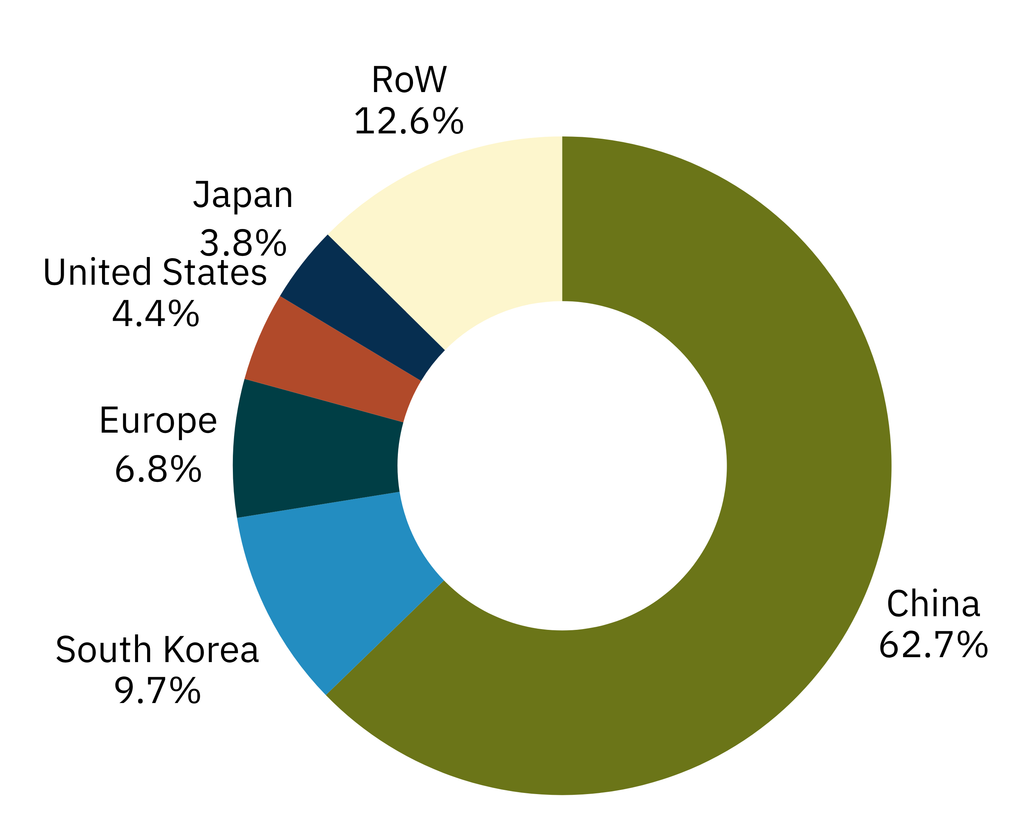
The significant role patents play in China’s research landscape is highlighted by the fact that 63% of global filings from research institutions originated in China, while Europe had fewer than South Korea.
Building on Europe’s strengths
The analysis follows GFI Asia Pacific’s report finding that China’s biomanufacturing industry is now scaling up alternative protein production, while Systemiq’s projections suggest that these foods could account for up to 55% of China’s domestic animal protein demand by 2050.
Europe’s policymakers have an urgent need to build on the region’s scientific excellence and avoid throwing away the prize.
One way they could do this is to provide targeted support to bring more researchers from adjacent fields into alternative protein research. Some countries have already shown this is possible – one in four Danish and more than one in five Finnish food scientists have published an alternative protein study over the last three years.
They should invest in shared infrastructure and networks to capitalise on European researchers’ open and collaborative approach. Almost six in 10 European publications result from international collaborations, mainly with researchers from other parts of Europe, while China’s researchers tend to collaborate domestically.
Europe’s research funders should strengthen technical research to improve the taste, affordability and scalability of alternative proteins while continuing to address societal questions and develop more public-private partnerships to ensure European innovations are more easily commercialised.
Alternative proteins can contribute to a more sustainable, healthy and resilient food system. However, realising that potential requires Europe to remain competitive and transform the region’s many strengths into food innovations that can make a real difference to the lives of European citizens.
Authors

David Hunt
David works to help sustainable protein scientists across Europe access the knowledge, resources, infrastructure, and collaborators to conduct their research effectively.

Stella Child
Stella works to help the alternative protein research community across Europe secure grant funding for open-access research.
Benchmarking Europe’s Alternative Protein Research and Innovation Ecosystem
Read the full report to find out more about how European funding, publications and patents compare with the rest of the world.