
European consumer insights on the alternative protein sector
What do European consumers think about plant-based, cultivated and fermentation-made proteins? This page summarises some of the key consumer insights available from open-access research on the European alternative protein market.
Este artículo también está disponible en español.
Last updated: 25 November 2025

This page focuses on studies that cover multiple European countries. There is also a wealth of open-access consumer research on alternative proteins covering just one or two countries. You can find these publications in our searchable, regularly updated European consumer research database at the bottom of this page.
The wider context
Europeans are open to dietary change
The majority of people in all but two of 15 European countries thought that meat consumption in their nation was too high, according to representative YouGov surveys commissioned by GFI Europe in February-April 2024.
Proportion of people per country that agree with the statement ‘The amount of meat that we eat on average in my country is much/slightly too high.’

Furthermore, most people in Europe are seeking alternatives to animal products. In 2023, 51% of respondents across 10 European countries reported having reduced their meat consumption relative to the previous year.

This is an increase from 46% of people from the same survey in 2021, which found meat reduction is most widespread in Italy (59% of respondents), Germany (59%) and France (57%).
By far the most common motivating factor for reducing meat consumption is health (cited by 47% of meat reducers), followed by animal welfare (29%) and the environment (26%).
Separate polling in the UK and Germany in 2024 found that changing taste preferences, cost and health were the main factors driving reductions in meat and dairy consumption.
Meat-reducing diets are widespread

In 2023, 62% of European consumers across ten countries identifed as omnivores, 27% as flexitarians, 4% as pescatarian, 5% as vegetarian and 3% as vegan.
In two of the countries surveyed – Germany and Austria – the majority of people follow some form of meat-reducing diet.
Omnivore was defined in the survey as “I frequently eat meat (such as beef, pork, chicken, turkey, fish and/or shellfish)”. “Flexitarian” was defined as “I sometimes eat meat, but I am trying to reduce my meat consumption and often choose plant-based foods instead”.
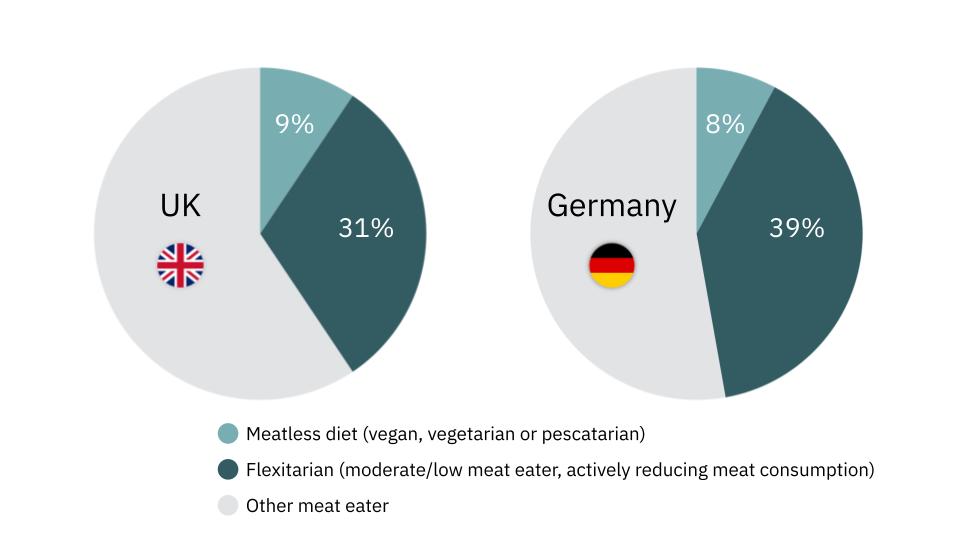
Separate polling in 2024 showed that 47% of German adults report that they are already actively reducing their intake of meat (39%) or following a meatless diet (with 8% identifying as vegan, vegetarian or pescatarian). In the UK, the figure is 41%, with 31% reporting actively reducing their meat intake and 9% saying they follow meatless diets.
Proportion of consumers in the UK and Germany following meatless or flexitarian diets
European consumers are familiar with alternative proteins
Consumers surveyed across four Western European countries reported high levels of familiarity with alternative proteins: in 2022, 83% of UK consumers knew at least one alternative protein product category, with the figures being 77% in Spain, 70% in Germany and 62% in France.
Meat consumption nevertheless remains high
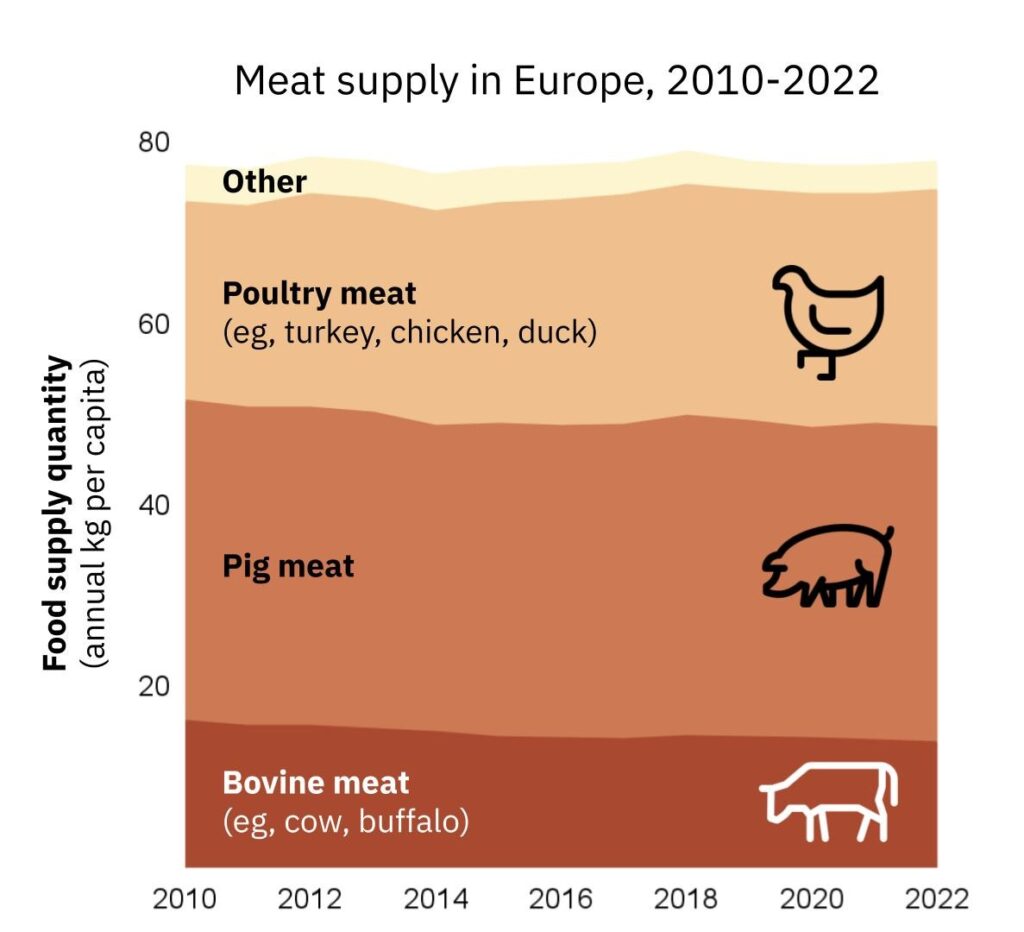
Despite the familiarity of Europeans with alternative proteins and the significant proportion pursuing some degree of meat reduction in their diets, overall supplies of meat across Europe have remained steady over the past decade. While there has been a slight shift away from red meat towards poultry, the overall supply of meat remains approximately 78 kg per person per year.
For context, one recommendation of healthy, sustainable levels of meat consumption comes from the EAT-Lancet Commission, which advised the consumption of up to 16.4kg of meat per person per year. Similarly, Germany’s dietary guidelines advise eating no more than 15.6kg of meat per year. This suggests that there is a considerable gap between the average intake and recommended levels of consumption in Europe.
Plant-based
Europe’s plant-based retail market
Euromonitor valued Europe’s plant-based retail market at €9 billion in 20241.
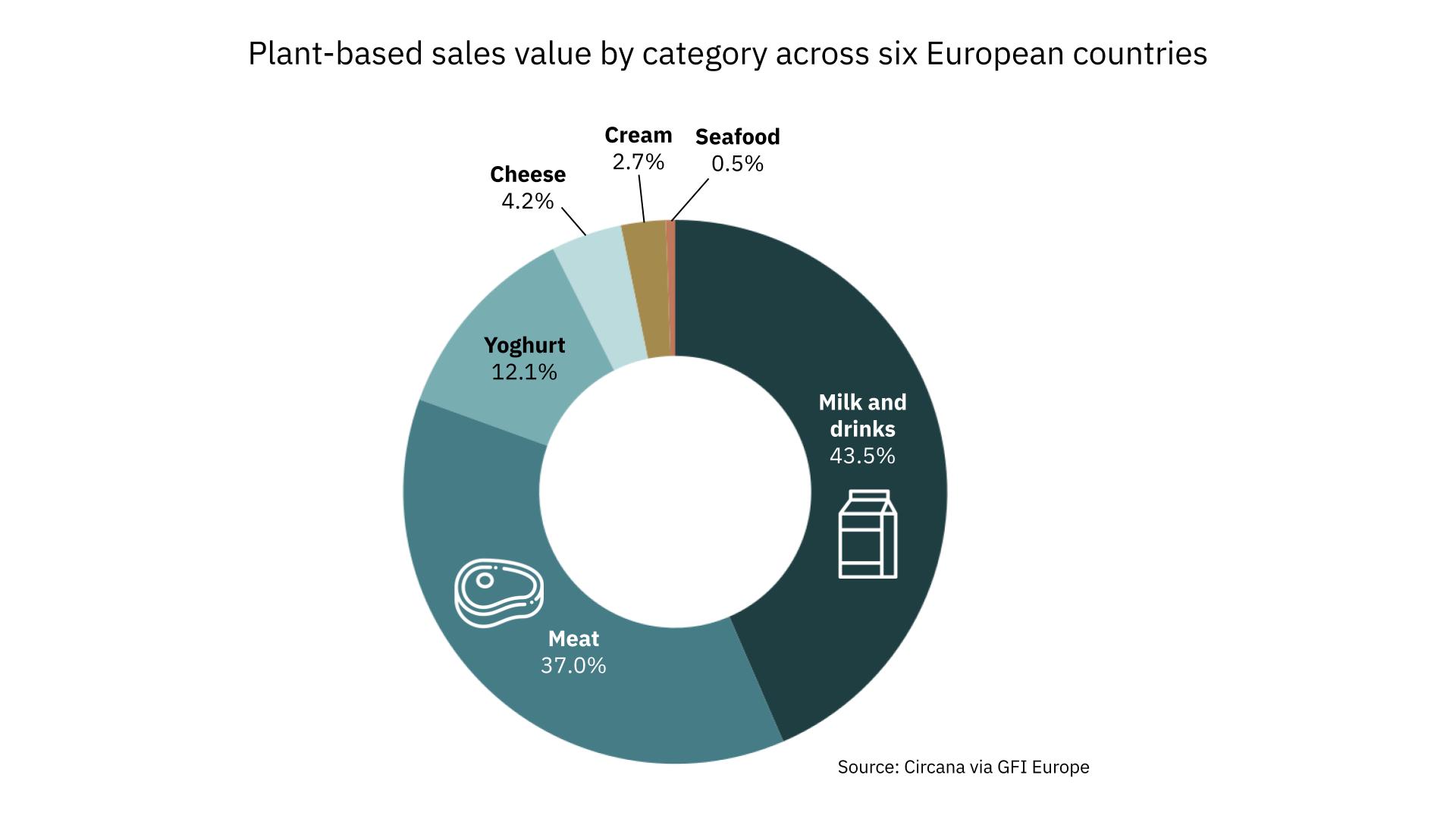
Plant-based retail sales across six major European markets (France, Germany, Italy, the Netherlands, Spain and the UK) were worth €4.7 billion in 2024, according to separate data from Circana, analysed by GFI Europe.
The two largest plant-based categories are milk and drinks, and meat. Across the six countries covered by the Circana data, they accounted for 44% and 37%, respectively, of plant-based sales value in 2024. Across all of Europe, the proportions were similar, at 44% and 34% respectively, according to Euromonitor.
Read our reports on European plant-based retail sales here.
Plant-based milk and drinks are a success story
Plant-based milk and drinks have seen a long-term rise in popularity over the past decade, with sales volume across Europe increasing by more than 150% between 2015 and 20242. Sales vary significantly between countries, with the six largest markets (France, Germany, Italy, the Netherlands, Spain and the UK) accounting for the majority of sales volume.
Sales volume across Europe increased by 5.1% between 2023 and 2024, according to Euromonitor, while sales volume in the six largest markets rose by 4.7% in the same time period, according to Circana data.
Retail sales volume of plant-based milk and drinks in Europe
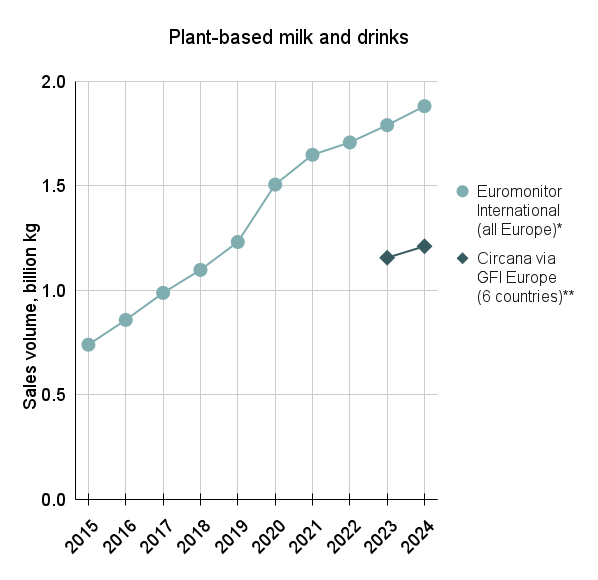
**Retail sales volume of plant-based milk & drinks across 6 countries (France, Germany, Italy, the Netherlands, Spain and the UK). Source: Circana via GFI Europe.
The ongoing success of plant-based milk and drinks in the largest five European markets 3 has been heavily driven by rising sales of relatively affordable private-label products, which grew by 11% in sales volume between 2023 and 2024, while the sales volume of branded plant-based milk remained stable. Private-label products were on average 45% cheaper per litre than branded options in 2024. This shows that, as plant-based milk becomes well-established, affordability becomes important in expanding the market further.
It is likely that improved product performance has also supported the growth of plant-based milk and drinks. For example, barista-style plant-based milk, which is designed to froth and be mixed into hot drinks without curdling, saw a 10.4% increase in sales volume in the UK in 2024.
Complementing this data, we also see broader qualitative indications of what is driving the success of plant-based milk. Mainstream coffee influencers are talking about and offering guidance on plant-based milks, plant-based milks are widely available in cafes, and industry figures report that people appreciate the taste of oat milk in its own right.
Sales volume and average price per litre of plant-based milk and drinks

A mixed picture for plant-based meat and seafood
The European market for plant-based meat and seafood has grown significantly over the past decade, with sales volume rising by over 150% between 2015 and 2024. After rapid growth between 2019 and 2021, sales volume levelled off.
Euromonitor data suggests that growth resumed between 2022 and 2024, while Circana data shows stable total sales volume across six major European markets, despite challenges in some mature markets such as the UK and the Netherlands4.
Retail sales volume of plant-based meat and seafood in Europe

**Retail sales volume of plant-based meat and seafood across 6 countries (France, Germany, Italy, the Netherlands, Spain and the UK). Source: Circana via GFI Europe.
Many European consumers eat plant-based foods
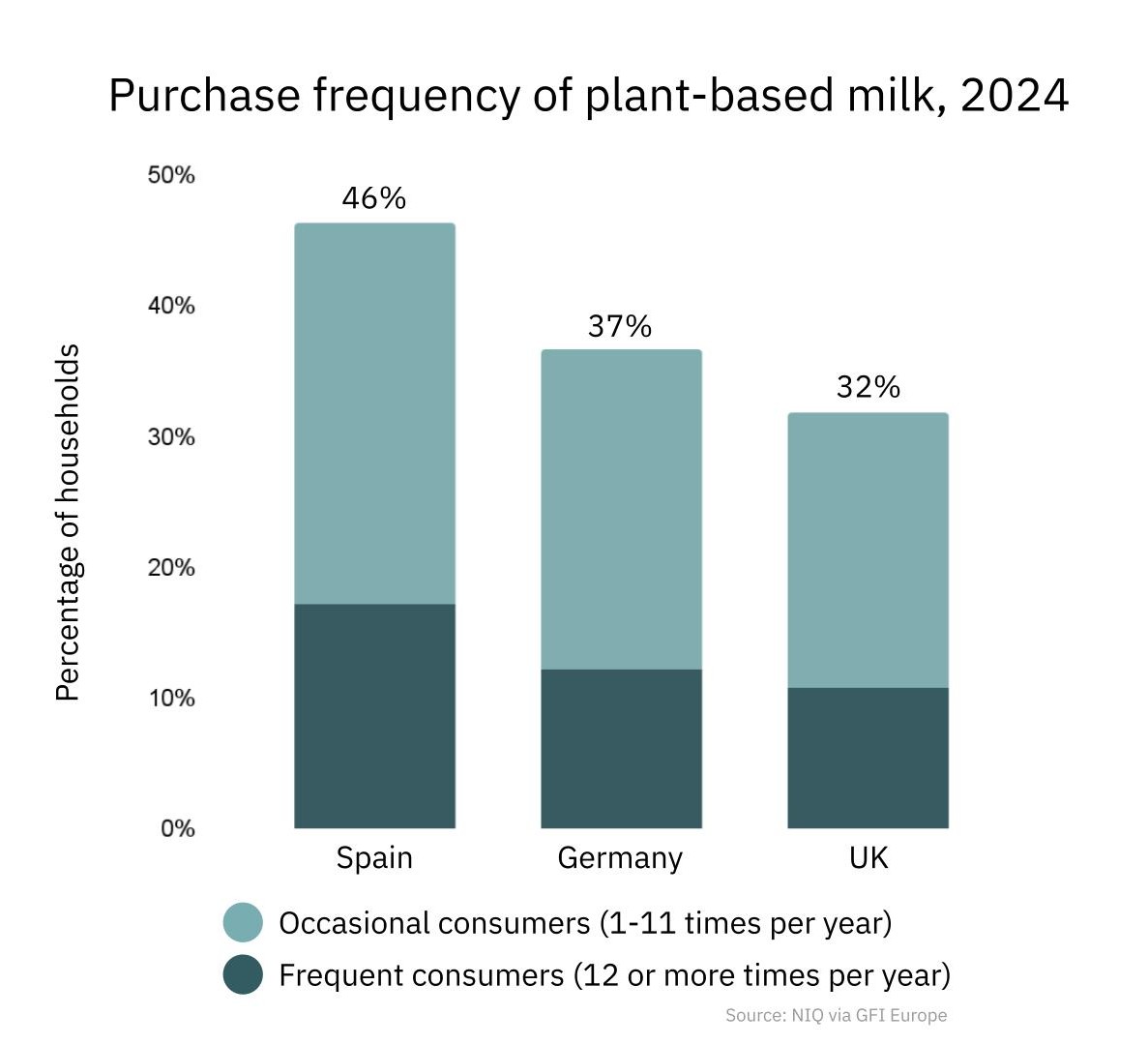
Plant-based milk has gained a wide customer base, being bought at least once by 46% of households in Spain during 2024, 37% of German households and 32% of UK households. A smaller, but still significant, proportion of households were frequent consumers: 17% of households in Spain, 12% in Germany and 11% in the UK bought plant-based milk an average of at least once a month. The popularity of plant-based milk in Spain may be related to relatively high rates of lactose intolerance in southern Europe.
In Germany and the UK, a large minority of households purchased plant-based meat at least once during 2024, at 32% in each country. 10% of households in Germany and 9% in the UK were frequent purchasers, buying it at least 12 times per year. Adoption was less widespread in Spain, with just 22% of households buying plant-based meat and only 3% being frequent purchasers.

Plant-based foods complement animal food consumption
In 2022, only single-digit percentages of consumers across four Western European countries reported exclusively consuming alternative proteins (as opposed to the animal-based equivalents): 5% in Germany, 4% in the UK, 3% in France and 2% in Spain.
However, much larger proportions reported either mostly consuming alternative proteins or balancing them evenly with conventional proteins: 30% in Spain, 25% in Germany, 23% in the UK and 22% in France.
Flexitarians are important: most people who consume alternative proteins also consume conventional proteins
Drivers: taste is key
When considering whether to buy a plant-based product, the top factors cited by European consumers in 2023 were taste (53%), health (46%) and affordability (45%).
Interestingly, although animal welfare was the second most cited reason for reducing meat consumption, it was only the 10th most cited factor when choosing plant-based foods. Similarly, although the environment was the third strongest reason for meat reduction, it was only the seventh most cited factor in choosing plant-based.
The one factor that was both a strong reason for meat reduction and also a top consideration in choosing plant-based was health.
This finding is backed up by a 2022 study, which found that health was the top motivator for consuming alternative proteins in the UK, Spain, Germany and France, followed by animal welfare and environmental impact.
The same study found that taste, nutritional value (eg macronutrient profile) and health (eg avoidance of antibiotics) were the most important criteria for consumers when buying alternative proteins.
Note, however, that these results are based on survey data. The value-action gap means that surveys do not always reflect real-world purchasing behaviour.
Barriers: price is a concern
In 2023, the top barriers to European consumers choosing plant-based products were concerns about plant-based foods being too expensive (38%) or not tasty enough (30%), as well as a need for more information about plant-based alternatives (25%). In fourth place, 24% of respondents claimed they would worry about their health if they were to exclusively consume plant-based alternatives.

Check out our report Plant-based meat and health in Europe for further details on the nutritional characteristics of plant-based meat.
Taste, health and price are important to European consumers. Many people want more information about plant-based products.
People want to change their diets, but plant-based foods need to meet their expectations
Polling from two of Europe’s leading plant-based markets, Germany and the UK, shows that half (51%) of consumers want to eat more plant-based foods and/or less meat and dairy.
However, consumers perceive plant-based foods as falling short of animal-based foods in key areas such as taste, availability, choosing them out of habit, ease of cooking and value for money.
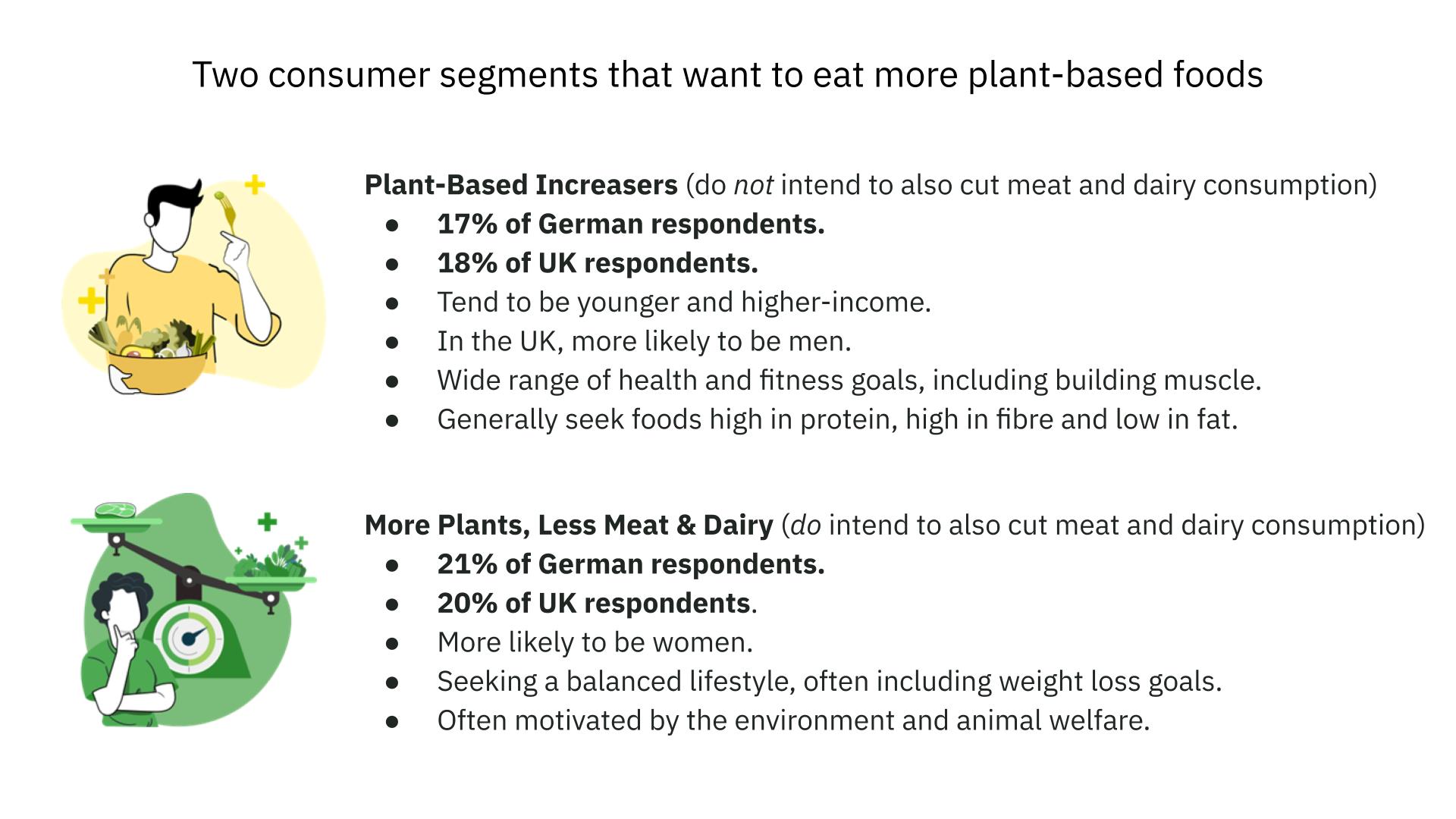
The polling identified two consumer segments who want to eat more plant-based foods in the future. However, they have differing motivations. Those who also want to cut their meat and dairy consumption are often aiming to lose weight, are seeking a healthy lifestyle, or are motivated by the environment and animal welfare. Those who are not simultaneously seeking to cut their meat and dairy consumption are more likely to be driven by fitness goals such as building muscle, and seek foods that are high in protein, high in fibre and low in fat.
Makers of plant-based foods can widen their audience by identifying and clearly communicating a more diverse range of areas where plant-based meat can add value. For instance, if a product has a strong nutritional profile, the brand could highlight how it can help people meet their nutritional and fitness goals, such as fibre, protein or iron intake. They can also help consumers build confidence in preparing plant-based foods, for example by providing simple recipe suggestions. Finally, the taste and price of plant-based products must continue to improve so that they meet the expectations of a wide range of consumers.
The plant-based sector can reach more potential consumers by highlighting how their products meet the needs of their target audiences.
Check out our reports to understand plant-based category dynamics, motivations and consumers in the UK and Germany.
Different consumer groups require different strategies
The top drivers and barriers regarding plant-based food depend on dietary habits (eg omnivore, flexitarian), demographic groups (eg age) and country.

For example, those who frequently eat meat were more likely to cite poor taste as their top barrier to choosing plant-based foods than flexitarians (who sometimes eat meat but are trying to reduce their intake) are, while flexitarians were more deterred by price.
There are similarities between groups in some cases. For example, the proportion of people who are flexitarian is fairly uniform across the generations, ranging from 26% (Gen Z) to 29% (Baby boomers).
With drivers for choosing plant-based foods, the country with the highest levels of importance placed on both taste and affordability is the UK (and Italy the lowest). The country most driven by health is Romania (and France the least). The countries most driven by freshness are Romania and Poland (with the UK the least).
To communicate how their products meet people’s needs, the plant-based sector needs to understand the interests and concerns of their target audience, which vary by country, age, lifestyle and more.
Cultivated meat
People in several European countries are open to cultivated meat
Consumer attitudes to cultivated meat vary by country. Representative surveys of consumers across conducted by YouGov in February-April 2024 , commissioned by GFI Europe, found that a significant proportion of people in Portugal (60%), Czechia (59%), Sweden (55%), Denmark (55%), Germany (47%) and Austria (42%) would try cultivated meat.
More recently, a Euroconsumers study conducted in January 2025 found that 56% of consumers in Spain, 53% in Portugal, 47% in Italy and 44% in Belgium would try cultivated meat if it were approved and available in their market. While those who had reduced, or were intending to reduce, their meat consumption were the most likely to want to try cultivated meat, a large minority (43%) of people with no intention of reducing their meat consumption would nevertheless try cultivated meat.
Consumers care about taste, price and health
The Euroconsumers study found that consumers in Belgium, Italy, Portugal and Spain care about food safety, with 51% saying they are afraid of the long-term health risks of eating cultivated meat, but 38% would include it in their diet if it were proven to be healthier than conventional meat, and 68% of respondents trust the European Food Safety Authority to judge whether cultivated meat would be safe for consumption.
The eating experience also matters, with 48% of consumers saying they would only eat cultivated meat if it had the same taste and structure as conventional meat.
Price is also critical, with 59% saying they would not buy cultivated meat if it were more expensive than conventional meat.
Framing, messaging, nomenclature and imagery are all influential
How cultivated meat is framed, the imagery of it that is used, and the ways in which its benefits are explained can all affect the perceptions of consumers. With only a small number of countries, including Singapore, the United States and Australia, having so far approved cultivated meat for sale, and with accessibility extremely limited even there, people must form their opinions based on media depictions rather than first-hand experience.
A UK study published in 2023 tested three different ways of framing information about cultivated meat. It found that a “consumption frame” generally had the most positive influence on consumers’ perceptions. Here, the description of cultivated meat focused on its taste, the varieties that might be available, and how it can be bought and cooked. A “production” frame describing how cultivated meat is made scored the lowest, and an “alternative food” frame focused on new types of foods had intermediate scores.
Similarly, GFI Europe research conducted in 2021 found that it is important to emphasise the flavour and sensory properties of cultivated meat. The most persuasive messages varied by country, with people in Germany and Italy caring most about whether cultivated meat can help address the climate crisis, while those in France and Spain were more interested in whether cultivated meat can help to feed a growing population.
The most popular nomenclature options all loosely translated to “cultivated meat”. In France, “Viande cultivée” was preferred; “Kultiviertes Fleisch” and “Kulturfleisch” (closer to “cultured meat”) were most popular in Germany; “Carne coltivata” performed best in Italy; and “Carne cultivada” was the top option in Spain.
Imagery has also been found to have an effect. A study of UK consumers conducted in 2021 found that people shown food-based images of cultivated meat (meat products being served or prepared) were more likely to rate it as appealing, tasty, nutritious and affordable than those shown laboratory-based images (Petri dishes and blue gloves). However, other studies show less conclusive results.
Food-based imagery of cultivated meat products is seen as more appealing than Petri dishes and blue gloves.

GFI’s cultivated meat image library
GFI maintains a collection of images of cultivated meat and seafood products. Read more about the project here and view the images below.
Fermentation
Fermentation covers both biomass fermentation (where the whole cell of microorganisms such as fungi or algae is used as a food ingredient) and precision fermentation (where proteins identical to those from animals, such as whey or casein, are produced using microorganisms such as yeast).
Mycoprotein-based biomass fermentation products (made from fungi), such as Quorn, have been available to European consumers for a few decades. Precision fermentation has also been used for decades to produce ingredients like citric acid, as well as vegetarian rennet for cheesemaking – but its use in alternative proteins is new, and animal-free meat, eggs and dairy made using precision fermentation are not yet available on the European market.
Compared to the plant-based and cultivated fields, there is relatively little open-access research on consumer attitudes towards fermentation-made foods.
Around half of consumers would try precision or biomass fermentation products
Research published in 2025 by GFI Europe and Accenture found that around half of consumers across four European countries (France, Germany, Spain and the UK) were willing to try dairy and egg products made using precision fermentation if they were given a free sample or someone else prepared it for them. Around one in five would add these products to their diet.
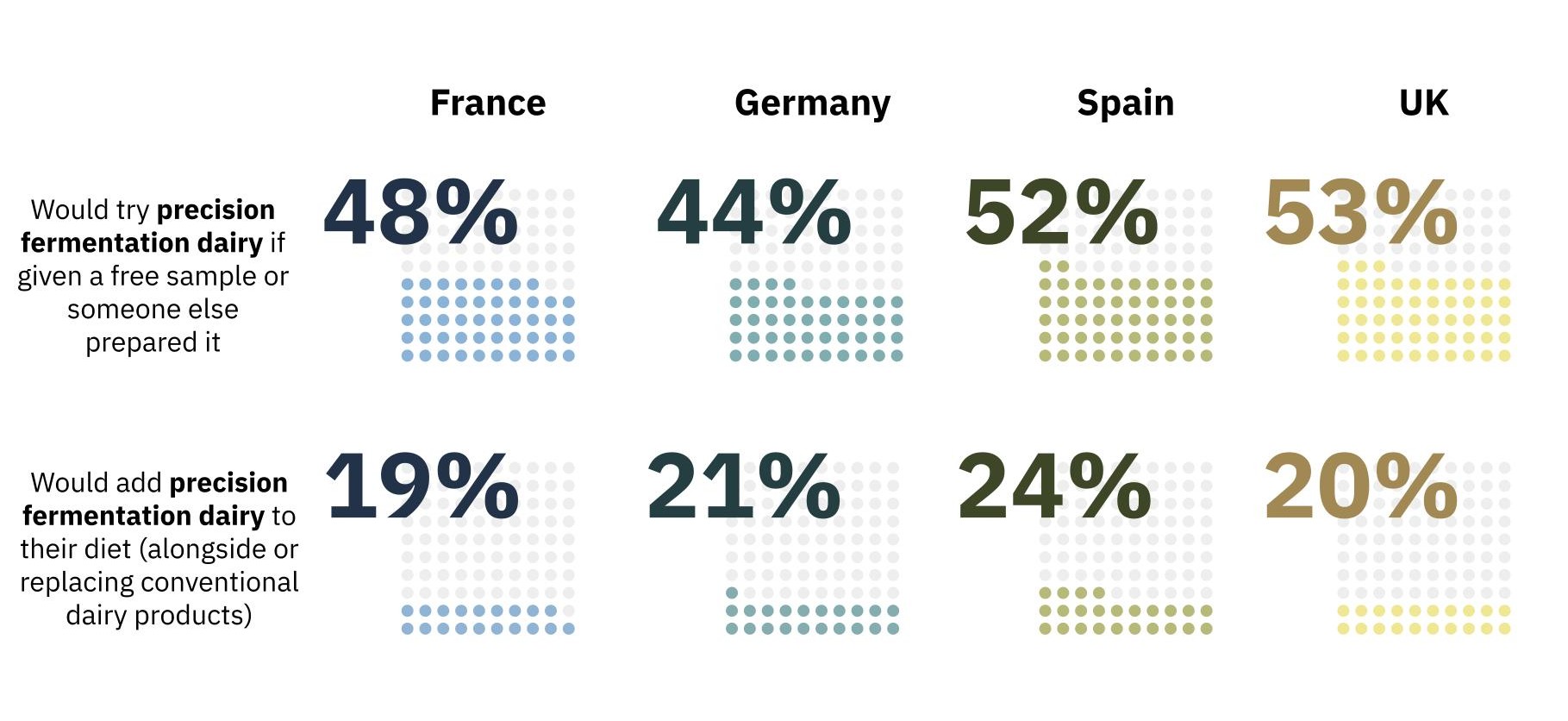
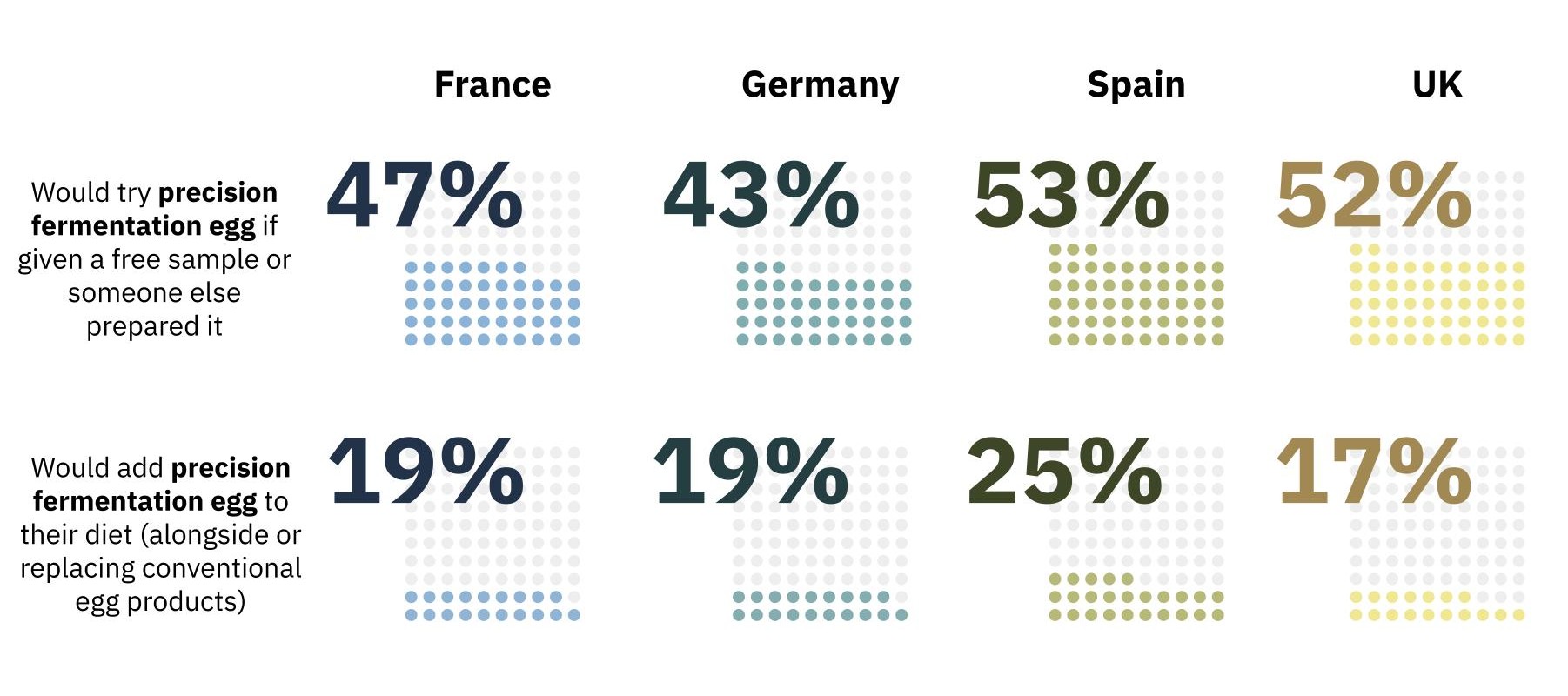
Separately, the EIT Food Consumer Observatory found in 2025 that 43% of respondents across six countries (France, Spain, Italy, Greece, Poland and Denmark) would be willing to try dairy products produced using precision fermentation.
According to 2024 research by the HealthFerm project, 52% of consumers across nine European countries 5were willing to try products made using precision fermentation, and 49% would try products made using biomass fermentation. Only small proportions of consumers were unwilling to try the products, at 23% for both types. The same survey found that vegans were the most willing to try products of both precision and biomass fermentation, with the least willing being meat eaters who are not trying to reduce their meat consumption.
People have varying motivations to try foods made through fermentation
GFI and Accenture’s 2025 report found that consumers had a wide range of reasons for wanting to try egg or dairy products made with precision fermentation, with the most important motivators varying by country. Curiosity/novelty was the top driver in France (chosen by 40% of those who were interested in trying precision fermentation products), health was the top driver in Spain (46%), and animal welfare was top in Germany and the UK (45% and 43%, respectively).
Of the potential benefits of precision fermentation, people in the UK found “without the need to farm or harm animals” to be the most compelling, while people in France, Germany and Spain found “free from hormones and antibiotics” to be most appealing. Other compelling potential benefits included the products being free from lactose and cholesterol, and the products having lower environmental impacts than conventional animal agriculture.
According to a 2018-19 study of consumers in 12 countries, including France, the UK, the Netherlands and Spain, the strongest driver of willingness to consume mycoprotein is health. Namely, participants were more likely to be willing to consume mycoprotein if they believed it to be healthy. Other important drivers were nutritional benefits, mycoprotein being safe to eat, and sustainability. When looking at which groups found which benefits most compelling, men and meat eaters who are not trying to cut their meat consumption were most strongly driven by health, women by nutritional benefits and flexitarians and vegetarians by safety.
Makers of fermentation products may need to tailor their messaging to highlight how their products can meet the needs and interests of different audiences.
Many consumers are still unfamiliar with fermentation, but providing background information can help
GFI and Accenture’s 2025 report showed that providing background information on how precision fermentation products are made can increase their appeal to people. In France, Germany and the UK, a medium level of detail was preferred when explaining the precision fermentation process, giving an overview of the process but avoiding granular scientific details. In Spain, a more detailed explanation was preferred.
Furthermore, using appropriate nomenclature can make precision fermentation more appealing. Out of several options tested, “animal-free” was the most popular name in the UK for products made using precision fermentation, with similar terms also performing best in other languages. “Sans élevage animal” was preferred in France; “tierfrei” was top in Germany; and “sin origen animal” and “cuidadosamente elaborado” were the winners in Spain.
A study conducted in 2021 across seven European countries (Finland, Germany, Iceland, Italy, Poland, Sweden and the UK) showed that most consumers have either positive or neutral attitudes towards the general concept of producing protein via yeast or microalgae, with only 10-20% having negative views. Many consumers did not yet know enough about the concepts to have either a positive or negative opinion. Environmental sustainability was the top perceived benefit of these novel protein sources.
Since many people don’t yet understand fermentation processes, educating consumers by providing an appropriate level of background information is important.
Further resources on European consumers
Open access literature on consumer insights
Below is a repository of published, open access research into consumer insights. Suggest new resources here.
Know of more open access consumer insights to add to this? Submit them here!
- Plant-based meat and seafood, milk, yoghurt, cheese and ice cream across total Eastern + Western Europe (30-44 countries depending on product category). Source: Euromonitor International 2025 ©, which uses a combination of trade sources, store checks, national statistics and modelling. ↩︎
- Retail sales volume of plant-based milk across total Eastern + Western Europe (30-44 countries depending on product category). Source: Euromonitor International 2025 ©, which uses a combination of trade sources, store checks, national statistics and modelling. ↩︎
- Germany, Spain, the UK, Italy and France. The proportion of private-label products was not available for the Netherlands, the sixth largest market, in the Circana data. ↩︎
- The gap in the 2023-24 trend between Euromonitor and Circana is caused partly by methodological differences, and partly by growth in countries not covered by the Circana data.
↩︎ - Belgium, Switzerland, Germany, Denmark, Finland, France, Italy, Romania and Sweden. ↩︎