
Alternative proteins: a strategic tool to adapt to climate change in Spain
Droughts, epidemics, floods: climate change is already transforming Spain’s food system. Find out how alternative proteins can serve as a strategic tool to adapt to climate change and strengthen food security in Spain.
Este artículo también está disponible en español.
21 April 2026
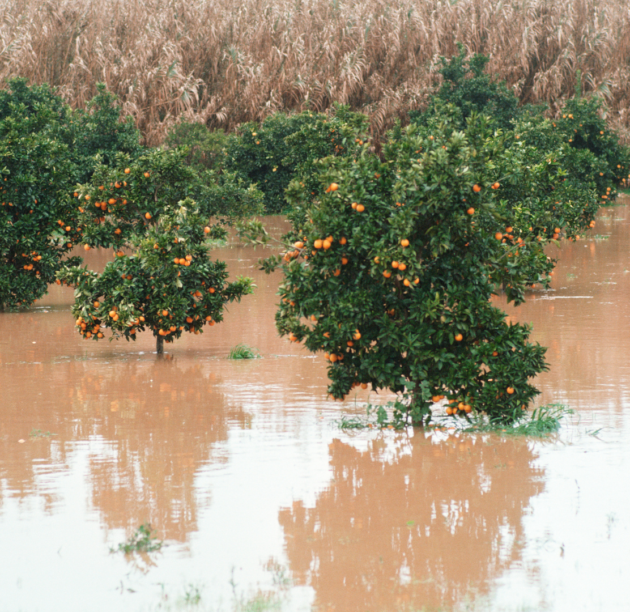
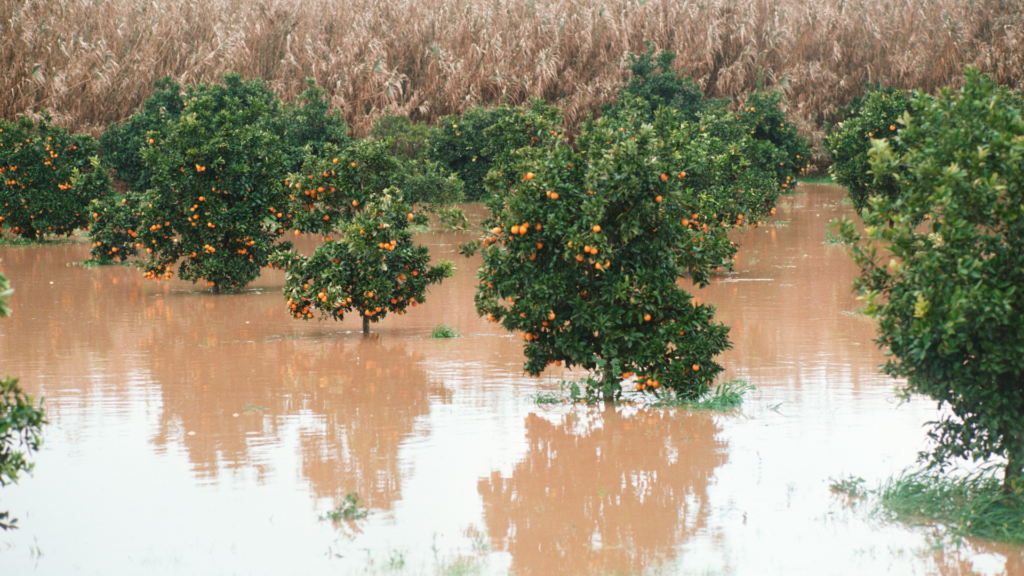
In Spain, headlines such as “Drought threatens to reduce olive oil production to below 1.3 million tonnes”, “Farmers in La Rioja estimate that more than 50% of the almond harvest has been lost due to the rain” or “Eggs are the food product that has risen most in price in 2025, against the backdrop of avian flu” are already a familiar sight.
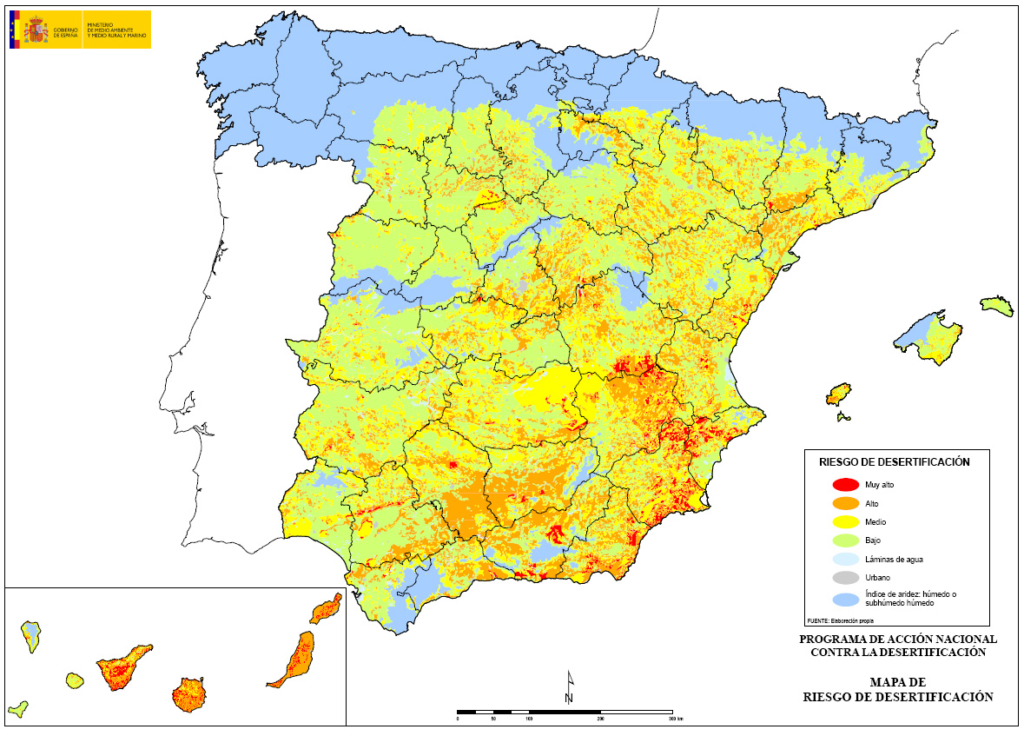
In the face of climate change, Spain, one of the world’s leading food producers and exporters, is particularly vulnerable. Temperatures are rising faster than the global average. The high risk of desertification and soil degradation is well documented. Heatwaves, fires, floods and droughts are becoming increasingly intense and frequent, devastating ecosystems, crops and farmed animals. Added to this is a heavy reliance on imports such as soya for animal feed, which are also subject to climate pressures and geopolitical instability.
It is estimated that climate change causes losses amounting to €550 million for Spanish farmers each year, which is equivalent to around 6% of Spain’s total agricultural output.
This is a vicious cycle: food production is one of the main causes of climate change – generating more than a third of global greenhouse gas emissions – but it also suffers profoundly from its consequences.
Given this vulnerability, there is an urgent need to develop climate change adaptation strategies that protect both Spain’s food security and the environment. To this end, alternative proteins are key: they require less water and less agricultural land, and produce fewer emissions and less pollution than animal-based proteins, making them an essential opportunity to strengthen the food system in the face of the climate crisis.
What are alternative proteins?
Alternative proteins are proteins sourced from plants, produced through fermentation or from cultivated meat.
Plant-based proteins are the best known and most accessible, and are obtained directly from plants. Thanks to scientific advances in flavour, aroma and texture, new plant-based products that mimic meat, fish, seafood, eggs and dairy have a very similar taste, aroma and texture. They are also cooked in the same way and have nutritional advantages over the processed meat they often replace.

Proteins obtained through fermentation are produced using microorganisms – yeasts, fungi, bacteria – which convert organic feedstocks into proteins. There are several types of fermentation:
- traditional fermentation, which has been used for millennia to make bread or beer;
- biomass fermentation, which typically uses fungi or bacteria to produce ingredients with appealing nutritional value or texture.
- precision fermentation is even more innovative, using microorganisms like yeasts that produce the desired proteins much more quickly, efficiently and sustainably than conventional methods.
Cultivated meat is produced by extracting cells from an animal and cultivating them in fermentors with the necessary nutrients to enable their natural growth and replication, thereby enabling the production of different tissues, such as muscle or fat. The end result is an ingredient made of real animal cells – made without the need to rear or slaughter animals.
To what extent can alternative proteins help Spain adapt to climate change?
Today in Europe, most of the protein we consume comes from animals. In Spain, 65.6% of total protein intake comes from animal sources, according to the ANIBES study by the Spanish Nutrition Foundation. As the population and demand for food grow, this model is unsustainable.
Industrial livestock farming generates large quantities of greenhouse gases and requires enormous amounts of water and land, thereby contributing to habitat destruction and biodiversity loss. Furthermore, it is highly inefficient: currently, it uses 77% of the world’s available agricultural land, yet produces only around 20% of the total protein we need. In Spain, according to research by Green Alliance, around 50% of agricultural land is used for domestic consumption of meat and dairy products, whilst only around 30% is used to grow plant-based foods for consumption by the Spanish population.
One of the most effective ways to adapt to climate change and bolster our protein supply is to diversify our sources of protein, hence the importance of alternative proteins.
Producing protein using less water
In January 2026, a new United Nations report revealed that the planet has moved from a state of water crisis to one of water bankruptcy, in which an increasing number of river basins and aquifers are losing the ability to return to their ‘historical normal’. In Spain, this is particularly relevant as the United Nations Convention to Combat Desertification identified Spanish territory as one of the critical hotspots at risk globally.
Conventional livestock farming consumes almost a third of the planet’s fresh water, which is mainly used to irrigate crops intended for animal feed. By comparison,a systematic review conducted in 2024 concluded that plant-based meat uses between 74% and 93% less water than conventional meat. Another life-cycle analysis of precision fermentation products revealed that, when it comes to alternative dairy production, water consumption could be reduced by 81% compared with conventional cow’s milk.
In a country where water is becoming a scarce resource, alternative proteins are emerging as one of the most effective solutions for ensuring long-term water and food security.
Restoring biodiversity, the best ally in mitigating the effects of climate change
Healthy ecosystems – forests, wetlands, grasslands, living soils – are key to regulating the planet’s climate. They absorb carbon, manage water cycles, stabilise temperatures and protect crops from pests and extreme weather events.
It is estimated that a third of all animal and plant species existing today could disappear by 2070. Large-scale livestock farming is one of the main causes of this loss of biodiversity: the vast land area it requires (and the deforestation this entails), the emissions it generates, and the water consumption and pollution it causes are pushing entire ecosystems to the brink.

According to Green Alliance, greater uptake of alternative proteins could free up as much as 46% of agricultural land in Spain. This would make space for more nature friendly farming methods, allow for the expansion of forests, the restoration of damaged ecosystems, and provide space for nature to regain its ability to mitigate the effects of climate change. Furthermore, even a moderate increase in the consumption of alternative proteins could halve the amount of agricultural land that Spain uses in other countries, specifically by 2 million hectares (an area twice the size of Asturias).
Every year, Spain imports millions of tonnes of soya – mainly from Brazil and Argentina – to feed farmed animals. This dependence poses a risk, as it exposes Spain’s food security to potential external shocks, such as the effects of climate change in these exporting regions or geopolitical shifts. The invasion of Ukraine is a clear example of this, having sent feed prices soaring and, with them, the cost of meat, eggs and dairy products.
According to an analysis by Systemiq, with adequate support and investment in protein diversification, the EU could reduce its dependence on imported soya for animal feed by 23% by 2040. The aim is to reduce risk concentration, so that if one protein source fails, the others can compensate.
Reducing vulnerability to animal health issues
Avian flu, African swine fever, foot-and-mouth disease… Epidemics affecting livestock are a recurring and structural threat to both food security and public health. Climate change increases the likelihood of their occurrence, as rising temperatures and changes to ecosystems create conditions conducive to the survival, reproduction and spread of pathogens and their vectors.
A protein supply that does not depend almost exclusively on livestock farming is a system that is more resilient to such shocks. Plant-based proteins or those obtained through fermentation are not susceptible to these kinds of problems, and their production can continue uninterrupted when an epidemic forces the disruption of animal protein supply chains.
Diversifying market opportunities for farmers
Spanish farmers are increasingly facing climate-related challenges that threaten their profitability and way of life, such as a lack of succession on farms, profitability issues and their position in the current food supply chain.
However, alternative proteins could present an opportunity for Spanish farmers to diversify their production. As a major producer of cereals, beet, potatoes, pulses and almonds, the Spanish agricultural sector is already ideally placed to supply key ingredients and raw materials to the plant-based and fermentation sectors.
Alternative proteins offer new market opportunities that could contribute a gross added value of €10 billion annually to the Spanish economy by 2040 under a moderate ambition scenario, according to the latest report from Systemiq.
Reducing greenhouse gas emissions
Every fraction of a degree can make the difference between food security and food insecurity. In Spain, industrial livestock farming accounts for up to 80% of total greenhouse gas emissions from the agricultural sector, mainly due to methane emitted by ruminant livestock, but also due to nitrous oxide from fertilised soils, emissions associated with the transport and processing of feed, and the deforestation it causes.
At the European level, a study indicates that the production and consumption of animal-based products account for between 12% and 17% of the bloc’s greenhouse gas emissions. According to another study by the University of Oxford, even if fossil fuel emissions were eliminated, the world could not meet the Paris Agreement targets without phasing out industrial livestock farming.
Alternative proteins can reduce emissions by up to 98% compared to conventional protein production, limiting the rise in temperature and its environmental consequences.
What measures are needed to accelerate protein diversification and harness its environmental potential?
Spain already has a dynamic and innovative alternative protein ecosystem. The research talent and entrepreneurial network are in place, but there are still obstacles to overcome before it can play its part in Spain’s climate adaptation efforts.
What can be done?
- Investment in R&D projects: Research is key to improving the taste, nutritional value and price of alternative proteins. Spanish scientists, universities, technology centres and research groups specialising in alternative proteins need greater support to ensure that Spain remains a leader in healthy and sustainable food for the future.
- Boost start-up growth: Many Spanish alternative protein companies lack the infrastructure to produce their products at scale, which has implications for the price and availability of these foods. Mobilising public and private investment to facilitate access to this type of industrial facility is key to enabling the sector to realise its full economic and environmental potential.
- Recognising the role of alternative proteins in the Mediterranean diet: Plant-based foods form the basis of the Mediterranean diet, but consumption in Spain has strayed significantly from these guidelines, largely due to changes in eating habits. Authorities have not yet recognised the role that alternative proteins can play in reviving the Mediterranean diet, adapting it to the convenience needs of the 21st century.
- Support at European level: European R&D funding is now the primary source of funding for Spain’s research community working on alternative proteins, and entrepreneurs and companies in the sector in Spain are also fostering collaborations at European level. Consequently, advocating for and promoting alternative proteins and their potential to address environmental, climate and health challenges at European level is in the general interest of Spain and its economic and innovation ecosystem.
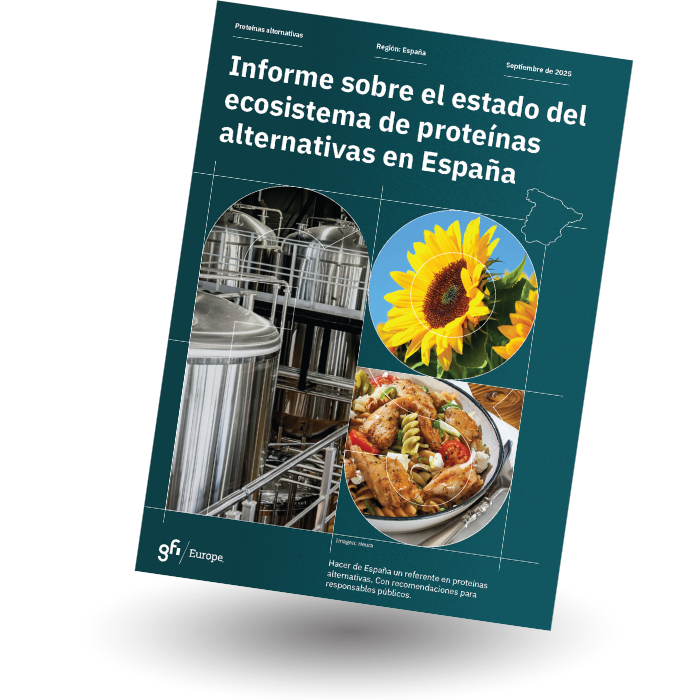
See all our recommendations for boosting the alternative protein sector in Spain.
Author
Carlos Campillos Martínez
 Public Affairs Manager, Spain
Carlos engages with Spanish policymakers to advance alternative proteins and create a more sustainable food system in Spain.