
Meet the researcher: Brewing up new ideas to scale precision fermentation with Josué Heinrich
Could the brewing industry provide clues for how plant-based foods, cultivated meat and fermentation startups can scale up production?
16 June 2026
Name: Dr Josué Heinrich
Job title: Assistant professor
Organisation: Wageningen University and Research, the Netherlands
Alternative protein specialism: Bioprocess engineering
Could the brewing industry provide clues for how plant-based foods, cultivated meat and fermentation startups can scale up production?
That’s one of the questions Josué Heinrich, part of the cellular agriculture team at Wageningen University and Research (WUR) in the Netherlands, is asking about the engineering challenges involved in improving the efficiency of precision fermentation.
The technique has been used for decades to produce foods like rennet for cheesemaking and is now being employed to produce fats and proteins that can bring the texture and flavour of meat to plant-based foods. It involves providing microorganisms like yeast with the instructions needed to produce these desired ingredients.
One area being explored by the team, part of WUR’s Bioprocess Engineering Group, is whether new approaches could bypass the painstaking and energy-intensive process of working in sterile environments to eliminate contaminating microbes. These unwanted organisms compete with the desired microorganisms for nutrients, reducing yields or even ruining batches.
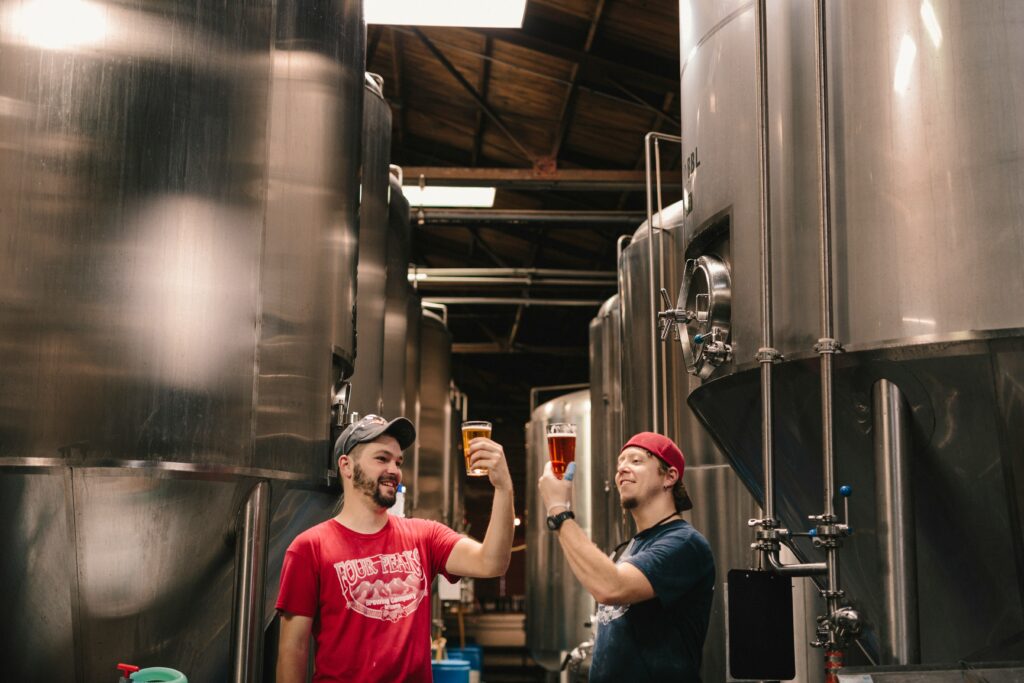
“Breweries don’t work in fully sterile conditions,” he says, drawing the analogy with a centuries-old industry that also uses microorganisms to produce a desired outcome – turning sugar into alcohol at an industrial scale.
Instead, he points out, they just need to be clean, but rely on other processes during fermentation to avoid contamination. This includes packing the desired organisms so tightly that they outcompete unwanted microbes, or using a combination of beer’s naturally high acidity, ethanol production – a byproduct of brewing – and oxygen-free conditions to prevent contaminants from growing.
Innovative uses for established approaches
Although finding ways of producing proteins using non-sterile conditions – while also ensuring the end product is safe to eat – is not as straightforward as it may be in a brewery, his team are at the early stages of applying this logic to precision fermentation.
“It’s not a new concept,” he said. “But the way that we are using this idea is new.”
One approach involves finding naturally robust microorganisms, known as extremophiles, that can thrive in harsh conditions – such as high temperatures or high levels of acidity or salinity – that would kill off any contaminants.
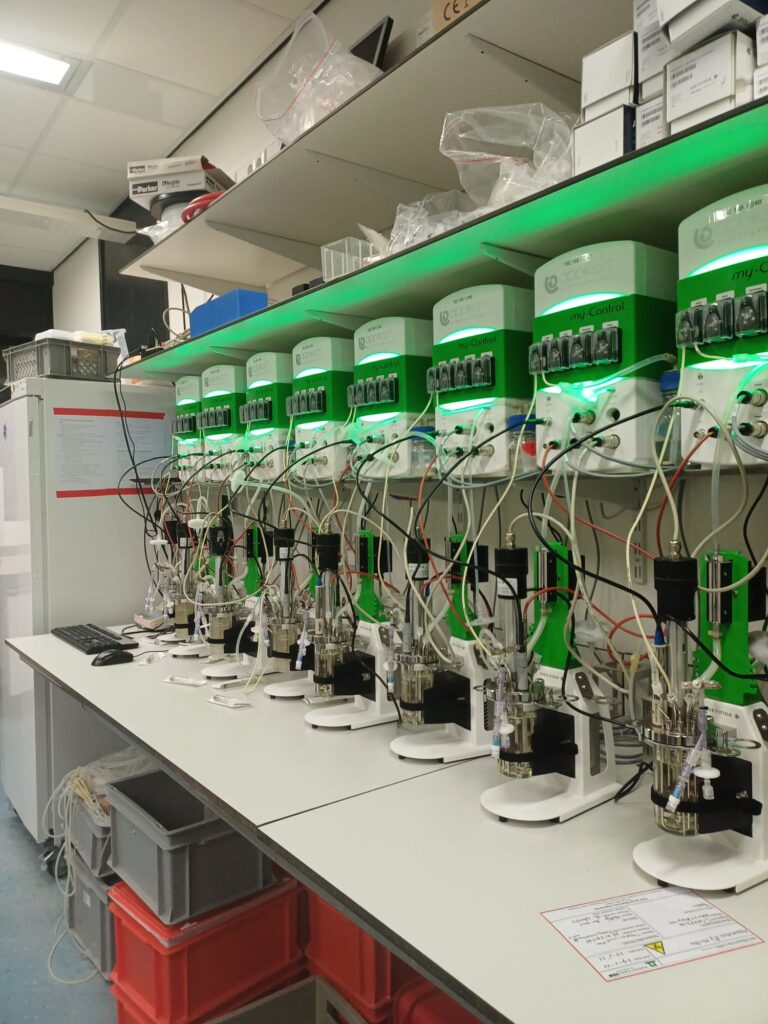
An alternative method being explored by PhD candidate Willem Baris is to identify the genetic mechanisms that extremophiles use to survive in these conditions and transplant them into more familiar microbial hosts, such as yeasts. These organisms, armed with this new blueprint, will be able to thrive in extreme environments and produce the desired ingredients without the threat of contamination.
Meanwhile, scientists would run regular tests throughout the process to catch any problems – just as brewers would to ensure their batches haven’t been ruined.
His group is also working to identify more affordable feedstocks for growth media, both for precision fermentation and for enabling animal cell growth in cultivated meat.
Other work focuses on moving beyond current batch-production processes – in which startups add all the ingredients to the tank, harvest the product and then clean up before starting again – towards more efficient continuous processes in which startups constantly add fresh nutrients and remove the desired product as they go.
Building the next generation of alternative protein innovators
Alongside his research, Josué coordinates the university’s precision fermentation course along with Mark Bisschops, complemented by programmes on cellular agriculture and the broader societal implications of alternative proteins.
The courses draw between 50 and 60 students per cycle from across the world and from different disciplinary backgrounds – from food technology to biotech.
“They have a lot of environmental and ethical drives,” he said.
“Students choose this course because they are aware of the impact that our food system has on the world and they want to be part of changing it.”
A career stretching from South America to Europe
Josué’s career began in his native Argentina, working on industrial fermentation applications for the agri-food sector, before moving to the Netherlands, where he later joined cultivated meat company Mosa Meat.
There, he managed a team of scientists working on process development, taking cultivated beef from small-scale laboratory work to the scale required to submit a regulatory dossier for approval.
Although he later returned to academia, the experience gave him insights into the technical bottlenecks facing alternative proteins.
“Business and academia – both have something to teach you,” he said. “When you are in academia, you have more freedom to explore. In industry, it’s about making something work and reducing costs.”
Helping people reduce meat consumption
His personal motivations for joining the field were not simply to solve the technical challenges it presents, as he came to realise the cruelty involved in industrial animal agriculture.
“As an Argentinian, I would eat a lot of meat,” he said. “Beef is so dominant there that we jokingly say that chicken isn’t even real meat!
“Now, I only eat it around every two weeks. But if we want to reduce the amount of meat people eat, we need to develop better options. Alternative proteins can do that, but they can also create economic opportunities.”
Working alongside early-career researchers – both in teaching and research – Josué can offer advice to those looking to enter the field.
“What is really important is that there is a big ecosystem and it’s being created now,” he said, mentioning examples such as Cellular Agriculture Netherlands. “You have a lot of companies, academics, and policymakers coming together. I would say you should join these groups.
“There’s a lot of work to find the key bottlenecks that need to be challenged. You should focus on the ones that have the biggest impact, and share knowledge by creating networks.”
Are you interested in getting involved in the science of plant-based food, cultivated meat and fermentation? Take a look at our resources or check out our science page.
If you’re a researcher:
- To find funding opportunities, check out our research funding database for grants from across the sector, and our research grants for funding available from GFI.
- Explore our resources to learn about the most pressing alternative protein knowledge gaps or find inspiration for new research projects.
- Subscribe to the alternative protein researcher directory to find potential collaborators or supervisors in the field.
- Look out for monthly science seminars run through our GFIdeas community.
If you’re a student:
- Join the Alt Protein Project – the global student movement dedicated to turning universities into engines for alternative protein education, research, and innovation.
- Find educational courses around the globe through our database.
- Sign up for our free online course introducing the science of sustainable proteins, explore our resource guide explaining what is available to students or newcomers to the space, and check out our careers board for the latest job opportunities in this emerging field.