
New research: Producing widely-used ingredients from waste can rival cocoa butter on cost
A new study examines a promising way to turn food and farm side streams into valuable ingredients – and finds it could compete with existing products on price.
30 June 2026
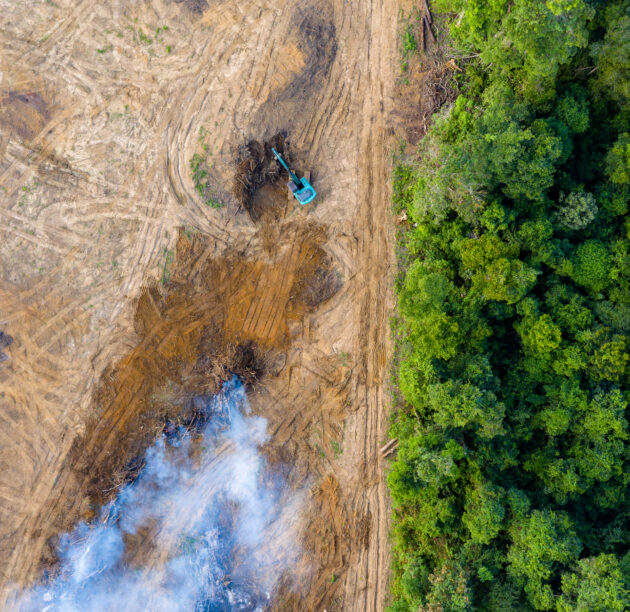
A new study examines a promising way to turn food and farm side streams into valuable ingredients – and finds it could compete with existing products on price.
The study, published in Nature Communications Sustainability, provides the first publicly available techno-economic assessment to demonstrate the feasibility of a new fermentation-based approach to producing lipids – fatty acids with a wide range of uses.
The technique involves breaking down organic products, including food industry and agricultural byproducts, into biogas, which is then fed to microorganisms to produce lipids, using a process similar to how yeast produces alcohol during brewing.
The approach offers a more sustainable alternative to conventional fat production, which is currently based on animal sources or growing tropical crops such as oil palm, which has been linked to biodiversity loss. The paper adds that rising demand for unsaturated fats has driven up the price of products such as olive oil.
Fermentation-made fats can also play an important role in improving the taste and texture of plant-based meat, increasing take-up of this sustainable food.
As part of a project funded by nonprofit think tank the Good Food Institute, researchers Dorian Leger and Milena Ivanisevic of Luxembourg-based Cx Bio (formerly Connectomix Bio) led a team looking at how the approach could be applied to two types of widely used fats.
These were phospholipids (also known as lecithins) – used as ingredients in products such as chocolates and pastries – and triacylglycerols – oils and solid fats that can give plant-based meat its richness and juiciness.
They estimate the minimum price of fats produced using this process at $14.20 (€12.24)/kg for phospholipids and $10 (€8.62)/kg for triacylglycerols. These figures, driven by factors such as the price of feedstocks – the raw materials used to feed microorganisms – electricity and capital expenses needed to build facilities, are within the price range of premium ingredients such as cocoa butter or egg or soy-based phospholipids.
But the paper finds that under future scenarios, in which the feedstocks become cheaper, microbial strains improve, and renewable energy becomes more affordable, prices could fall to $6.10 (€5.26)/kg for phospholipids and $4.20 (€3.62)/kg for oils, making them competitive with a wider range of conventional products.
The authors suggest that this process is widely scalable, as Europe generates around 849 million tonnes of organic waste per year, capable of producing thousands of tonnes of microbial fats annually. They add that a single production facility at the scale modelled would still represent less than 1% of global demand for cocoa butter — indicating significant room to grow without disrupting existing markets.
Lead author Milena Ivanisevic said: “No single technology will solve the challenges of food sustainability, but our findings suggest that waste-to-lipid biomanufacturing could become one important piece of the puzzle.
“If demonstrated at scale, it offers a way to transform underutilised organic waste into valuable food ingredients while working alongside existing food production systems to build a more circular economy.”
Seren Kell, Head of Science and Technology at the Good Food Institute Europe (GFI Europe), said: “Current production of fatty acids is unlikely to meet the global rising demand, while sourcing sustainable, scalable fats and oils that replicate the flavour and mouthfeel of conventional animal fats has long been a challenge for developing tastier plant-based meat that can appeal to a wider group of people.
“Fermentation promises a new approach that contributes to a circular economy by turning waste side streams into valuable food ingredients, and this study provides a robust roadmap for how this potential can be realised across Europe.”