
Benchmarking Europe’s alternative protein research and innovation ecosystem
New analysis finds Europe is globally competitive in alternative protein research and innovation, but risks losing its early advantage. Read the report to find out more about how European funding, publications and patents compare to the rest of the world.
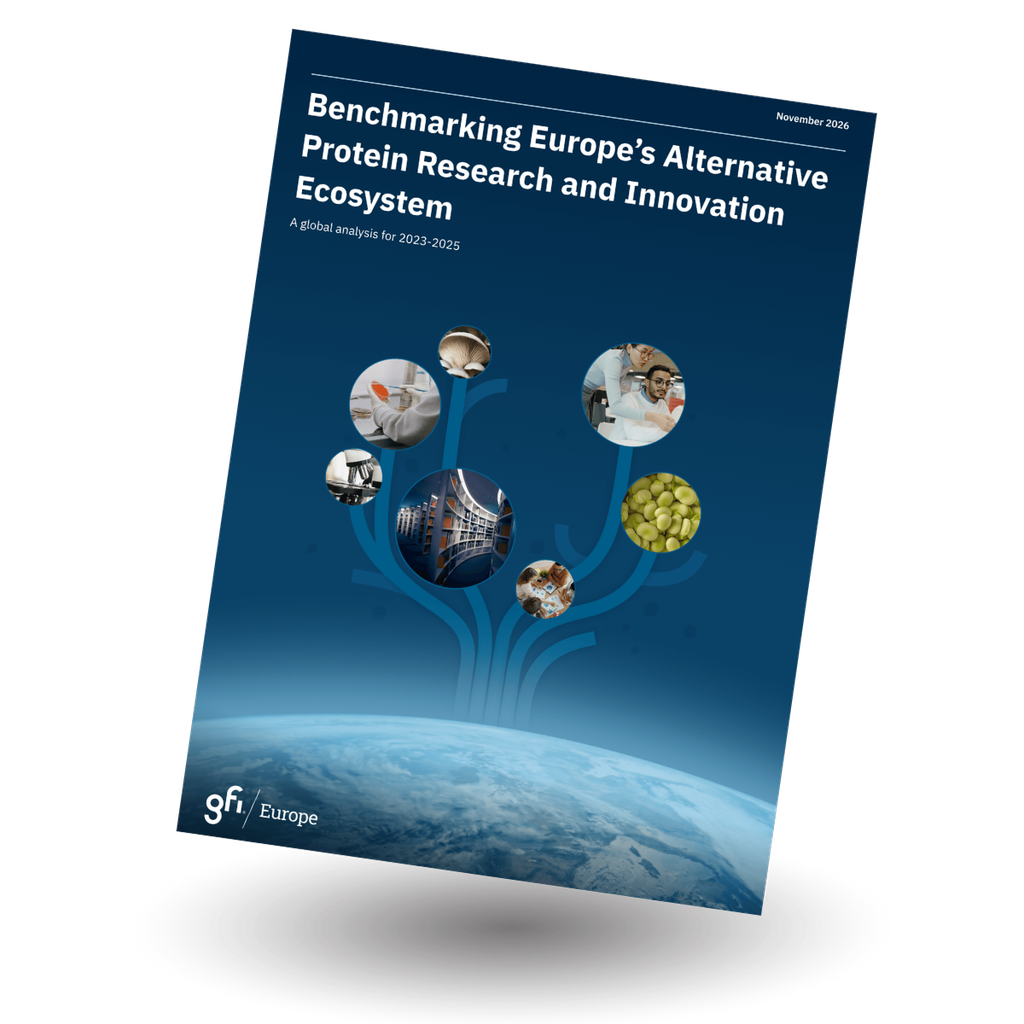
Europe is home to the world’s largest and most productive alternative protein academic research community, and the region’s innovators have published the highest volume of global patents. This leadership position is the result of early investment, with European public and philanthropic research funders committing almost €1.3 billion to the field since 2020.
However, the new analysis finds that Europe’s early lead will not guarantee long-term success. When looking at individual countries, rather than regions, China and the United States are the largest single contributors, and China’s research community is now catching up with Europe’s.
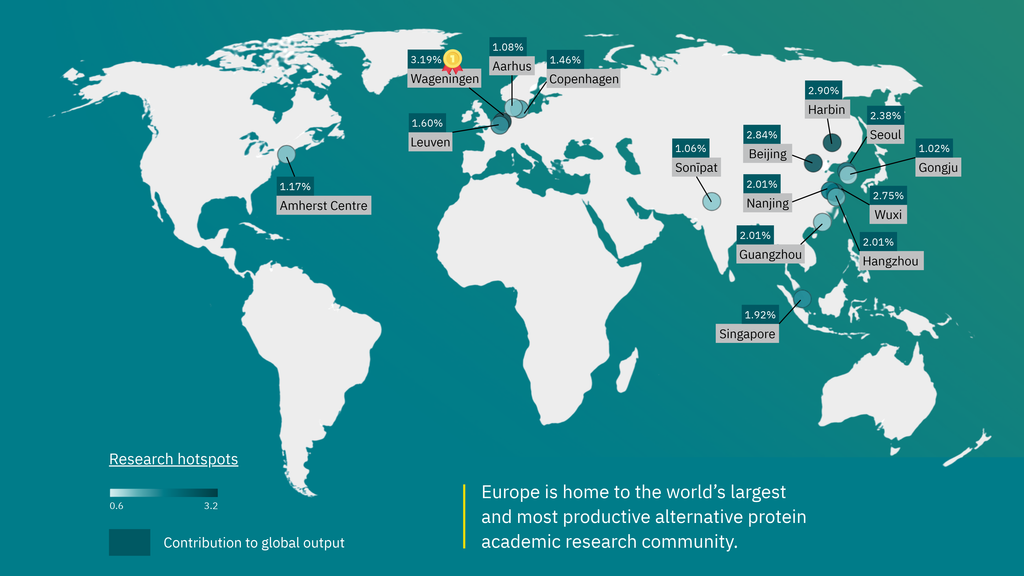
| Research hotspot | Country | Contribution to global output |
|---|---|---|
| Wageningen | The Netherlands | 3.19% |
| Harbin | China | 2.90% |
| Beijing | China | 2.84% |
| Wuxi | China | 2.75% |
| Seoul | South Korea | 2.38% |
| Nanjing | China | 2.01% |
| Guangzhou | China | 2.01% |
| Hangzhou | China | 2.01% |
| Singapore | Singapore | 1.92% |
| Leuven | Belgium | 1.60% |
| Copenhagen | Denmark | 1.46% |
| Amherst Centre | United States | 1.17% |
| Aarhus | Denmark | 1.08% |
| Sonīpat | India | 1.06% |
| Gongju | South Korea | 1.02% |
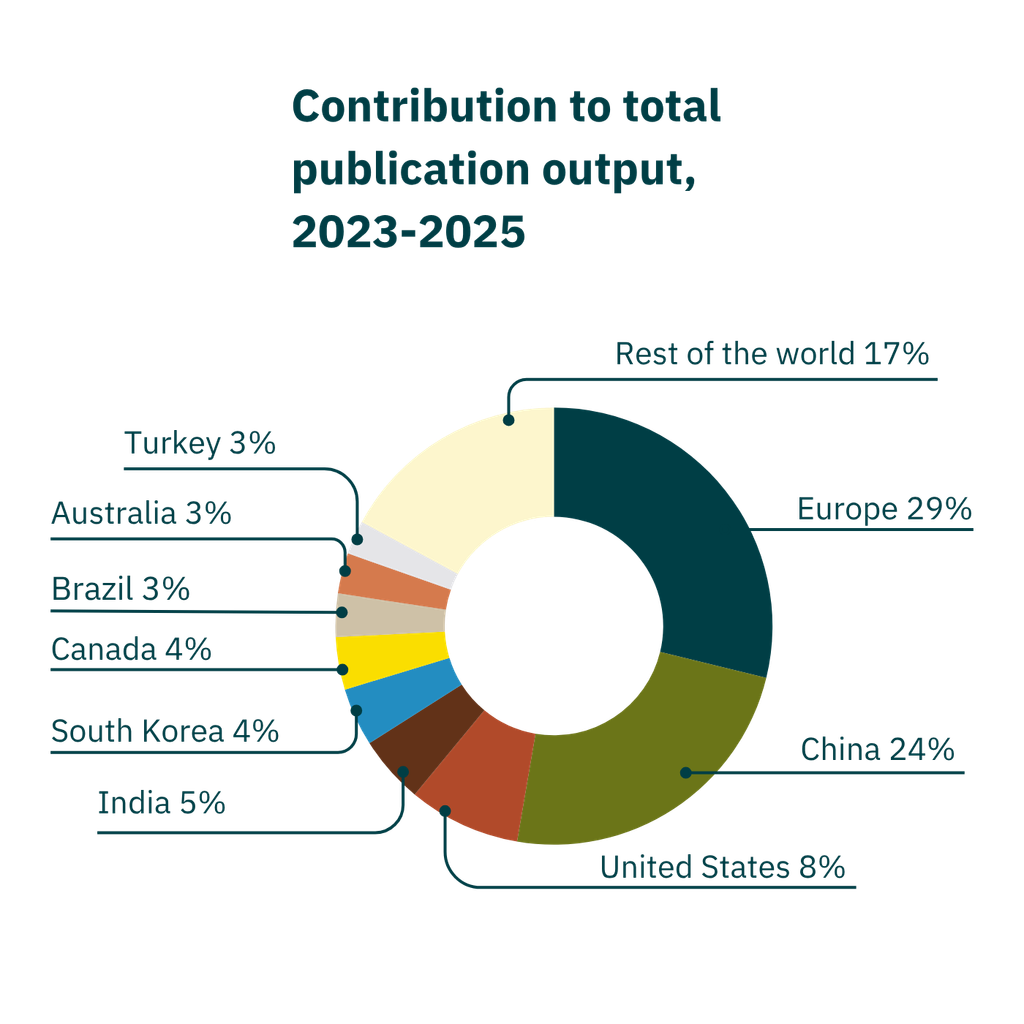
| Region | Contribution to total publication output |
|---|---|
| Europe | 29% |
| China | 24% |
| United States | 8% |
| India | 5% |
| South Korea | 4% |
| Canada | 4% |
| Brazil | 3% |
| Australia | 3% |
| Turkey | 3% |
| Rest of the world | 17% |
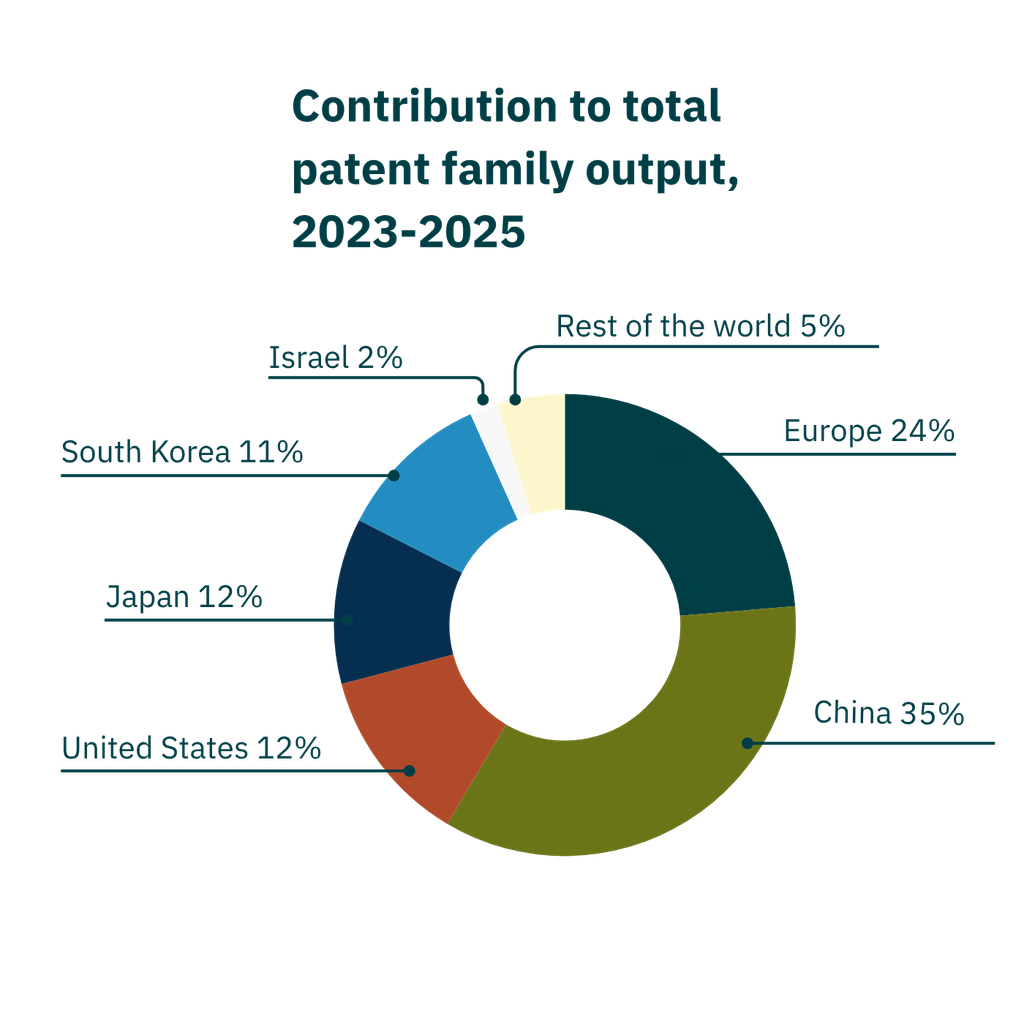
| Region | Contribution to global output |
|---|---|
| Europe | 24% |
| China | 35% |
| United States | 12% |
| Japan | 12% |
| South Korea | 11% |
| Israel | 2% |
| Rest of the world | 5% |
The report finds that Europe is lagging in translating its research into innovation. Despite the region’s lead in patent publications, China surpasses Europe in the number of patent families – collections of patents covering the same or similar technical content disclosed by a common inventor. Other leading economies, such as Japan and South Korea, are also increasing their patent output at a faster rate.
European public funding could be better aligned with the region’s innovation strengths, as Europe dedicates a smaller proportion of funding towards technological research than other regions and instead commits more resources to societal impact studies.
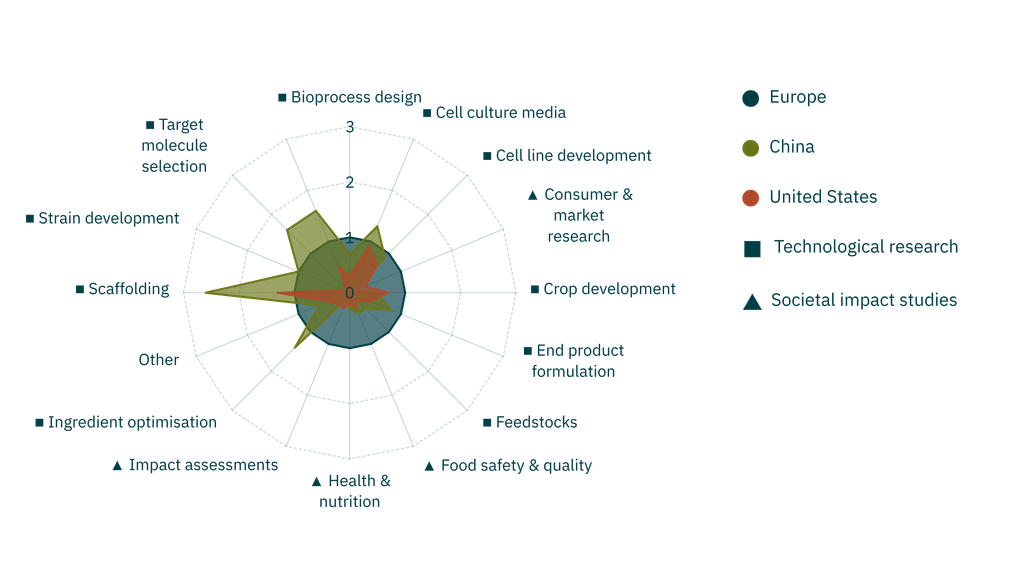
Despite this, the analysis shows that Europe already has the research talent to be a global alternative protein leader, with existing untapped talent pools that could be quickly mobilised through targeted investment.
Europe should align its investment in protein diversification with its industrial strategy, focusing on developing its technological strengths and stronger public-private collaboration.
By taking this strategic approach, European leaders could support the growth of these research communities, realise the region’s considerable R&I potential and reap the full societal and economic benefits that a protein transition can offer.
More related resources:
- Download the infographic to see how the UK’s alternative protein R&I ecosystem compares globally.
- Download the infographic to see how the EU’s alternative protein R&I ecosystem compares globally.
Cite this resource:
- Holleck, V., Davies, T., Child, S. and Hunt, D. (2026). Benchmarking Europe’s Alternative Protein Research and Innovation Ecosystem: A global analysis for 2023-2025. Good Food Institute Europe. DOI: 10.5281/zenodo.24458793
Support our scientific work and learn more about the science of alternative proteins.
Explore regional deep-dives
Find out more about the state of alternative protein R&I funding, publications and patents in the EU, Denmark, Finland, France, Germany, Netherlands, Spain, Sweden and the United Kingdom between 2020 and 2025.