Why is Germany’s plant-based market growing while the UK’s stagnates?
The trajectories of Europe’s two largest plant-based markets look very different. We look at a wide range of factors to understand what could be behind this and what the UK might learn from Germany.
5 November 2026
Germany and the UK are Europe’s largest markets for plant-based foods, but the trajectories they have taken over recent years look very different.
While UK sales have been declining since their 2021 peak, Germany’s market has continued to expand.
We’ve dived into market data, consumer profiles and retailer actions in both countries to explore what could be behind these trends and what the UK might be able to learn from Germany. While the picture is complicated, a range of factors begins to explain the divergence.
At a glance:
- Germany’s wider market structure is very different from the UK’s, with discounters taking a much larger slice of the overall grocery market and of plant-based sales.
- Own-brand products account for a larger proportion of Germany’s plant-based sales, and retailers may offer wider ranges. The impact on affordability is particularly clear in the plant-based milk category, which is only 10% more expensive than dairy milk in Germany but 72% more expensive in the UK.
- German consumers are more likely to say they are already reducing their meat consumption and see a narrower gap between plant-based and animal-based products, while the debate around ultra-processed foods has been more prominent in the UK.
Divergent markets despite consumer similarities
While German and UK shoppers have different priorities, their basic motivations are strikingly similar, making the countries’ divergent trajectories all the more surprising.
Polling by GFI Europe with HarrisX and Plant Futures found that 8% of German adults and 9% of UK adults identified as vegan, vegetarian, or pescetarian, while 51% in both countries said they want to eat less meat and dairy and/or eat more plant-based foods. Around a quarter of meat reducers in both countries cited cost, while people also cited taste and health.
With consumer intentions so similar, each country’s market performance is more likely to depend on what people can buy, how people perceive these products and how expensive they are.
The state of the markets
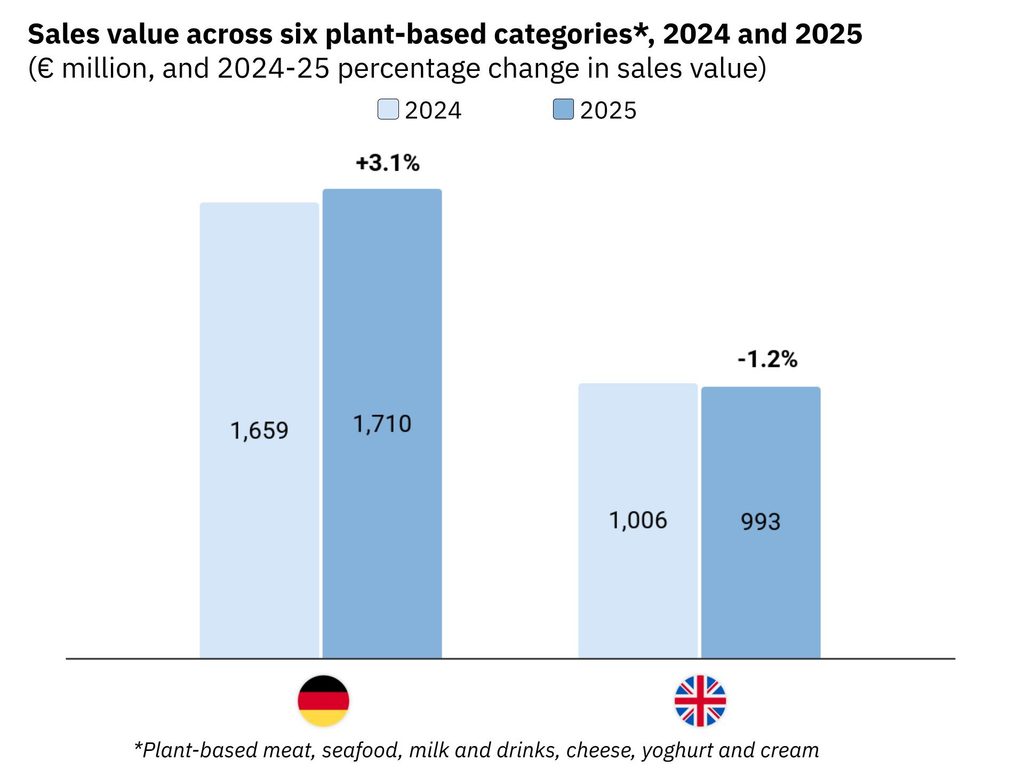
Our latest analysis found that, in 2025, the retail sales value of six plant-based food categories grew by 3.1% to €1.71 billion in Germany and fell by 1.2% to £848 million (€993 million) in the UK – although the UK data did not include discounter stores, where plant-based products have performed well.
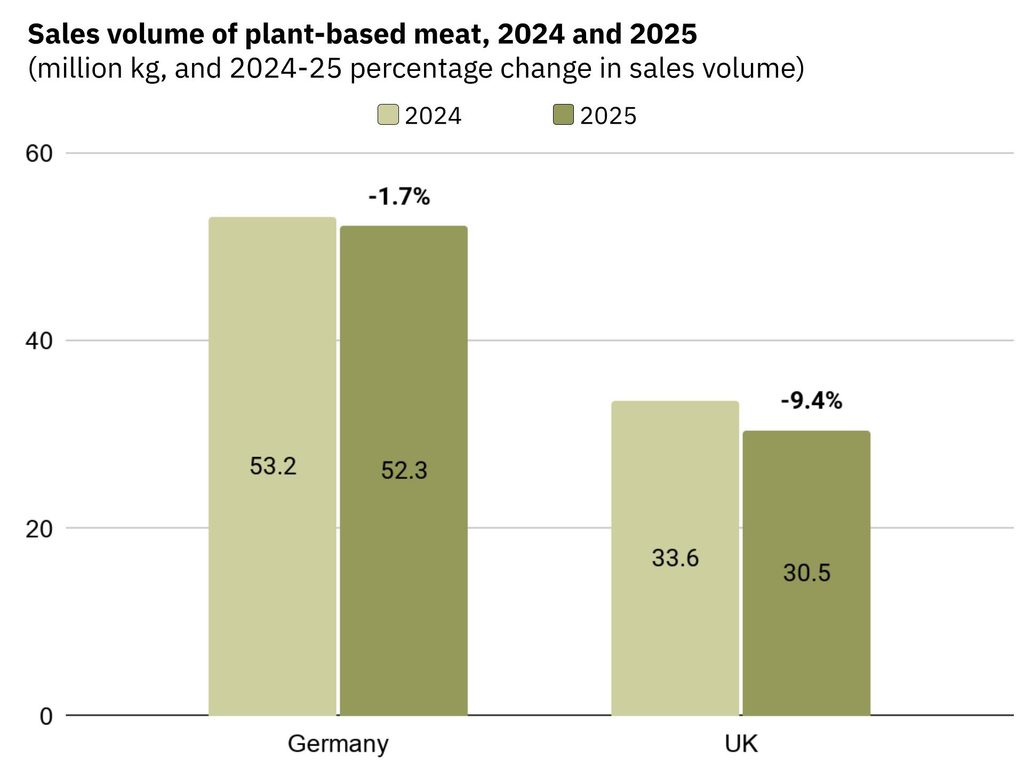
Zooming in on plant-based meat, the German market was worth €751 million in 2025, while UK sales fell 7.3% to £295 million (€345 million).
German sales value1 remained roughly level, with a 0.2% rise in 2025, following 4.4% growth in 2024. However, according to Circana, the German plant-based meat market grew in the year to August 2026 – up 10.8% in value and 9.4% in volume.
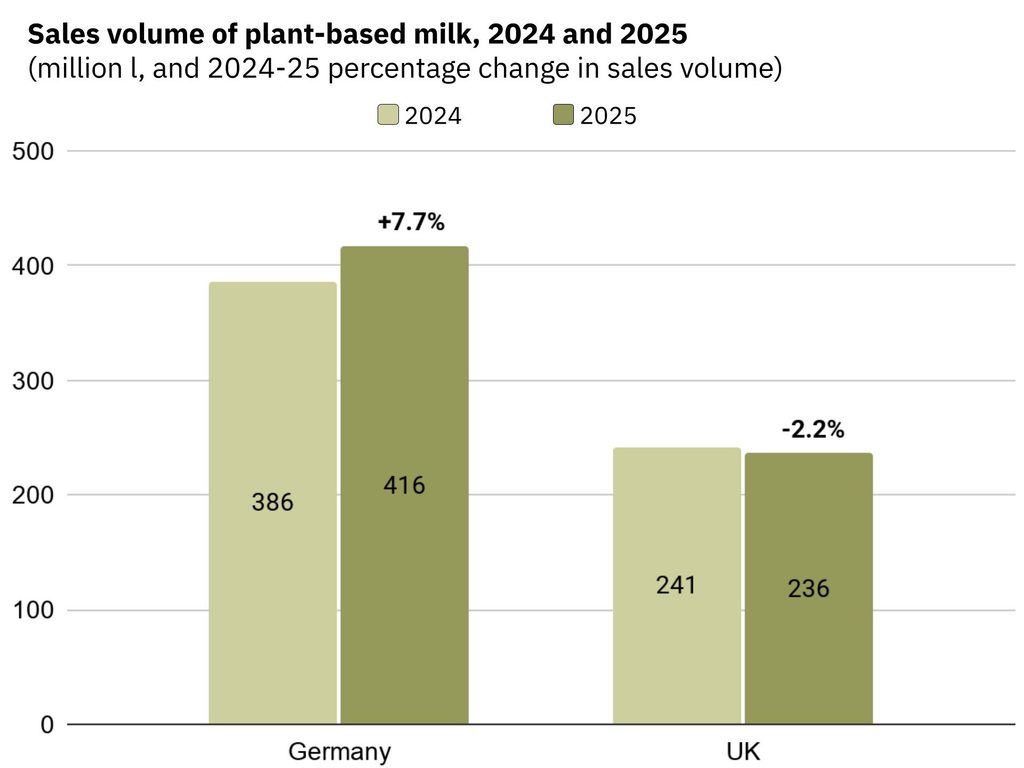
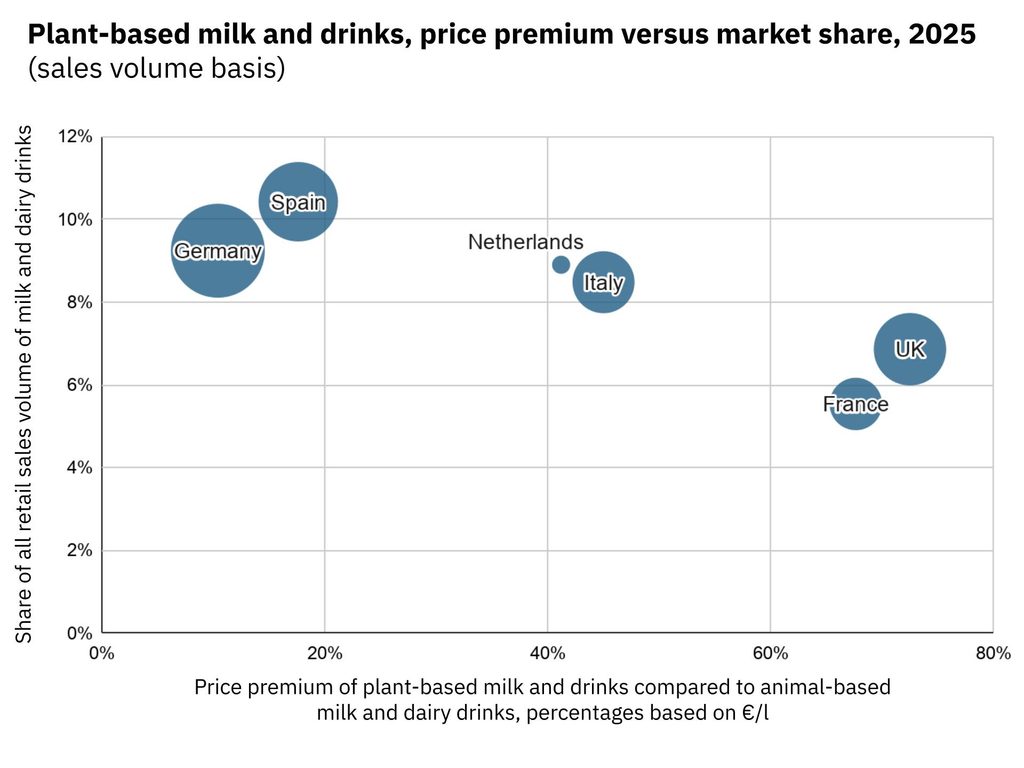
In the plant-based milk and drinks category, including flavoured drinks like iced coffee, UK sales value held roughly level in 2025 with a 0.5% increase to £419 million (€491 million), while German sales value grew 8.1% to €632 million. This category also accounted for a higher share of total milk sales volume in Germany (9.2%) than in the UK (6.9%).
More frequent buyers in Germany
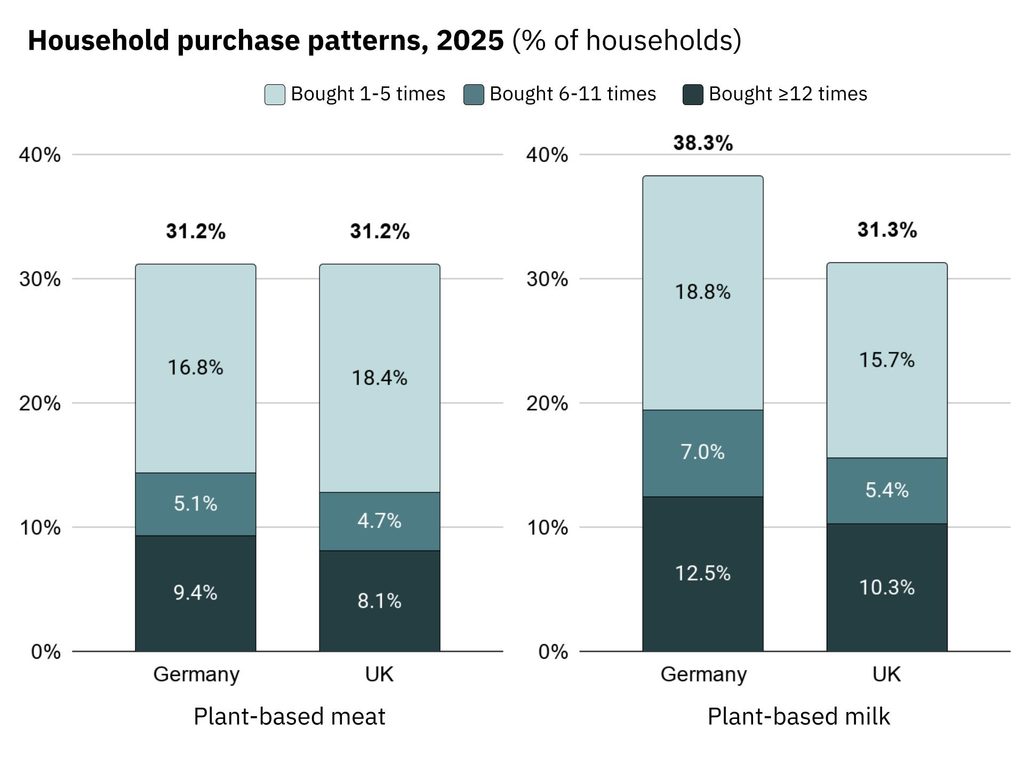
Despite these differences, the same proportion (31.2%) of German and UK households bought plant-based meat at least once during 2025, but more German (9.4%) than UK (8.1%) households did so at least once a month on average.
These figures suggest that while a similar share of people in both countries are open to trying plant-based meat, Germans are slightly more likely to becoming regular purchasers because the available products meet their needs.
Plant-based milk has also become more mainstream in Germany, where 38.3% of households bought it at least once, compared with 31.3% in the UK, and more people bought it regularly.
Why do the markets differ?
To examine the reasons behind these differences in market performance, we looked at three potential reasons – the structure of each country’s grocery markets, the strategies used by retailers and brands, and the priorities and perceptions of shoppers in each country.
Each area overlaps – the market structure impacts what retailers can do, retailers’ actions determine what people can buy and how expensive it is, and consumer perceptions affect whether they are likely to buy these products again.
Market structure: Discounters play a larger role in Germany
The role of lower-priced options in Germany’s plant-based food sector is likely to be a key factor in explaining the differences, as the relatively high prices of plant-based products are a barrier that prevents many people from choosing them over animal-based foods.
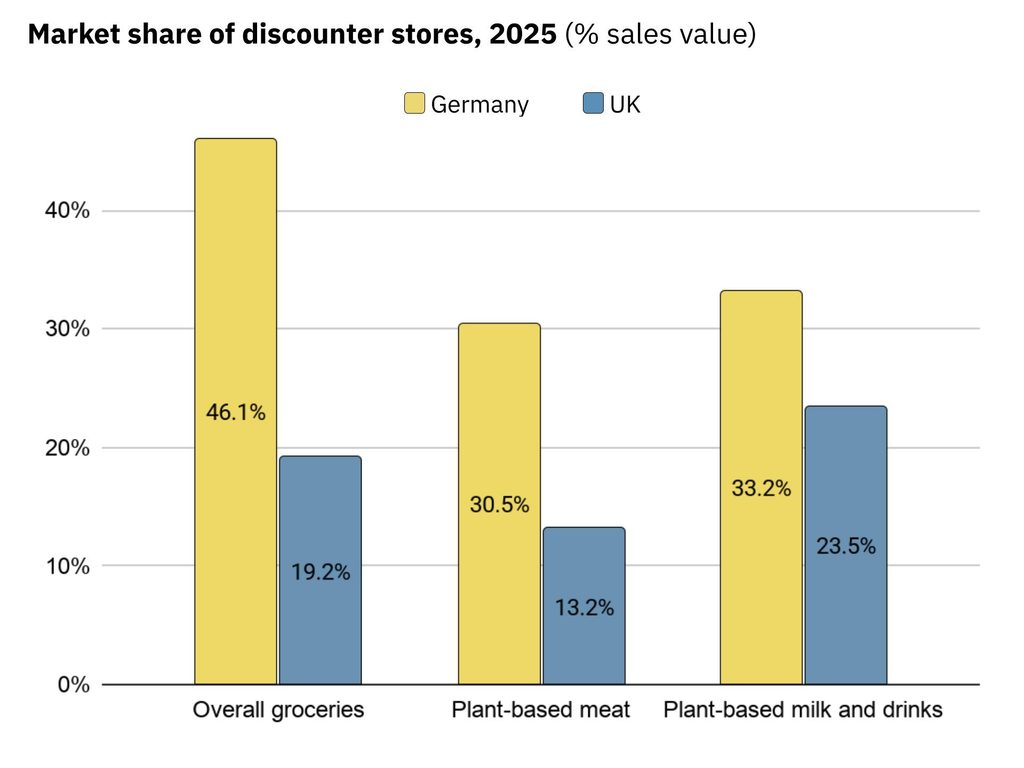
Discounter stores such as Aldi and Lidl hold a larger market share in Germany, making up 46% of all grocery sales, compared with 19% in the UK.
German discounters accounted for 31% of the country’s plant-based meat and 33% of plant-based milk sales last year, but just 13% of plant-based meat and 24% of plant-based milk sales in the UK, according to NIQ data analysed by GFI Europe.2
Retailer and brand strategy
There are also differences in retailers’ strategies around price, range and promotion between the two countries.
More affordable own-brand ranges in Germany
Private-label options – generally more affordable than branded items – are more prominent in the German plant-based category. They accounted for 35% of German plant-based meat and 60% of plant-based milk and drinks sales volume in 2025, but just 12% of UK plant-based meat and 19% of plant-based milk and drinks.
This is despite private-label products accounting for the same proportion of total grocery sales in both countries, suggesting that private-label plant-based offerings better meet consumer needs in Germany than in the UK.
Range sizes
It was not possible to determine each supermarket’s relative number of own-brand products, but Germany’s Kaufland offered more than 100 own-brand plant-based products in 2024, while Lidl Germany had around 100 vegan items in its Vemondo range in 2023.
By contrast, Lidl GB had only 28 plant-based Vemondo products available in early 2025.
Product formats
Another interesting comparison is the type of products in these ranges and how they fit into both countries’ food cultures.
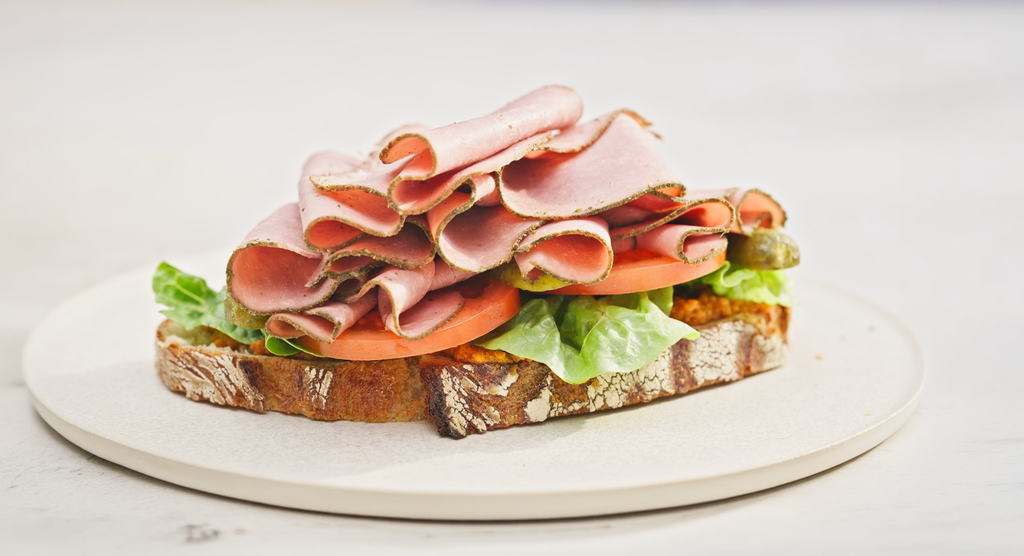
One segment performing well in Germany is plant-based cold cuts, which offer an easy switch for widely consumed conventional meat products such as salami, pair well with familiar dishes such as stulle (bread with toppings) and require no cooking, making them convenient for people who aren’t confident preparing plant-based foods.
By contrast, the most common UK plant-based meat formats, such as sausages and burgers, require cooking.
Price matching
Both Lidl Germany and Kaufland made price-matching commitments in 2023, meaning that their own-brand plant-based products were priced at or below animal-based equivalents. Lidl Germany’s commitment was followed by a 30% rise in vegan product sales.
None of the UK’s leading retailers have made similar commitments, although Lidl GB committed to “market-leading prices for plant-based products” in 2024 and some retailers have offered short-term discounts.
Plant-based milk shows clear impact of private label strategy
The impact of Germany’s private-label plant-based products on affordability is striking for plant-based milk and drinks, where they were 5.6% cheaper per litre than private-label cow’s milk.
This led to the entire plant-based milk and drinks category being only 10% more expensive than animal-based dairy in Germany in 2025, while the UK’s price gap was 72%.
Plant-based milk tends to take a larger share of the overall market in countries where the category comes closer in price to dairy, and as Germany’s price gap narrowed between 2023 and 2025, the market share increased. The remaining gap is due to taxes and would disappear if plant-based milk were taxed the same as dairy.
It’s much harder to say whether retailer strategies have had as much of an impact on bringing the cost of plant-based meat closer to conventional meat, as complete price data for animal meat were not available in either country. However, 2025 Circana data showed plant-based sausages were 44% more expensive by weight in Germany and price tracking shows plant-based meat is on average 34% more expensive in the UK’s Tesco.
A 2025 ProVeg study finding that the cheapest German plant-based cold cuts, sausages, burgers and schnitzels were cheaper than comparable animal equivalents at most retailers does not demonstrate that price parity has been reached, but does show that affordable plant-based options are available.
Targets say less than actions
ProVeg’s Protein Shift Hub found that only one of the six leading UK supermarkets has set a protein split target – Lidl GB aims for 25% of its protein food sales to be plant-based by 2030, having already exceeded its 2025 target. Asda missed its 2023 goal and currently has no target, while Tesco missed its 2025 target, and Aldi, Morrisons and Sainsbury’s have not set any.
Three of Germany’s seven leading retailers have targets relating to plant-based sales. Lidl Germany aims for 20% of protein foods to be plant-based by 2030. REWE aims for 60% of foods to be plant-based by 2035. Aldi Süd, which achieved a target of 1,400 vegan products in 2026, aims for a 20% increase in absolute plant-based net sales by 2030 compared to 2025. However, Aldi Nord, EDEKA, Kaufland and Netto Marken-Discount have not set any.
But it’s important to point out that the Netherlands – the strongest country in Europe at setting retailer targets – has also seen plant-based sales decline. Targets alone cannot explain the difference, and actions are likely to play a bigger role.
Retailer actions differ
All leading UK and German retailers have taken steps to increase sales of plant-rich foods, though their specific strategies vary.
Both countries’ major supermarket chains have private-label plant-based ranges, but the fact that these products account for a larger share of sales in Germany suggests that German retailers may have made greater progress in affordability and range size.
Efforts by Germany’s retailers, including setting specific plant-based sales and affordability commitments and developing larger private-label plant-based ranges than those in the UK, may be contributing to the country’s ongoing growth.
Consumer priorities vary between countries
While UK and German consumers share similar motivations, their priorities differ considerably.
Meat reduction
One clear difference was that flexitarianism appears to be more widespread in Germany, where 39% said they were actively reducing their meat intake, compared to 31% in the UK.
Ethical concerns were cited by 10% of German meat reducers, compared with just 3% in the UK, and environmental concerns by about the same proportion (6% in Germany, 7% in the UK), but these remain niche compared with the top reasons for meat reduction in both countries – changing tastes, cost and health.
Health and the UPF debate
Health was cited as a driver of meat reduction by 24% of UK meat reducers, compared with just 17% in Germany, suggesting that messaging about issues such as the ongoing ultra-processed debate may have greater influence on food choices in the UK than in Germany.
There are clear differences in the public narratives surrounding this topic, with the media giving UPF greater prominence and linking it to plant-based foods far more in the UK than in Germany.
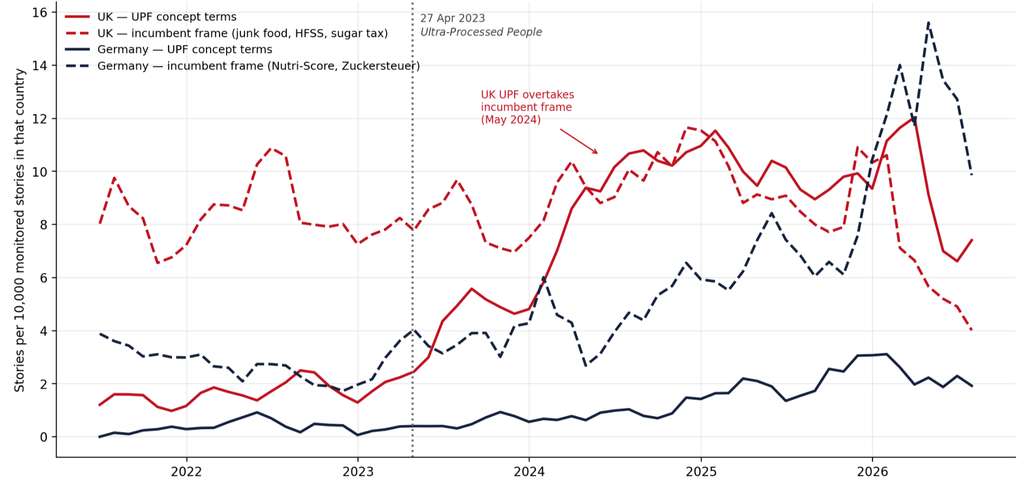
Although an emerging body of research highlights the nutritional benefits of plant-based meat, it is often classified as a UPF, leading to negative and misleading UK headlines claiming it is unhealthy – sometimes linking this to the category’s downturn. So far, this has not been a significant trend in Germany.
Recent qualitative research, based on focus groups with UK consumers who want to reduce their meat consumption, found that many participants saw plant-based meat as processed, but this didn’t always mean they rejected it.
For people who already had concerns about issues such as taste and texture, processing entrenched their existing dislike, giving them another reason to avoid plant-based meat. For those with more positive experiences, processing was perceived as a drawback, but not sufficiently so to outweigh plant-based meat’s benefits as a familiar, convenient and accessible way to eat less meat.
Many participants also viewed plant-based meat as occupying a middle ground – healthier than processed meat but less healthy than beans, chickpeas and vegetables. This suggests that the UPF debate increases doubt, but it is not the only factor in people’s decisions.
Germany’s narrower perception gap
GFI Europe’s behavioural insights work with HarrisX and Plant Futures found that 26% of German meat reducers cited changing taste preferences as a motivating factor, compared with 19% in the UK. This suggests that a broader food culture shift may be underway in Germany as plant-based eating becomes mainstream.
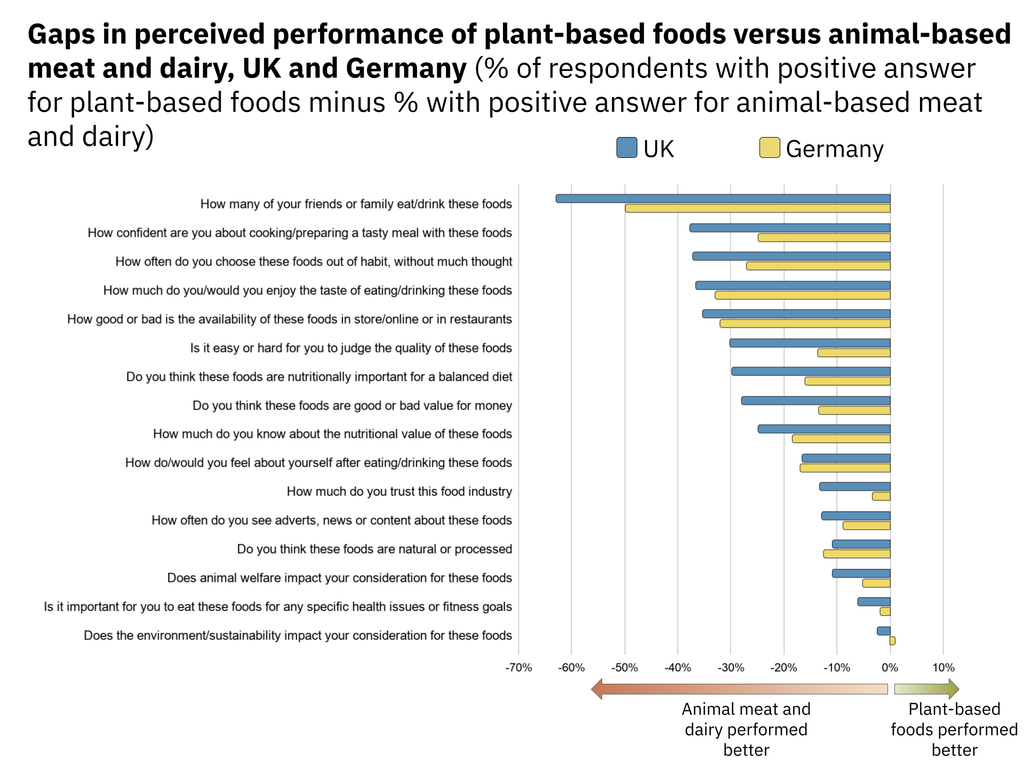
To understand Germany’s stronger performance, we have to look at how well plant-based options meet expectations. People in both countries rated animal-based meat and dairy higher than plant-based foods on factors such as cooking confidence and familiarity, but in most cases Germany’s gap was narrower.
This may suggest that Germans perceive plant-based foods as closer to animal-based foods in terms of performance, and that they have become more socially normalised, but it’s unclear whether this is because German products better meet expectations or because expectations and perceptions differ between the two countries.
What can the UK learn from Germany?
There isn’t a single reason explaining why the German plant-based market continues to grow while the UK’s stagnates – instead, an overlapping series of factors, each reinforcing the others, is likely to be playing out at the checkout.
German retailers have made affordable plant-based products widely available in a market where discounters are already strong, and German consumers see a smaller gap between plant-based and animal-based foods.
In the UK, a wider price gap – at least for plant-based milk – a more prominent UPF debate, and a wider gulf in consumer expectations make it harder to win regular consumers, and sluggish sales make investment a less attractive option for retailers.
But these challenges are not impossible to overcome, and different groups across the UK supply chain have opportunities to reverse this trend:
- Retailers can expand their affordable own-brand ranges and introduce price commitments. This may be a harder ask in the UK, but Lidl GB has shown that own-brand ranges can grow quickly.
- Brands and manufacturers need to invest in improving taste and developing convenient, easy-to-prepare formats that fit in with people’s food cultures. They should also communicate how plant-based foods can meet people’s dietary needs – particularly making their health benefits much clearer to consumers most likely to benefit from swapping processed meat for plant-based options.
- Researchers should focus on developing innovations that will make cheaper and more affordable plant-based meat more widely available.
- The plant-based meat categories were defined differently between the two countries due to differing data availability. In the UK, only products that are explicitly positioned as replicating the taste and texture of meat were included. In Germany, the category covers products that use formats similar to those of conventional meat products, such as burgers. However, it may also contain some products such as bean burgers that are not intended to directly replicate the taste and texture of meat. ↩︎
- Note that UK discounter sales were not counted in the Circana retail sales trends above, due to data limitations. ↩︎
Author

Helen Breewood
Helen develops research and resources that support companies in navigating the sustainable protein landscape in Europe and accelerate the growth of the industry.