
Plant-based meat and its role in the UK’s food system
The UK has one of the most well-established ecosystems for plant-based meat in Europe, with a diverse research field and innovative and longstanding plant-based meat producers. Learn more about how wider uptake of plant-based meat could contribute to improving public health and a more resilient food system.
This page was last updated on 26 August 2026.
What is plant-based meat?
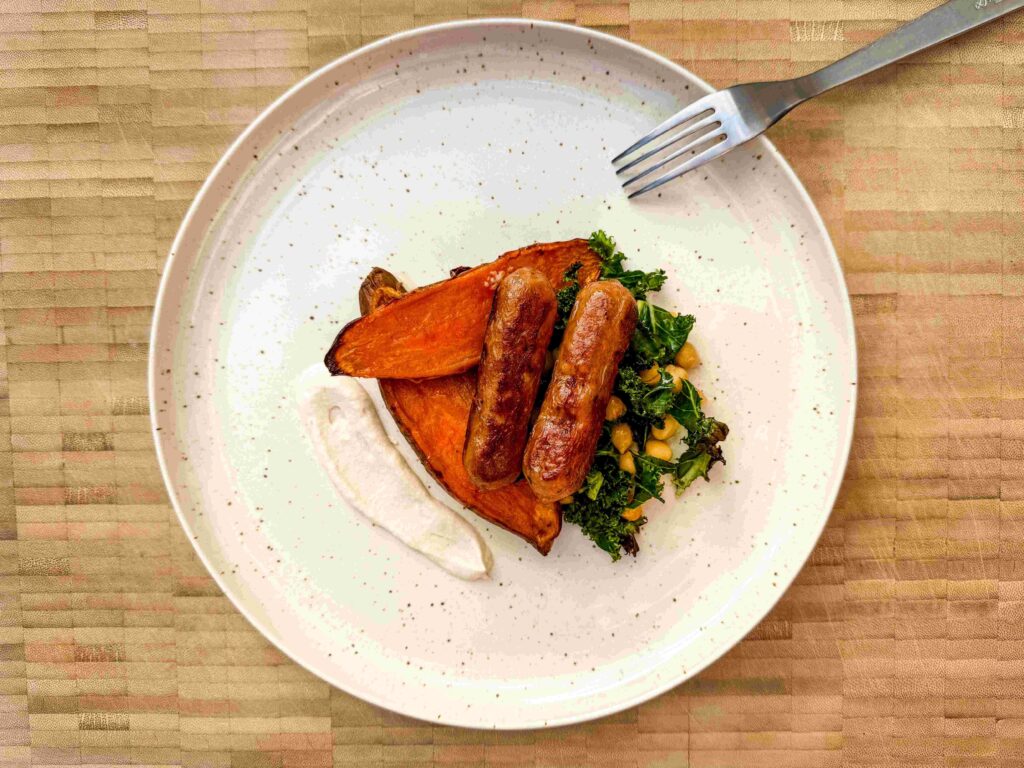
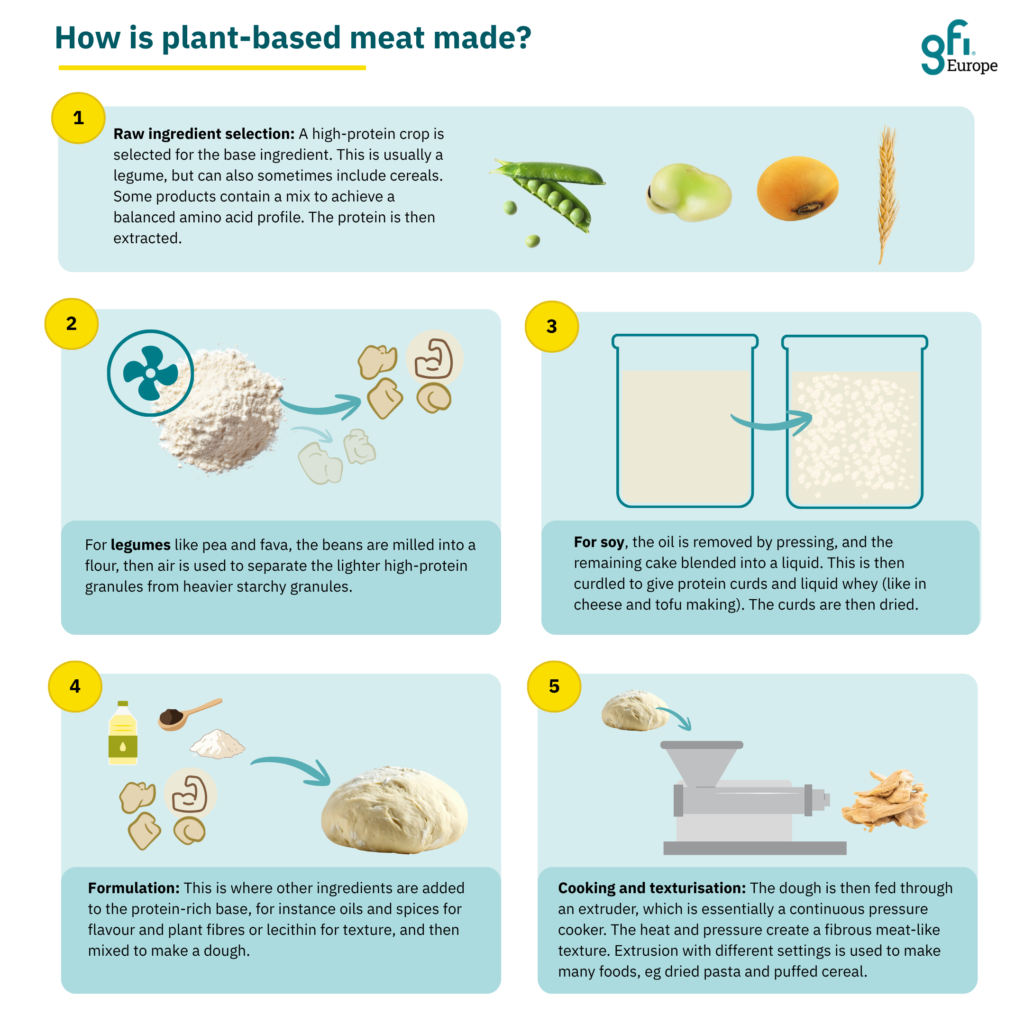
Plant-based meat aims to replicate the taste and texture of animal meat using protein-rich ingredients from plants, such as soy, pea, wheat, and fava beans. It is a convenient option that can be used as an ingredient in curries and pasta sauces, and to replace processed meat products, such as sausages and chicken nuggets.
Though technically made from fungi rather than plants, mycoprotein is also a common ingredient in plant-based meat in the UK (under the brand name Quorn).
How does plant-based meat contribute to a healthier and more resilient UK food system?
What is the nutritional profile of plant-based meat?
Although plant-based meat looks, cooks and tastes like animal meat, its nutritional profile differs in a few notable ways. The chart below compares the median values for key nutrients across hundreds of animal- and plant-based meat options available in the UK. While there is variation among products, plant-based meat is typically high in protein and low in sugar and, unlike animal meat, is also a source of fibre and much lower in saturated fat. This means eating plant-based meat could help people achieve a more balanced diet, without significant changes to how they cook.
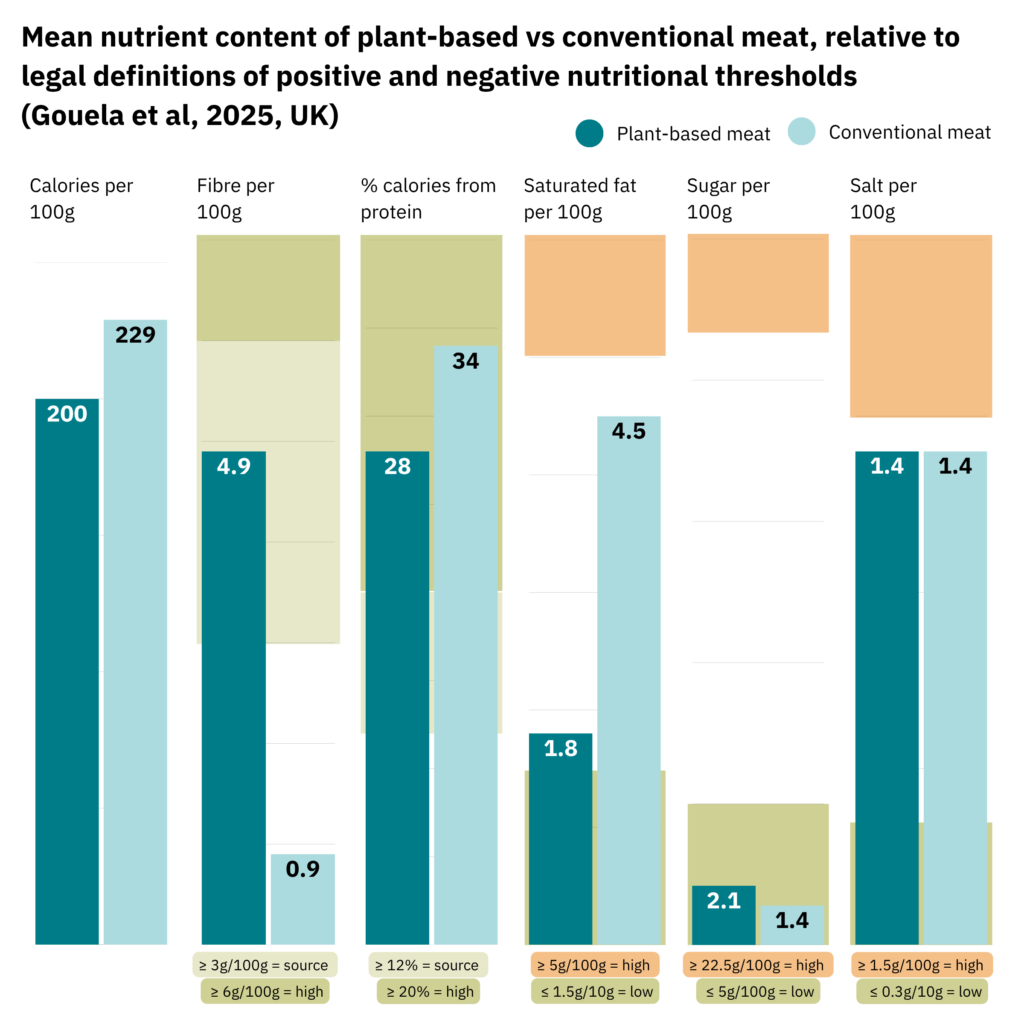
Most adults consume more calories per day than the average recommended intake, and animal meat is the second-largest contributor to calorie intake of any food group for adults. Plant-based meat is slightly lower in calorie density than animal meat.
Only 4% of UK adults currently eat the recommended 30g/day of dietary fibre. Plant-based meat is a source of fibre; animal meat is not.
Most UK adults meet or exceed recommended protein intake levels, although needs vary (such as for athletic and older populations). Both plant-based and animal meat are typically high in protein.
81% of UK adults (19-64) exceed recommended saturated fat intake levels, and animal meat contributes a quarter of average saturated fat intake. Plant-based meat has consistently lower levels of saturated fat compared with red and processed meat.
Animal meat does not contribute significantly to sugar intake. Plant-based meat is also low in sugar.
Average daily salt intake among UK adults is 8.4g per day – 2.4g above the recommended level. Meat products are the second-highest contributor to salt intake in the UK. Plant-based meat is higher in salt than unseasoned, unprocessed animal meat, but is similar to or lower than processed animal meat.
| Nutritional composition (per 100g) | |||||||
| Energy (kcal) | Protein (g) | Fibre (g) | Saturated fat (g) | Salt (g) | Sugar (g) | % cals from protein | |
| Animal-based meat (n 460) | 229 | 19.30 | 0.87 | 4.47 | 1.36 | 1.4 | 34% |
| Plant-based meat (n 361) | 202 | 14.3 | 4.82 | 1.89 | 1.4 | 2.2 | 28% |
| Mycoprotein (n 40) | 182 | 13.3 | 5.83 | 1.43 | 1.3 | 1.4 | 29% |
| Weighted mean animal-based | 229.0 | 19.3 | 0.9 | 4.5 | 1.4 | 1.4 | 34% |
| Weighted mean plant-based | 200.0 | 14.2 | 4.9 | 1.8 | 1.4 | 2.1 | 28% |
What about micronutrients?
As the UK undergoes the necessary transition to eating a more diverse range of protein sources, it will be important for plant-based foods to provide micronutrients commonly found in animal meat.
Research has shown that plant-based meat is a source of many micronutrients. Some of these, such as niacin (B3), zinc and iron, are present in animal meat, while others, including folate (B9) and calcium, are not. There is also variation in micronutrients depending on the protein base ingredient. For example, mycoprotein, which is made from fungi and is the most common ingredient used to make plant-based meat in the UK, is a good source of thiamin (B1) and zinc.
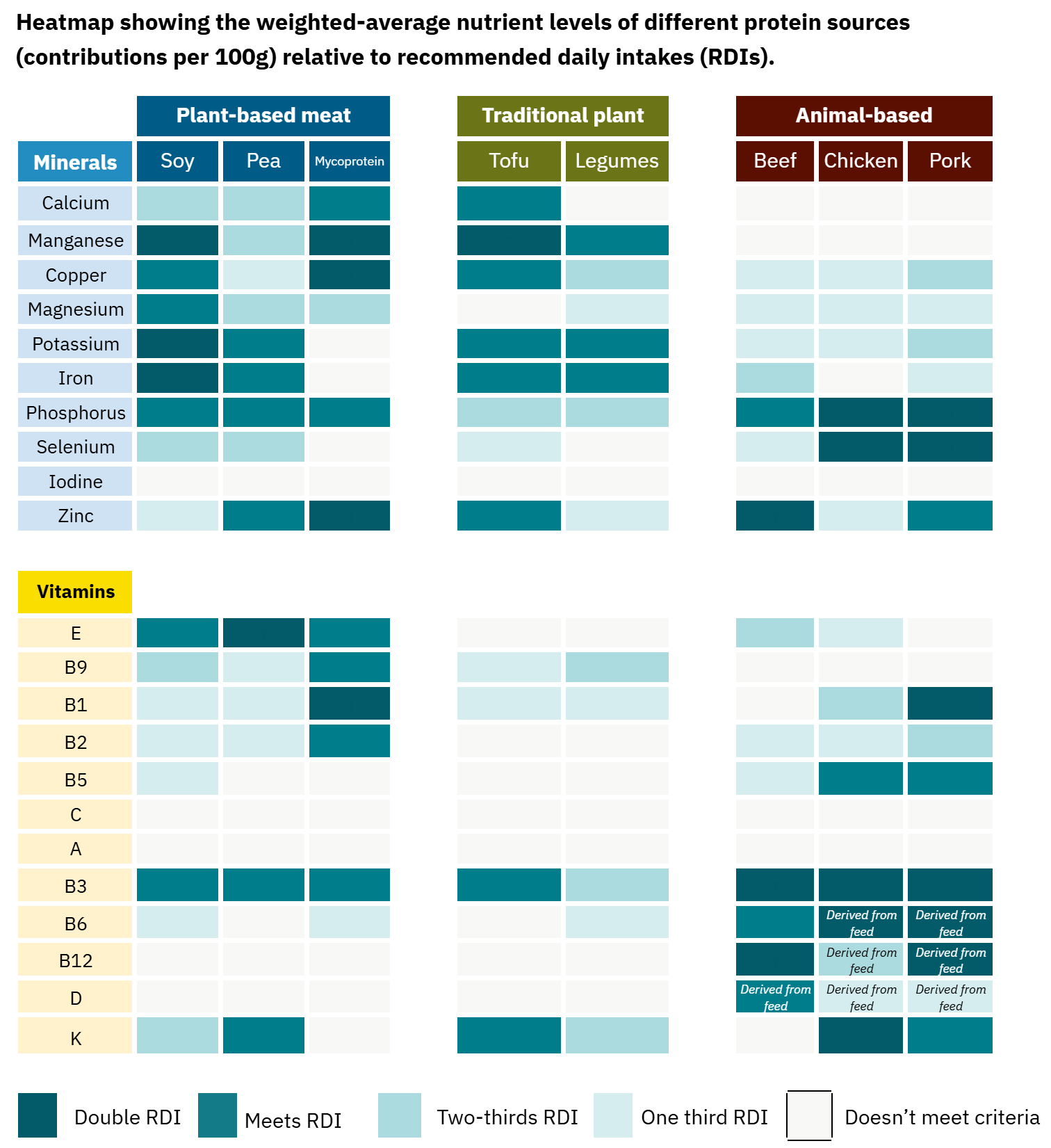
Just as animal feed contains added micronutrients, plant-based meat can also be fortified with vitamins and minerals to enhance its nutritional profile. This is an example of how food processing can positively impact public health, whereas unprocessed plant proteins cannot be fortified.
Currently, however, only a small minority of plant-based meat products in the UK are fortified. To establish this, we analysed the 70 best-selling products (by volume) in UK supermarkets in 2025 (excluding Aldi and Lidl), representing 78% of the retail sales volume of plant-based meat. Overall, 8.8% of our sample was fortified with B12, and 4.2% with iron and B12.
Fortification rates could be improved, with the Netherlands showing a way forward. The Netherlands Nutrition Centre (Voedingscentrum) provides guidance to the public and producers on what constitutes a healthy plant-based meat product, including recommendations on fortification with iron and B12. Research from ProVeg indicates that a significant majority of plant-based meat available in the Netherlands is fortified with iron and B12, suggesting headroom for the UK to improve fortification rates.
| Percentage of plant-based meat retail volume sales (2025) fortified with micronutrients Top 70 best-selling PB meat products (accounts for 78% of all volume sales) |
|
| B12 | 8.8% |
| B12 & Iron | 4.2% |
Is plant-based meat good for your health?
Learn what the latest research has to say about plant-based meat and health, along with key recommendations and answers to frequently asked questions.
Could replacing red and processed meat with plant-based meat improve UK public health?
The UK Government’s Scientific Advisory Committee on Nutrition recommends limiting consumption of red and processed meat to no more than 70g per day, due to established associations with heart disease, type 2 diabetes and bowel cancer. The EAT-Lancet Planetary Health Diet recommends no more than 15g of red meat per day.
Plant-based meat offers a straightforward, direct swap for red and processed meat products, and currently, the most popular formats sold in the UK are sausages, burgers, snacking meats, and mince. Researchers at the London School of Hygiene and Tropical Medicine have shown that replacing processed meat with a plant-based meat option in a typical British weekly food shop leads to positive impacts that are significant at the level of the whole diet, including an overall increased fibre intake of 4-6%, a 6-7% reduction in saturated fat intake, and a 3-4% reduction in salt.
This could lead to significant gains for public health. A recent systematic review and meta-analysis of seven randomised controlled trials found that swapping red and processed meat for plant-based meat resulted in significant reductions in LDL (bad) cholesterol levels and supported maintenance of a healthy weight. This is likely due to the fibre content, lower saturated fat and lower caloric density of plant-based meat.
Given the long-standing challenges of reducing the saturated fat content of British diets and increasing fibre consumption, plant-based meat represents a relatively neglected opportunity that doesn’t require significant dietary shifts and can be widely adhered to. However, for this to become universally true across all socioeconomic groups, prices will need to fall, and more products will need to meet expectations around taste.
To navigate the challenge that individual studies often vary in quality, size, and study population, researchers can pool results from all available studies exploring the same research question. This helps to establish confidence in the generalisability of the results and the reliability of the evidence base. If data can be pooled and re-analysed, this can also increase the statistical power of the results. To do this, researchers use a type of study called a systematic review to synthesise the available evidence in one place, and where possible, a meta-analysis to re-analyse the pooled data. On topics with a sufficient body of underlying research, these studies are therefore usually the foundation for translating evidence into practice, for example, to inform public health policy.
As of mid-2026, the two most up-to-date review studies on the nutritional profile and health impacts of plant-based meat are:
Fernández-Rodríguez et al (2025), published in the American Journal of Clinical Nutrition, this systematic review and meta-analysis pooled results from seven randomised controlled trials with a total of 369 participants. The researchers were interested in markers of cardiovascular health, and established that replacing animal meat with plant-based meat over a 1-8 week period significantly reduced LDL (bad) cholesterol, total cholesterol, and bodyweight.
Nájera Espinosa et al (2024), published in Nutrition Reviews, this systematic review grouped data from 35 publications, covering 508 plant-based meat and 66 animal meat products, to establish that plant-based meat is typically higher in fibre and lower in saturated fat and caloric density.
Could plant-based meat reduce the environmental impacts and improve the resilience of UK food production?
Throughout the UK, industrial animal agriculture is leading to widespread air pollution and degrading soils and rivers. Managing the significant waste generated by these systems in catchments such as the Wye Valley is a major challenge for farmers and local communities, while the UK’s dependence on imported animal feed has significant impacts on biodiversity. By 2040, agriculture is set to become the UK’s joint-largest source of domestic greenhouse gas emissions, alongside aviation.
Plant-based meat could help to satisfy the UK’s appetite for meat using fewer natural resources than the intensive pig and poultry systems that produce most of the meat eaten in the UK. A 2024 systematic review synthesising 135 studies concluded that the emissions, land use and freshwater use of plant-based meat are typically at least 70% lower than those of animal meat. This evidence underpins the Climate Change Committee’s (CCC) inclusion of plant-based meat as part of its pathway to ensuring the UK meets its climate targets throughout the 2030s and 2040s. Separate analysis has confirmed that the CCC’s pathway would be beneficial for public health.

Climate change interacts with – and worsens – acute food systems shocks, which the UK must seek to mitigate, plan for and adapt to. Industrial pig, poultry, beef and dairy systems are vulnerable to disruptions largely beyond our control, such as CO2 shortages, extreme heat, and disease outbreaks, which can quickly threaten the stability of the UK’s animal protein supply. Plant-based meat helps diversify food production, complementing other solutions by satisfying demand for meat while making space for agroecological farming and increasing horticultural production. Research has shown that even a modest shift towards plant-based meat consumption could enable a fivefold increase in the area of land farmed organically by 2050.
Maximising the positive impact of plant-based proteins on the resilience of domestic food production will depend on developing new ingredient and processing supply chains in the UK. This is a complex challenge, with the system currently incentivising plant-based companies to source ingredients from overseas, thereby limiting opportunities for UK farmers. Coordinated action will be needed throughout the value chain to address this, from plant breeding to processing infrastructure.
How are UK retail sales of plant-based meat changing?
The UK’s plant-based food sector has matured in recent years, and a range of plant proteins is widely available in UK supermarkets, including beans, lentils, nuts, tofu, tempeh, and plant-based meat. These foods all play a complementary role in enabling people to diversify the protein on their plates.
Plant-based meat has become an established part of UK food retail environments
GFI Europe’s annual plant-based retail sales report, based on data from Circana, shows that the sales value of plant-based meat in UK supermarkets (excluding discounters such as Aldi and Lidl) fell by 7.3% in 2025 to £295 million – driven by a 9.4% decline in sales volume. This data covers only products intended to replicate the taste and texture of meat, excluding options such as bean burgers.
Nielsen IQ Homescan household panel data shows a less severe contraction in sales value of 2.7%. This is likely attributable to NIQ using a broader category definition while also capturing discounters, as the proportion of total plant-based meat sales value from discounters increased from 11.6% in 2024 to 13.2% in 2025.
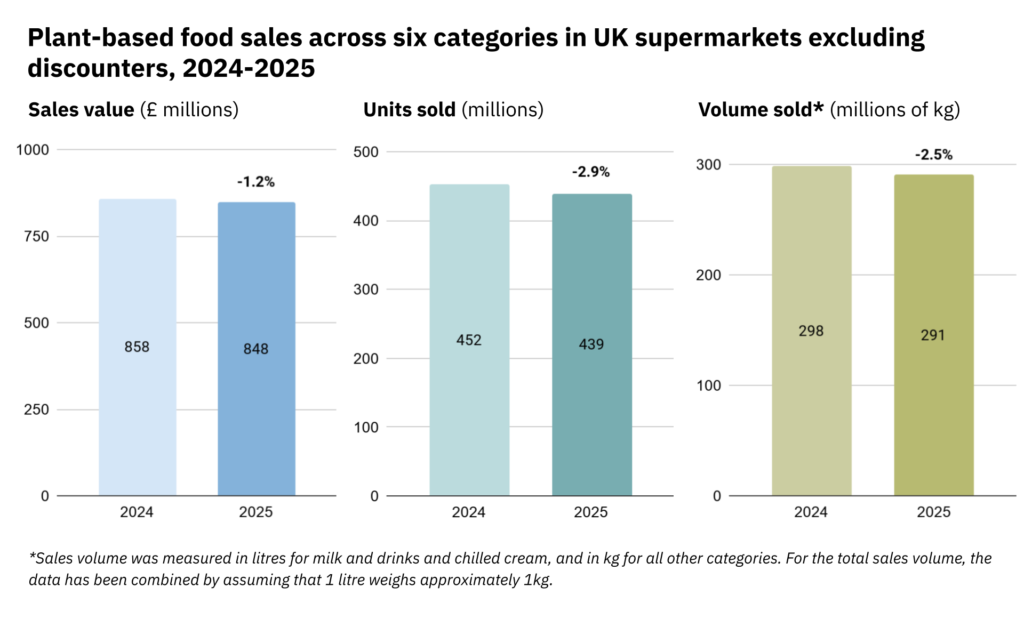
| Plant-based food sales across six categories in UK supermarkets excluding discounters, 2024–2025 | |||
| 2024 | 2025 | 2024–25 change | |
| Sales value (£ millions) | 858 | 848 | -1.20% |
| Units sold (millions) | 452 | 439 | -2.90% |
| Volume sold* (millions of kg) | 298 | 291 | -2.50% |
Despite recent dips in sales, there are clear signs that plant-based meat is appealing beyond vegetarians and vegans, who make up just 7% of the UK population. In 2025, 31.2% of households (9 million homes) purchased plant-based meat at least once, and 14.4% (4.2 million homes) purchased at least six times.
Branded products continued to dominate – representing 87.8% of sales volume in the category. Sausages were the most popular product format, accounting for almost a quarter (23.7%) of sales volume in 2025, followed by breaded/battered products and burgers (both at 12.4%), suggesting that plant-based meat is primarily displacing processed meat.
The decline in sales of plant-based meat in recent years is likely attributable to a number of factors, including its perceived value (how appealing plant-based products are relative to their price) and a disconnect between public perception of the healthiness of plant-based meat and its actual nutritional value. Below, we examine what is driving purchasing behaviour and interest in plant-based foods.
The slowdown in plant-based meat sales in the UK isn’t replicated throughout Europe. For example, between 2023 and 2025, sales volume of plant-based meat in France and Italy grew by 32.1% and 21.1%, respectively. Per capita sales of plant-based meat were 42% higher in Germany than in the UK in 2025.
UK retail sales of plant-based foods
Our latest report analyses Circana retail sales data for six categories of plant-based foods in the UK from 2024 to 2025.
Are consumers turning to more traditional plant-based options?
Tofu, tempeh and veg-led products
Plant proteins more commonly eaten in Asian food cultures, including tofu and tempeh, have attracted increasing attention in recent years. In 2025, sales volumes of tofu grew by 15% in UK supermarkets (excluding discounters), while tempeh and seitan grew by 44%, and several plant-based meat producers diversified their product ranges to include more traditional plant protein options. This is an encouraging sign of continued interest in plant-based foods.
Sales volume of plant-based meat versus other meat alternatives in UK supermarkets excluding discounters, 2024-2025 (millions of kg)
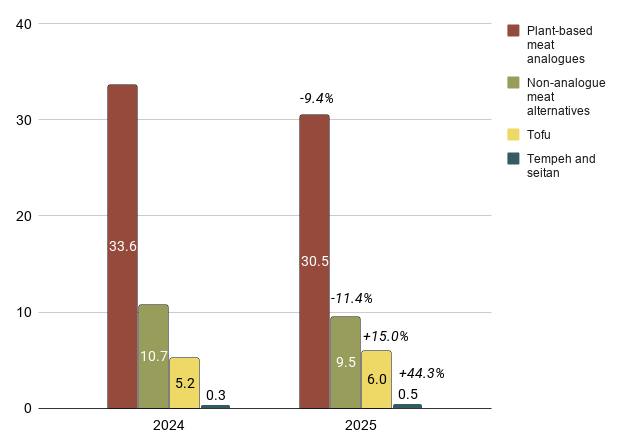
| Sales volume (in millions of kg) | |||
| 2024 | 2025 | 2024–25 change | |
| Plant-based meat analogues | 33.62 | 30.45 | -9.40% |
| Vegetable or bean burgers | 2.47 | 2.23 | -9.90% |
| Falafel | 1.67 | 1.34 | -19.40% |
| Vegetable sausage or sausage roll | 1.05 | 1.06 | 1.40% |
| Other (including new non-analogues) | 5.53 | 4.87 | -11.80% |
| Tofu | 5.21 | 6 | 15.00% |
| Tempeh and seitan | 0.34 | 0.49 | 44.30% |
Plant-based meat does appear to have a broader appeal, however. It remains a much larger category, with sales volumes 4.7 times higher than tofu, tempeh and seitan combined. Meanwhile, more traditional vegetable-based alternatives, like bean burgers, saw sales volumes fall by 11.4% in 2025. Our research with Plant Futures and HarrisX indicates that across all dietary preferences (flexitarian, vegan, etc), UK adults reported eating plant-based meat more routinely than tofu or tempeh.
At least for now, more traditional plant-based alternatives haven’t managed to penetrate the mass market to the extent that plant-based meat has, emphasising the need for producers, retailers and food service providers to continue offering a diverse range of plant proteins to appeal to a broad consumer base.
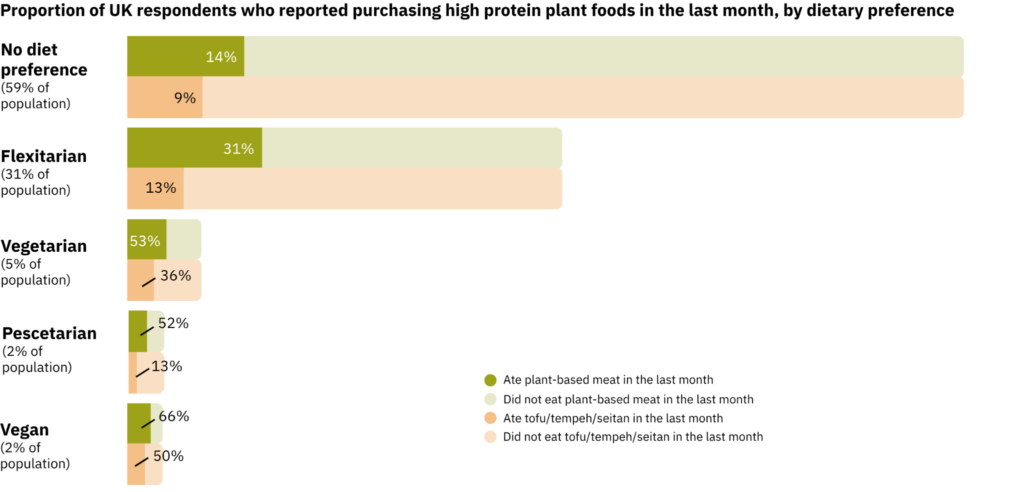
| Consumption of tofu, tempeh, seitan and plant-based meat by diet type in the UK | |||||
| Other meat eater | Flexitarian | Pescatarian | Vegetarian | Vegan | |
| Plant-based meat | 14.1% | 30.5% | 52.0% | 52.8% | 66.0% |
| Tofu, tempeh and seitan | 8.7% | 12.6% | 23.2% | 36.2% | 49.6% |
| % of people following this diet | 59.4% | 31.2% | 2.2% | 5.4% | 1.8% |
Beans and pulses
Due to data availability challenges, our research has not yet covered retail sales of beans and pulses in the UK. Recent analysis from the Food Foundation (based on National Diet and Nutrition Survey data) indicates that the average UK adult eats 81g of beans per week – equivalent to roughly ⅓ of a tin of chickpeas (drained weight) and a little less than the average amount of meat eaten in a single day. Pulse consumption varies across demographic characteristics (for example, Asian and Asian British populations consume an average of 143g of pulses per week, while other groups eat significantly less).
The Planetary Health Diet recommends 525g of legumes per week – more than a six-fold increase on current consumption. Plant-based meat could make achieving this recommendation more feasible, as it slots easily into familiar dishes – playing a complementary role alongside beans, pulses, tofu and tempeh. Several UK food retailers are applying this logic to their product development and marketing. Lidl GB, the only UK supermarket to have a target for plant-based proteins as a proportion of total protein sales, redeveloped its Vemondo Plant range to include both plant-based meat and veg-led products; the range has experienced significant growth in recent years. The UK’s largest supermarket, Tesco, stated in 2026 that it sees “a dedicated customer base” for plant-based meat, with these products working to “complement natural plant-based protein demand”.
How affordable is plant-based meat in the UK?
Price is a fundamental determinant of any food choice, and there is no viable or socially just path to population-wide uptake of plant-based meat unless products become more affordable (without sacrificing taste or nutritional quality). Our research shows that only 30% of the public thinks plant-based foods offer good value for money, compared with 58% for animal-based products.
Between January and June 2026, GFI Europe tracked online price data for 131 plant- and animal-based products from Tesco (online), capturing prices on a monthly basis. We found that plant-based meat was, on average, 34% more expensive per kg than animal meat, with this premium falling to 28% when loyalty scheme discount offers were factored in. The average price of plant-based meat products in our sample was £12.49/kg at full price, and £11.29/kg at discount price.
Average prices of animal-based and plant-based meat products in the UK (£ per kg), Jan-Jun 2026
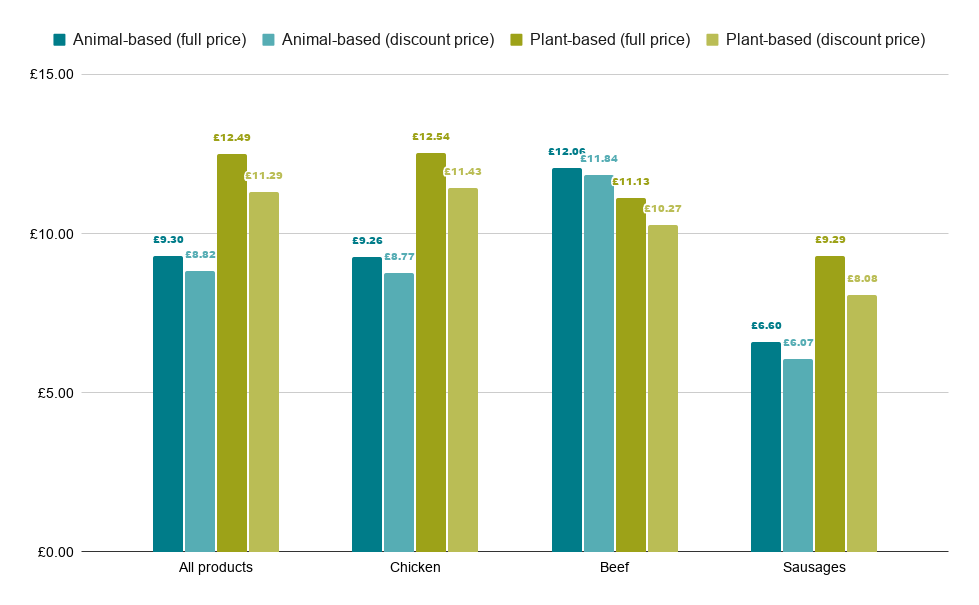
| Average prices of animal-based and plant-based meat products in the UK (£ per kg), January–June 2026 | ||||
| Animal-based (full price) | Animal-based (discount price) | Plant-based (full price) | Plant-based (discount price) | |
| All products | £9.30 | £8.82 | £12.49 | £11.29 |
| Chicken | £9.26 | £8.77 | £12.54 | £11.43 |
| Beef | £12.06 | £11.84 | £11.13 | £10.27 |
| Sausages | £6.60 | £6.07 | £9.29 | £8.08 |
Significant price differences exist when comparing across animal species and product formats. Sausages, the largest segment of plant-based meat sales in the UK, were 40.7% more expensive than pork sausages (33.3% at discount). Plant-based chicken options cost 35.4% more than conventional chicken (30.3% at discount). By contrast, plant-based beef products were 8.4% cheaper than conventional beef (15.3% at discount). Given the strong evidence that replacing some red meat with plant-based meat can reduce individual risk of several common diet-related diseases and climate emissions, this presents a ‘triple win’ for more affordable, sustainable and healthy eating. Overall, significant progress still needs to be made for plant-based meat to be widely considered an affordable option across the population.
A basket of products from Tesco.com was created based on:
- The Food Foundation’s Rethinking Plant-based Meat Alternatives (2024) report, which analysed a sample of plant-based and animal-based products. This included budget and premium options.
- Circana data on the highest volume SKUs of plant-based meat products in UK supermarkets (excluding discounters). Equivalent animal meat products were added to the basket where a relevant comparator was not included in the original Food Foundation analysis. This included budget and premium options.
Price and product weights were gathered from Tesco.com monthly between January and June 2026.
Discount price refers to Clubcard price promotions. Multi-buy discounts were only applied when they were restricted to the same product category (eg, multi-buys across all deli slices were included).
Where products were out of stock for two months consistently, they were assumed to be delisted and replaced with a similar product. This was matched as closely as possible on product format, price and weight to the product being replaced.
Sample sizes:
- All products (59 animal, 72 plant-based)
- Chicken (13 animal, 18 plant-based)
- Beef (12 animal, 20 plant-based)
- Sausages (12 animal, 13 plant-based)
What factors drive consumer interest in plant-based meat?
One of the foundational drivers of interest in plant-based meat is that its taste and texture is similar to animal meat. Given that roughly 90% of the UK population eats animal meat, direct replacements that can be used in the same meals, with similar preparation methods, are important for supporting population-wide shifts towards plant-rich diets.
Working with Plant Futures and HarrisX, we identified that half of the UK population was seeking to eat less meat in 2025, with saving money and eating more healthily the two strongest motivators for doing so. At the same time, awareness of the health benefits of plant-based foods remained low – only 35% of adults say they know at least something about the nutritional value of plant-based foods. And while 38% of UK adults intended to eat more plant-based foods, several factors prevented actual behaviour change:
- Value for money (taste and price): Only 30% of adults see plant-based options as good value for money, compared with 58% for animal products. Almost twice as many people (81%) enjoy the taste of meat and dairy compared with plant-based options (44%).
- Convenience and familiarity: Familiarity with plant-based foods was relatively low compared with animal products. For example, only 45% of adults felt confident preparing and cooking plant-based foods, compared with 83% for animal meat and dairy. Animal meat and dairy were eaten more routinely and socially normalised, with 64% of respondents agreeing they chose animal-based foods out of habit, compared with 27% for plant-based foods.
These barriers, which prevent people from acting on their intentions to eat more plant-based foods, are not a matter of individual willpower or education, but show the need for widespread transformation in our food environments, for example, through retailers placing plant-based foods on a level playing field with animal meat and dairy, both in terms of shelf placement and pricing strategies.
How is the UK supporting the development of affordable, nutritious and appealing plant-based meat?
UK researchers and universities
The new generation of plant-based meat products that emerged in the late 2010s was driven by private-sector innovation. At that stage, publicly funded research into plant-based proteins was largely non-existent in the UK (and across Europe), while business-led R&I was locked behind closed doors.
Encouringly, this picture has shifted throughout the 2020s, and our analysis shows that £36.8 million was invested in plant-based protein research and innovation by UK public funders (primarily UKRI) between 2020 and 2025. This includes both university-led research and training and collaborative public-private sector innovation partnerships.
Research into crop development and ingredient optimisation has been a core focus of this funding. Several UK projects have explored legume genetics and developing new protein ingredients from agricultural byproducts, which may improve ingredient performance and create new opportunities for arable farmers. This trend extends to academic research publications, where 25% of all European-authored articles on ingredient optimisation were from UK institutions. By contrast, research into texturisation methods for plant-based meat has been relatively sparse. Research into biomass fermentation (mycoprotein) has also been a feature of the UK’s scientific community, with Marlow Foods (Quorn) the third-most prolific UK institution publishing alternative protein science in academic journals between 2020 and 2025.
The establishment of the National Alternative Protein Innovation Centre (NAPIC) with a £16 million UKRI investment, and the Bezos Centre for Sustainable Protein (BCSP) with a £24 million philanthropic investment, are important developments. These centres represent a shift from ad hoc grant funding to more foundational investments in the UK’s plant-based research community – and the wider alternative protein field. NAPIC and the BCSP provide academic training, research funding, and opportunities for collaboration with businesses. This includes integrating other alternative protein technologies into plant-based research, such as a 2026 study led by BCSP researchers that evaluated the sensory properties of mixing cultivated beef with pea protein.
State of the UK alternative protein research ecosystem
Our latest report explores the current research and innovation landscape for alternative proteins in the UK. For more information about the UK’s key research priorities for plant-based meat, click here.
Could plant-based meat benefit the UK economy?
While the UK’s existing plant-based meat market remains relatively small, it presents a range of long-term economic opportunities. Many of these stem from new crop supply chains, processing and manufacturing capacity. Shifting away from imported ingredients like soy isolates and procuring from British sources would generate new markets for arable agriculture, although investments in plant breeding and processing infrastructure will be critical to providing the certainty farmers need. As an indication of what might be possible, modelling by Systemiq indicates that moderate policy support for plant-based foods could see EU legume production more than double to 9.3 million metric tonnes by 2040.
Meanwhile, the food industry is recognised as having a £14 billion productivity gap, and scaling science-driven startups will be key to addressing this. Plant-based meat companies are deploying cutting-edge technologies to improve the taste, affordability and nutrition of their products. For example, University of Leeds spinout Microlub is utilising advances in food colloids to improve the mouthfeel of plant-based proteins. Adamo Foods, which is developing whole-cut mycoprotein products that match the nutritional profile of beef, recently secured an £8.7 million EU grant to scale its production process.
How can UK policymakers maximise the benefits of plant-based meat?
Proactive policymaking could be transformative for widening uptake of plant-based meat in the UK and delivering on the UK Government’s ambitions for its Good Food Cycle.
Invest in open-access research and innovation
Building on the UK’s leadership in alternative protein science and research, we recommend that public funders invest £150 million over five years (2026-2030) in research, innovation and infrastructure for plant-based meat, cultivated meat, and fermentation. Funding for R&I should be delivered primarily through UKRI with input from Defra and the Department for Business, Innovation, Science and Trade.
A core component of this funding should be a £30 million Plant-Based Innovation Fund, targeting three areas:
- Generating new opportunities for UK farmers. Not enough has been done to stimulate R&I collaboration between plant-based businesses and British farmers to develop domestic supply chains for plant-based meat ingredients and products. Germany’s Farm Opportunity Programme and Denmark’s Plant Grant could serve as models for developing funding calls in this area.
- Improving health & nutrition. Maximising the nutritional density of plant-based foods should be an ongoing priority, for example, by improving protein fractionation methods and continuing to reduce salt content.
- Developing more appealing products. Focus areas should include scaling new texturisation methods for plant-based meat. To generate opportunities for farmers, approaches should focus on using crops such as fava and pea, which can be grown successfully in some parts of the UK.
Introduce a protein split target for the food industry
Public reporting on indicators of environmental sustainability and public health risks is critical for driving change throughout the food system. While the UK Government’s 10 Year Health Plan intends to implement healthy sales targets for large food companies, it does not currently require reporting on sales of protein-rich foods, broken down by animal- and plant-based sources. The Food Data Transparency Partnership initially considered mandatory reporting on sales of protein sales, but deprioritised it in 2024. This is despite long-standing calls from civil society and the fact that retailers already report ‘protein split’ data privately to WWF.
The government should introduce mandatory protein split reporting for large food retailers and food service businesses (over 250 employees) as soon as possible, requiring disclosure of the proportion of protein-rich foods sold from animal-based, seafood-based and plant-based sources. As part of the 10 Year Health Plan, a target should then be set for 2035 (at the latest) for the share of protein-rich sales from plant-based sources. This would provide the food industry with a roadmap of how sales need to change, mirroring the logic of the UK’s zero-emissions vehicle mandate, which has contributed to year-on-year increases in the proportion of ICE vs. EV sales.
Establish nutritional guidelines for plant-based meat
The UK’s policy environment currently does little to maximise the positive contribution that plant-based meat can make to public health.
As a first step to addressing this, government departments, including the Food Standards Agency and the Office for Health Improvement and Disparities, should work with the Scientific Advisory Committee on Nutrition (SACN), researchers and health professionals to establish nutritional guidelines for plant-based meat. Evidence clearly indicates that, when compared with red and processed meat, plant-based meat has many nutritional advantages, including lower saturated fat and higher fibre content. However, there is wide variation among products available in the UK and currently no government-backed guidance to help inform producers on considerations such as fortification. By contrast, a SACN review on plant-based milks was published in 2025.
Update the Eatwell Guide and approaches to public sector procurement
The UK’s food-based dietary guidelines should be updated to include plant-based meat. Currently, the Eatwell Guide contains only a passing reference to ‘vegetarian meat alternatives’ under the protein-rich food category. A survey of 172 registered dieticians in 2022 found that 91.5% agreed that plant-based meat should be visually represented in the Eatwell Guide. The UK should learn from the approach taken in the Netherlands, where plant-based meat is recommended in national dietary guidelines, provided it meets certain nutritional criteria.
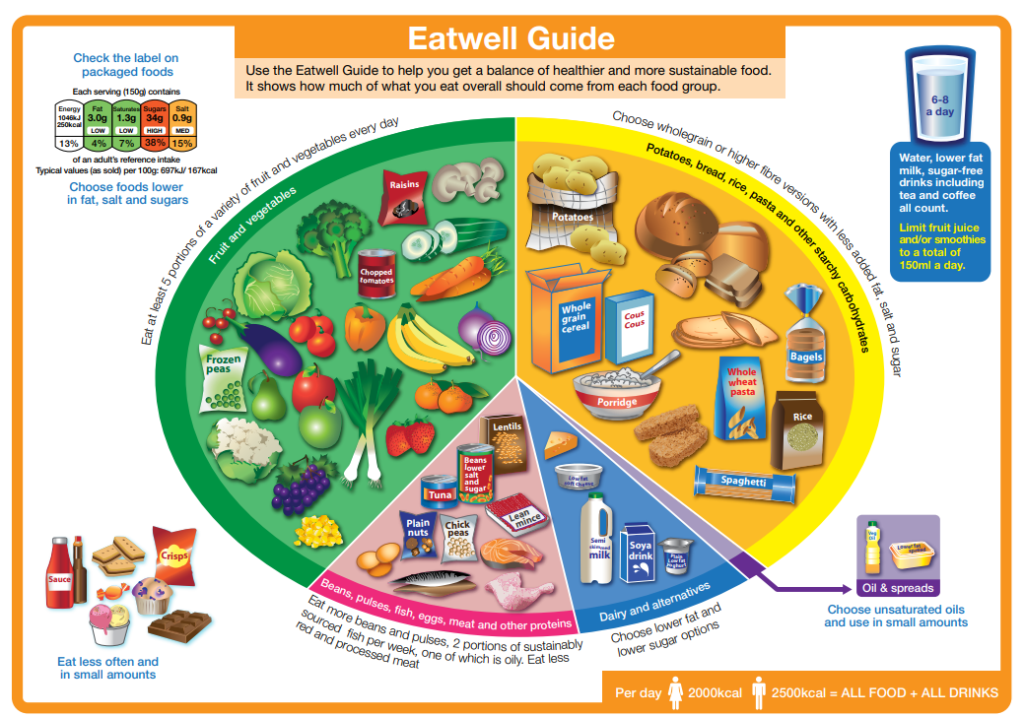
While research has shown that individuals do not widely adhere to the Eatwell Guide, national dietary recommendations play an important role in public procurement and corporate social responsibility targets. Its inclusion in the Guide could therefore mean plant-based meat reaches more people and begins to deliver on its potential to improve public health and reduce the environmental impacts of the food system.
Public procurement does not currently incentivise caterers to offer plant-based meat as a regular meal in schools, hospitals and other public sector settings. This is despite the potential for cost savings, particularly for red-meat ingredients such as mince and meatballs. Currently, the Government Buying Standards describe plant-based meat as food for vegetarians and vegans and offer no description of its nutritional value (whereas they do for animal meat). There are also different salt targets for plant-based meat, with pork bacon permitted to have nearly 50% more salt than plant-based bacon in public sector catering. Recent proposals for school food standards in England and Wales have suggested restrictions on plant-based alternatives to processed animal meat options, regardless of nutritional composition, with no scientific justification. By establishing government-backed nutritional guidelines for plant-based meat, public procurement standards could be aligned to scientific evidence, rather than the current piecemeal approach.
Identify and address gaps in plant protein infrastructure
To improve the resilience of plant protein supply chains, the government should convene farmers, crop processors, food manufacturers, plant-based brands, retailers, researchers and investors to identify and derisk the most pressing gaps in plant protein infrastructure. This includes fractionation facilities, which are needed to derive high-value ingredients, such as protein isolates, from crops like peas and fava beans. Currently, the UK lacks this infrastructure almost entirely, meaning that plant-based businesses need to source from overseas. In turn, this reduces the incentive and undermines the certainty needed for British farmers to grow protein crops. Recent investments in oat processing capacity demonstrate how this can drive and encourage plant-based manufacturers to make changes in ingredient sourcing.

Our expert
Linus works with policymakers, businesses and researchers in the UK to advance plant-based foods, cultivated meat and fermentation.