
The Nordic alternative protein research ecosystem
The Nordic region stands out as a powerhouse of innovation, consistently ranking among the most research-intensive and technologically advanced areas in the world. Learn more about the alternative protein research landscape in the Nordics.
This page was last updated on 26 June 2026.
Sweden, Denmark and Finland, in particular, are European leaders in R&I investment, scientific output, and innovation-driven economic growth. That excellence in scientific and technological advancement is clearly seen in alternative protein R&I, as highlighted in GFI Europe’s recent reports on the funding, publication and patent landscape for alternative proteins.
However, while the current Nordic research ecosystem for alternative proteins shows much promise, it is still a very young field, often consisting of scattered research teams and short-term collaborations. To consolidate its leadership, government investment is needed to build diverse networks that foster innovation and facilitate knowledge sharing.
This page provides a summary of the funding, research and patent landscapes for alternative protein research in the Nordic region.
The Nordic funding landscape

“For alternative proteins to reach price and taste parity with traditional proteins, increased investment in early-stage R&D and ‘hard science’ is crucial. The Nordic research community has significant untapped potential – many promising avenues are left unexplored.”
Milena Corredig, professor at the Department of Food Science, Aarhus University (Denmark), affiliated Professor at the Interdisciplinary Nanoscience Centre at Aarhus University, and visiting Professor at Lund University (Sweden)
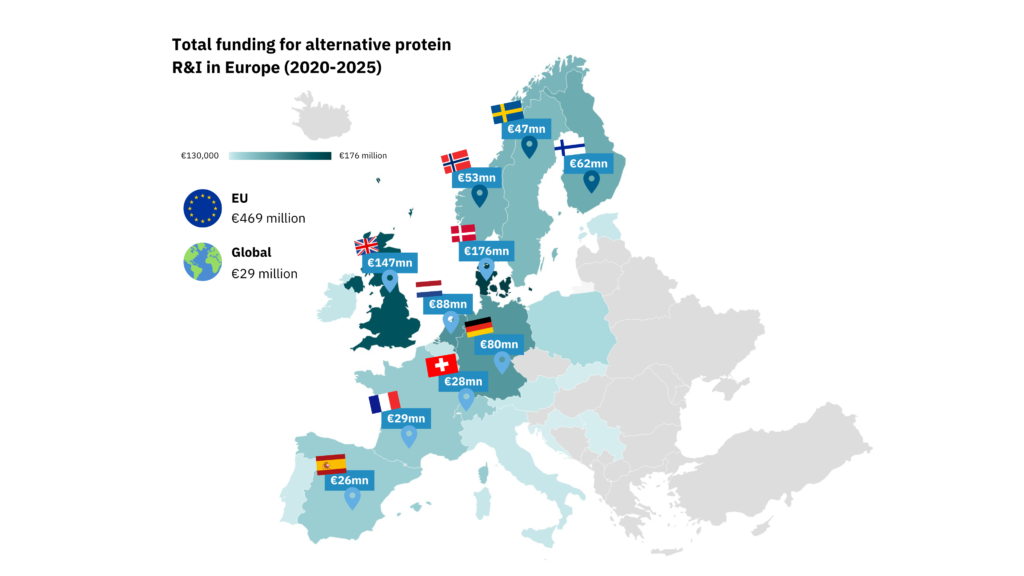
GFI Europe’s State of the European alternative protein research and innovation ecosystem analysis found that European institutions invested €1.3 billion in alternative protein research between 2020 and 2025. Nordic countries make up four of the top 10 European funders and over a quarter of all European investment. Denmark is the top country in Europe for overall investment with €176 million of funding for alternative protein R&I.
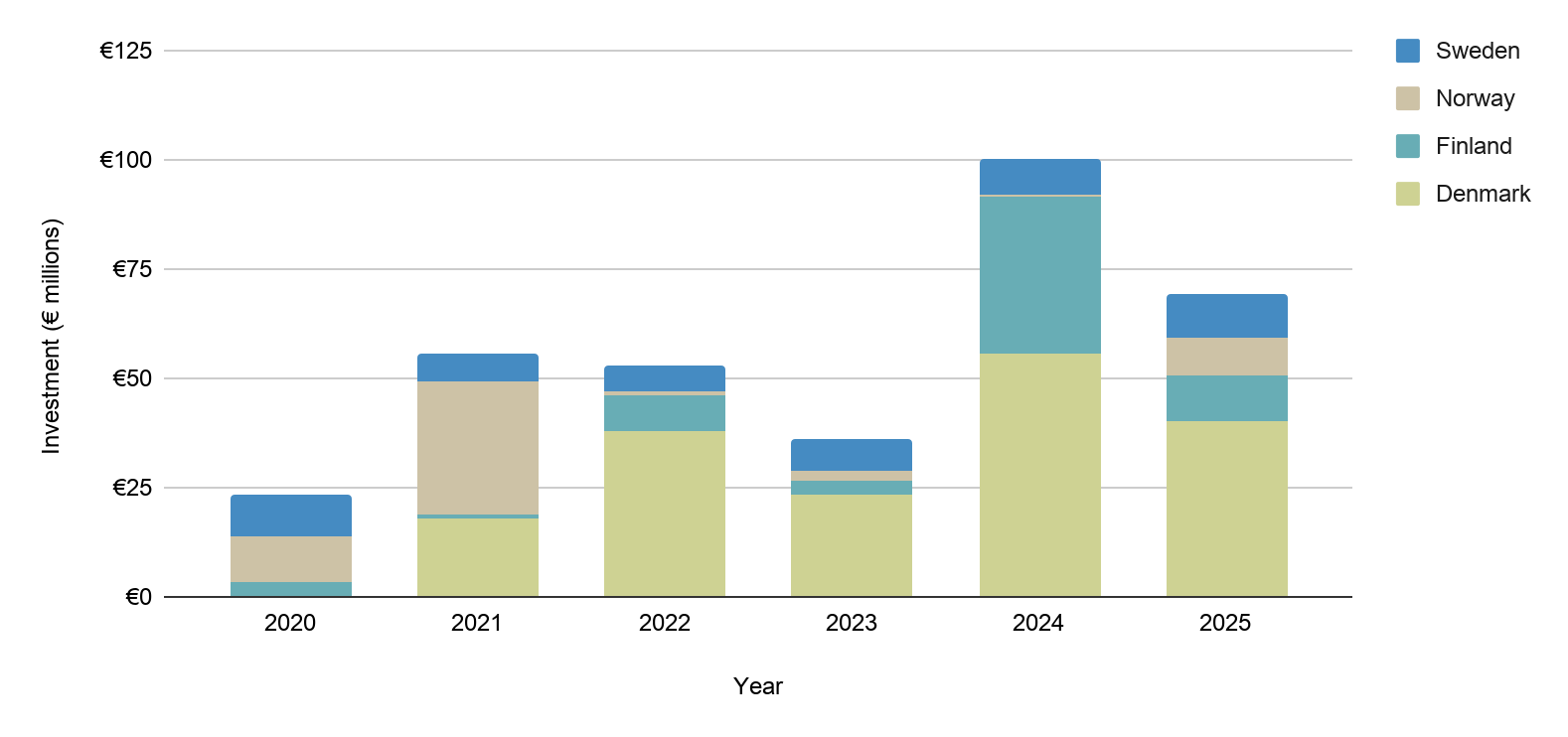
Investment in the Nordic region has been strong throughout 2020-2025 but has fluctuated year to year. Sweden has been the most consistent, with investment ranging from around €6 million to €10 million per year. Finland and Norway have both seen large swings in investment depending on the year, with Norway having made most of its major investments in 2020 and 2021 and Finland making its major investments in 2024 and 2025.
Investment in the Nordic region, broken down by jurisdiction of funder (including nonprofit funders), 2020-2025.
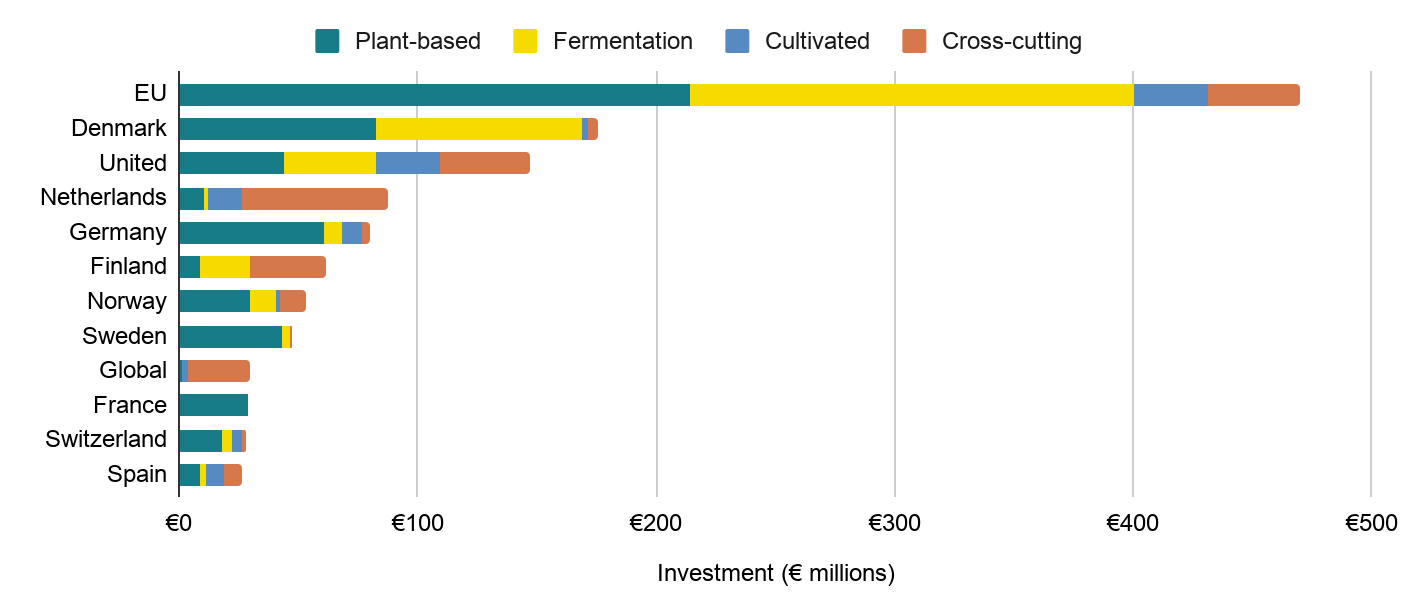
Allocation of alternative protein R&D funding to a particular pillar often depends on the priorities of individual funding bodies. At the regional and country levels, most investment has gone to plant-based and fermentation R&I.
In Denmark, the split is roughly equal, with €84 million for fermentation and €77 million for plant-based. Sweden has so far mainly invested in the plant-based field, dedicating €43 million of the total €47 million committed by Swedish funders to that area. Norway has invested €31 million in plant-based, with €10 and €11 million invested in fermentation and cross-cutting research, respectively.
Finland has seen greater specialisation in fermentation, dedicating €21 million to it. Finland invested €32 million in cross-cutting research, most of which was dedicated to cellular agriculture research (including both precision fermentation and cultivated meat). This is a wider theme in the Nordics where dedicated cultivated meat investment has been limited (€2.9 million in Denmark, €563.000 in Norway and €183.000 in Sweden), but much of the cross-cutting investment has focused on cellular agriculture, thereby providing support for the cultivated meat research community.
European public and nonprofit investment in the various alternative protein pillars by country (2020-2025)
Country deep dive
Click on the drop-downs below to find out more.
Denmark
Denmark’s leadership in alternative proteins is driven by strong nonprofit support, particularly from the Novo Nordisk Foundation – the largest Nordic funder of alternative protein research and the third-largest in Europe, with over €146 million (1 billion kroner) invested. Other contributors include the Carlsberg Foundation, which has invested €2.8 million (21 million kroner) in alternative protein research, and the Aarhus University Research Foundation (AUFF), which has invested €2 million (15 million kroner). The Danish Government has increased investment in the space, totalling €24 million (179 million kroner) in public funding from 2020 to 2025.
Investment in Denmark, by research funder, 2020-2025
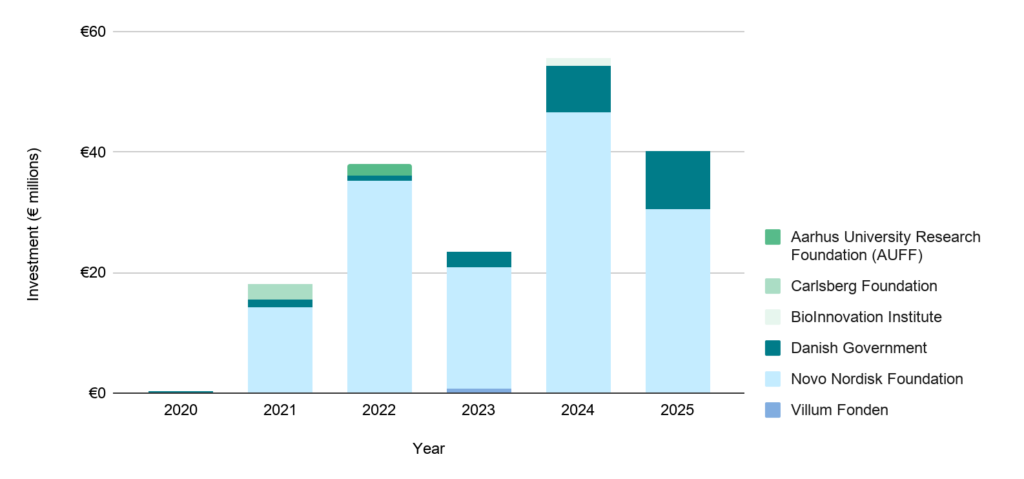
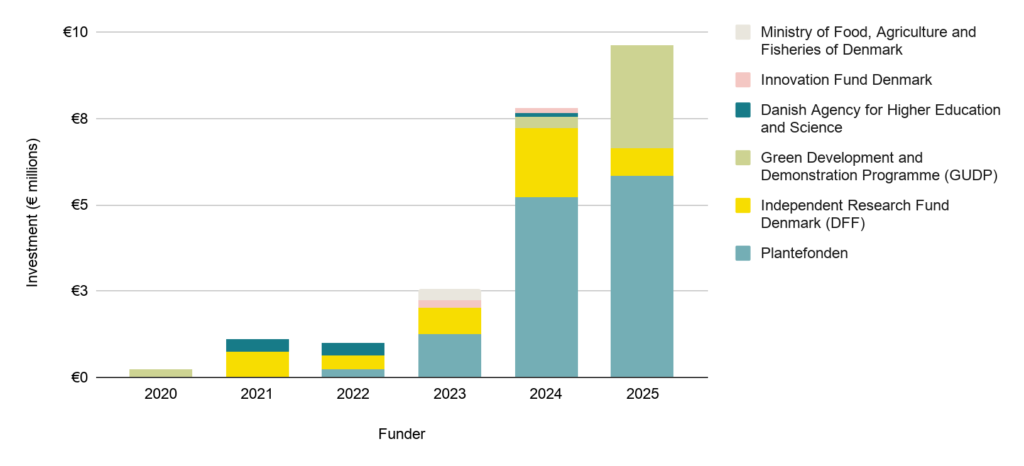
Denmark was the first country in the world to release a national action plan for plant-based foods. The Danish government’s €160 million (over 1 billion kroner) commitment to plant-based foods over nine years is the largest in Europe, and is being distributed by the Plantefonden. This presents a great opportunity for the Danish government to accelerate the momentum being built by the large investments of the Novo Nordisk Foundation, ensuring that public investment matches the scale and ambition of nonprofit-driven innovation. As Denmark’s remaining funding is disbursed, the key challenge and opportunity lies in ensuring that these funds are channelled towards solving the most pressing scientific challenges of the moment and accelerating real breakthroughs for sustainable food systems.
Investment by the Danish government, broken down by research funders, 2020-2025
Finland
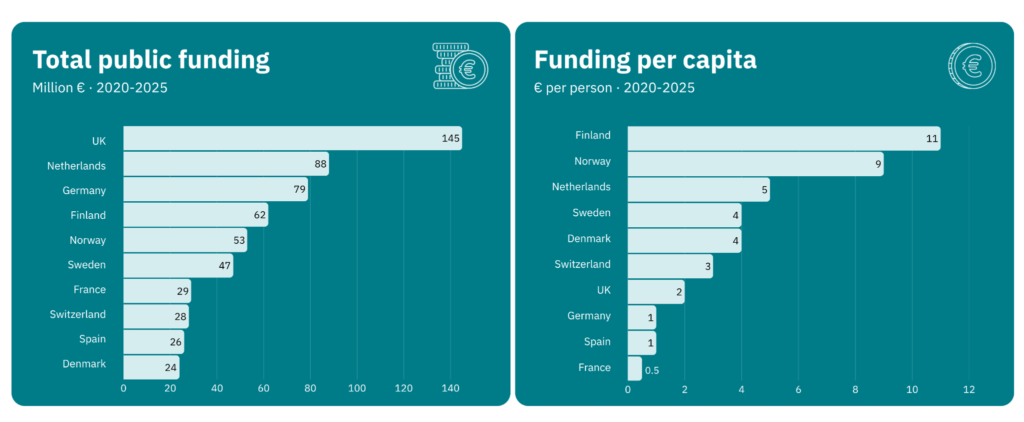
Finland has made significant investments in alternative protein research in recent years and has seen multiple successful startups spin-out from their public research ecosystem. It is the fourth-largest funder in Europe, and tops the chart for alternative protein R&I funding per capita.
Investment from the top 10 governments funding alternative proteins in Europe, 2020-2025, showing total public funding (excluding nonprofit contributions) and funding per capita.
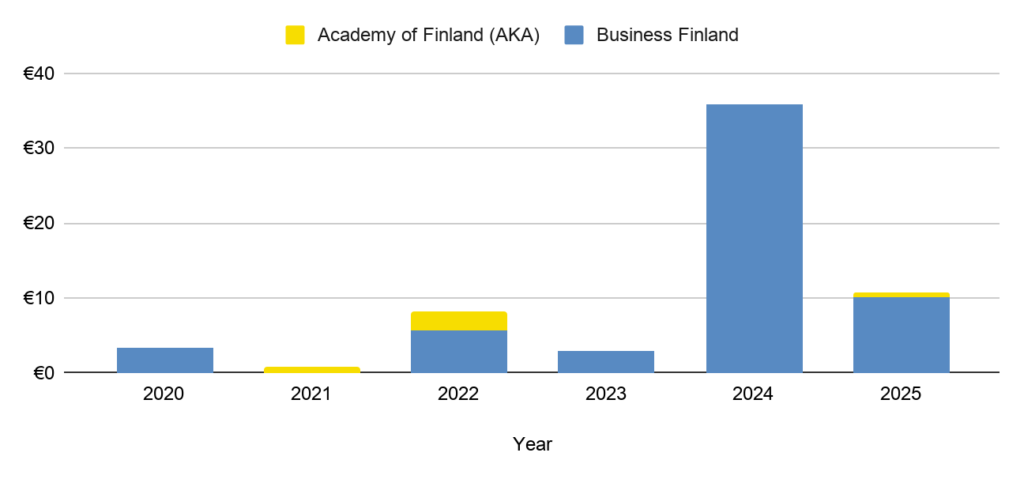
Business Finland is the major funder in Finland, with the bulk of its funding in the form of major grants to companies like Onego Bio to support their R&I and promote the commercialisation of public research findings into a global competitive advantage. Business Finland has also supported initiatives like RETHINK, a consortium where VTT and the Finnish food industry will develop new plant protein value chains with the utilization of AI and machine learning. Many of Finland’s success stories like Onego Bio and Solar Foods are spinouts from VTT Technical Research Centre of Finland, demonstrating the importance of a strong scientific community producing open-access research that provides a solid basis for the commercialisation pipeline.
Whilst the continued support for industry R&D is promising, such as the recent €10 million euro additional funding to expand Valio’s Food 2.0 research program, Finland’s publication output in alternative proteins has seen the slowest growth in the Nordics and has remained relatively stagnant since 2022. It will be essential for Finland to ensure funding is directed towards foundational open-access research to sustain a healthy R&I pipeline and repeat the successes of companies such as Solar Foods.
Investment in Finland, by research funder, 2020-2025
Investment in Finland research category breakdown, 2020-2025.
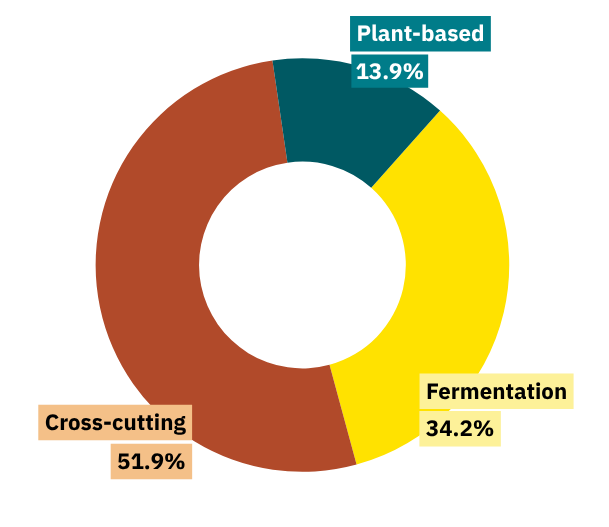
The majority of Finnish alternative protein investment has gone to cross-cutting research, specifically to support cellular agriculture R&I. A recent action plan by VTT Technical Research Centre Finland, Natural Resources Institute Finland, and the University of Helsinki outlines a roadmap for Finland to become a world leader in cellular agriculture.
Norway
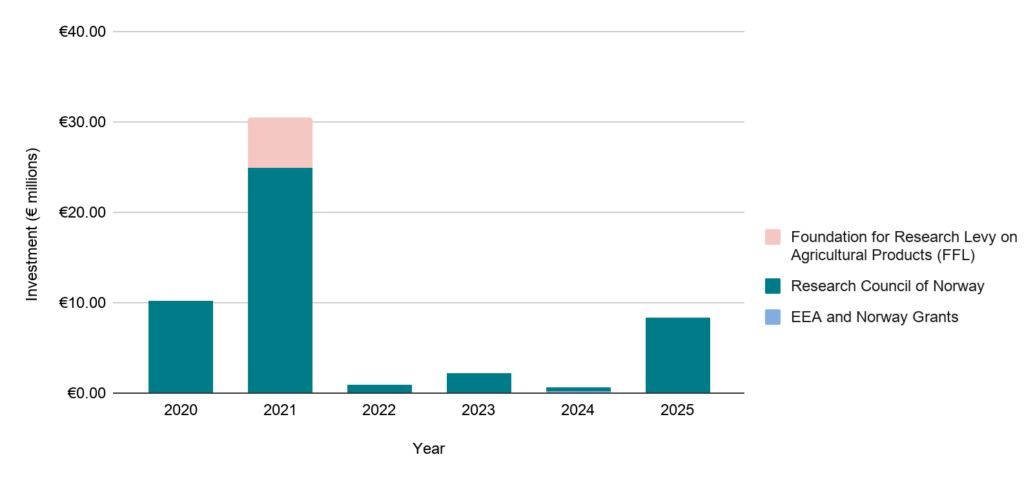
Norway is the fifth-largest European funder of alternative protein R&I, and ranks second per capita, but its funding trajectory has been quite inconsistent. Norway was the leading public funder in Europe from 2020 to 2022, driven by significant investments from the Research Council of Norway and additional support from the Foundation for Research Levy on Agricultural Products.
After this early peak, funding dropped sharply between 2022 and 2024, before appearing to pick up again in 2025. Norway, therefore, still holds a very strong position on a per-capita basis, but it remains to be seen whether this reflects a sustained national funding priority or the effect of a few large one-off calls. Investment decisions made over the coming years will determine whether Norway maintains its strong per-capita position or gradually falls behind countries with more consistent annual funding.
Investment in Norway, by research funder, 2020-2025.
Investment in Norway research category breakdown, 2020-2025.
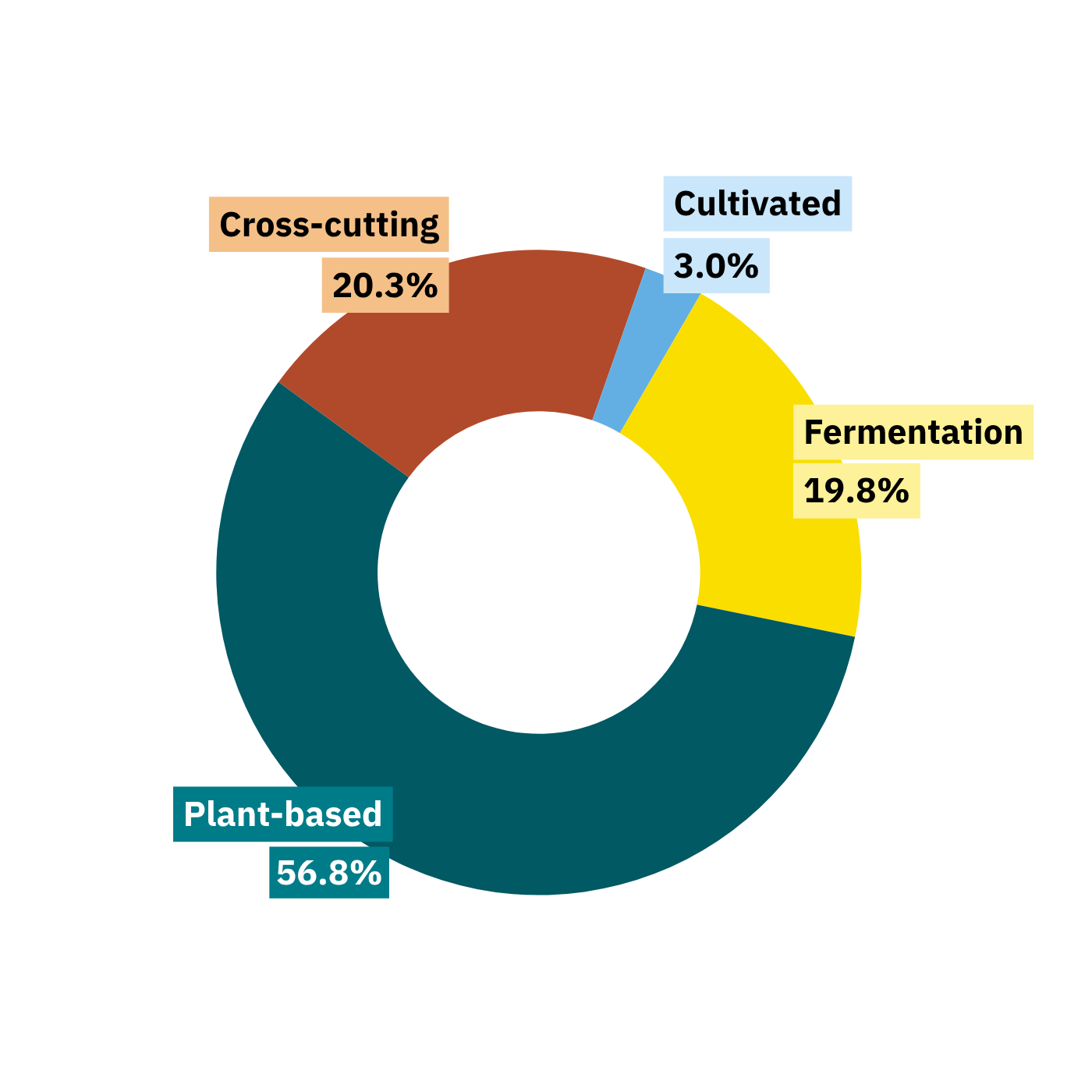
Plant-based research makes up more than half of tracked funding – approximately €31 million of the €53 million total – in Norway. Major projects such as GreenPlantFood indicate a strong focus on Norwegian and Nordic raw materials, including peas, faba beans, oats, and barley, as well as green processing technologies, ingredient functionality, sidestream use, and food industry applications.
Fermentation has seen almost €10.5 million of investment in Norway. The bulk of this has gone to the Norwegian Bioprocessing & Fermentation Centre and the Centre for Industrial Biotechnology – biotechnology centres focused on fermentation.
Cross-cutting and cultivated meat funding can partly be seen as one combined research area as Norway’s growing cellular agriculture community often groups precision fermentation and cultivated meat under the same umbrella. Nofima’s Precision Food Production initiative is a good example, spanning precision fermentation, cultivated meat, bioreactors, growth factors, process monitoring, and new food technologies. Food4Cells, on the other hand, is a major project focusing exclusively on cultivated meat and will run from 2025 until 2027.
Sweden
Sweden performs strongly in the European context, ranking sixth for alternative protein R&I investment, but lags behind Denmark and Finland in the region despite its larger economy (by nominal GDP).
Investment in Sweden, by research funder, 2020-2025.
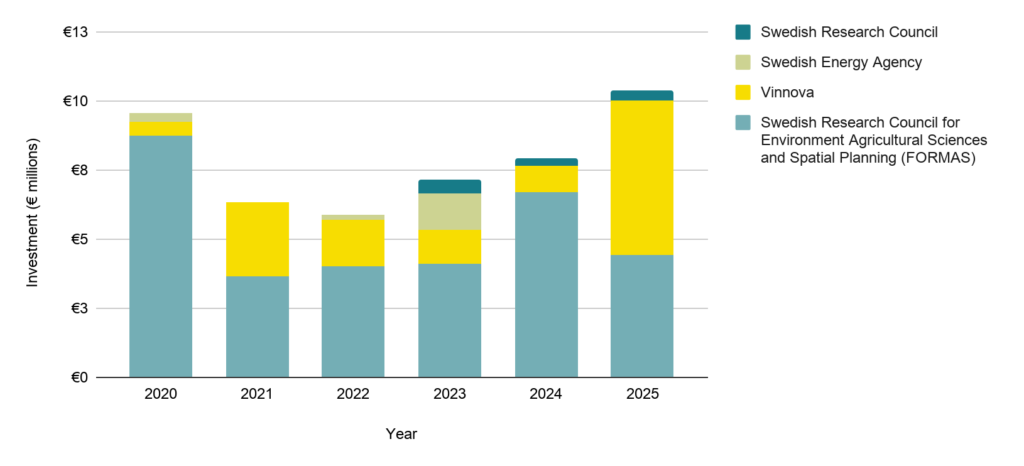
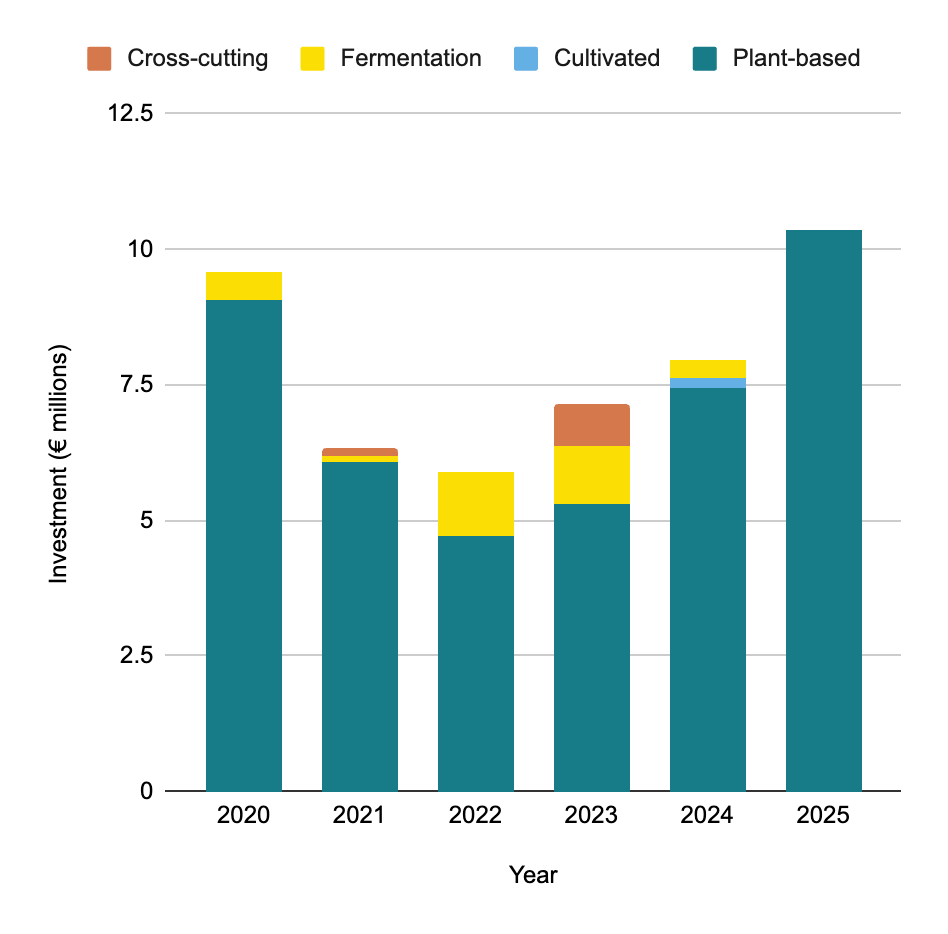
The Swedish funding landscape is mostly focused on the plant-based field. Fermentation funding has been lower and more intermittent, but Sweden has made some relevant investments in fungal and microbial protein. This includes projects such as the Swedish University of Agricultural Sciences (SLU) producing fungal protein and lipids from lignocellulose, with a grant of almost 6 million krona (€551 000), and Swedish participation in the €1.5 million Eurostars-backed Revo Foods–Mycorena project to develop 3D-printable mycoprotein for whole-cut alternative seafood.
The first Swedish investments in cultivated meat were made in 2024 by the Swedish Research Council, with grants of 2 million krona (€184 000) for Curve to optimise the cell culture of an industrial-scale bioreactor for animal cell cultivation and 700,000 krona (€64 000) for EY to examine the role and effects of cultivated meat across a circular value chain.
Investment from Sweden, broken down by alternative protein type, over the period 2020-2025.
Funding highlights
Nordic countries are driving groundbreaking research in alternative proteins. Major investments made in the last years include:
- Finland: Fermentation specialists Solar Foods received €11 million from the Finnish Climate Fund to scale up its novel protein production process that uses air and electricity.
- Norway: Research institutions are applying biotechnology and data analytics to sustainable food production. For example:
- Nofima’s Precision Technology Project (€7 million) is exploring how biotechnology, smart sensors, and advanced data analysis can transform food production.
- NMBU’s FoodProFuture (€5 million) is investigating how plant resources can be used effectively to produce tasty, healthy and attractive plant-based food products with high protein content.
- Sweden: Marine ecosystems are at the forefront of sustainable food research in Sweden. The University of Gothenburg is leading a €1.88 million project to explore how marine and industrial waters can be harnessed to cultivate seaweed for future food production.
- Denmark: The University of Copenhagen is exploring how plant seed storage proteins can improve the functionality, taste and sustainability of plant-based foods in the SEEDFOOD project (€8.17 million).
Our research grant tracker contains all the funded projects we’re aware of. Can’t find your project in here? Let us know! This ensures our analyses are as accurate as possible and maximises visibility for your project.
The Nordic research landscape

“Denmark’s strength in plant-based protein innovation and consumer research, Norway’s expertise in aquaculture, Iceland’s advances in algae technologies, Finland’s leadership in fermentation, and Sweden’s focus on food systems research together provide an unparalleled foundation for a collaborative approach. Yet despite these innovations, cross-border collaboration remains limited. We’re missing opportunities to optimise resources, share technologies, and tackle societal barriers to dietary shifts in a coordinated way. Nordic Alternative Protein Knowledge and Innovation Network (NAPKIN) co-funded by the Nordic Joint Committee for Agricultural and Food Research, VTT (FI), MATIS (IS), Åarhus University (DK), Lund University (SE), NOFIMA (NO), and the Good Food Institute Europe, aims to bridge that gap – connecting academic research with public and private sector needs, transferring knowledge into practice, and involving civil society in co-creating culturally relevant solutions”
Nesli Sözer, Research Professor at VTT Technical Research Centre of Finland
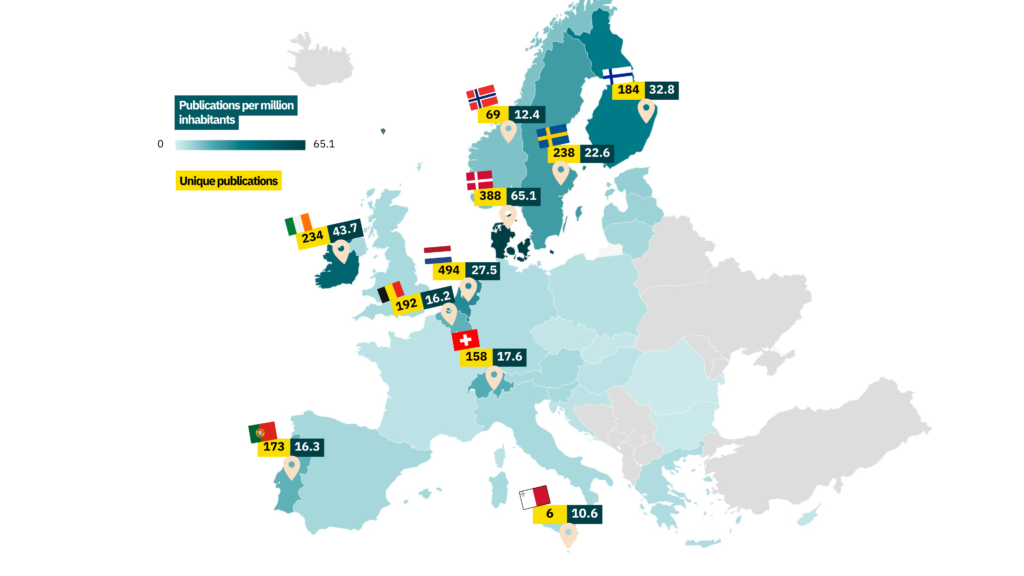
GFI Europe’s analysis of the alternative protein research landscape found that the Nordics have some of the highest per capita research outputs in Europe. With 388 publications, Denmark has the highest per capita publication rate in Europe (65.1 publications per million inhabitants), ahead of neighbours Finland (third with 184 publications and 32.8 publications per million inhabitants) and Sweden (fifth with 238 publications and 22.6 publications per million inhabitants).
Heat map of the most productive European countries in alternative protein research in the years 2020-2025 (unique publications per million inhabitants). Denmark is the most productive per capita, followed by Ireland, Finland, the Netherlands, and Sweden.
Breakdown across plant-based, fermentation and cultivated meat research
Click on the drop-downs below to find out more.
Plant-based
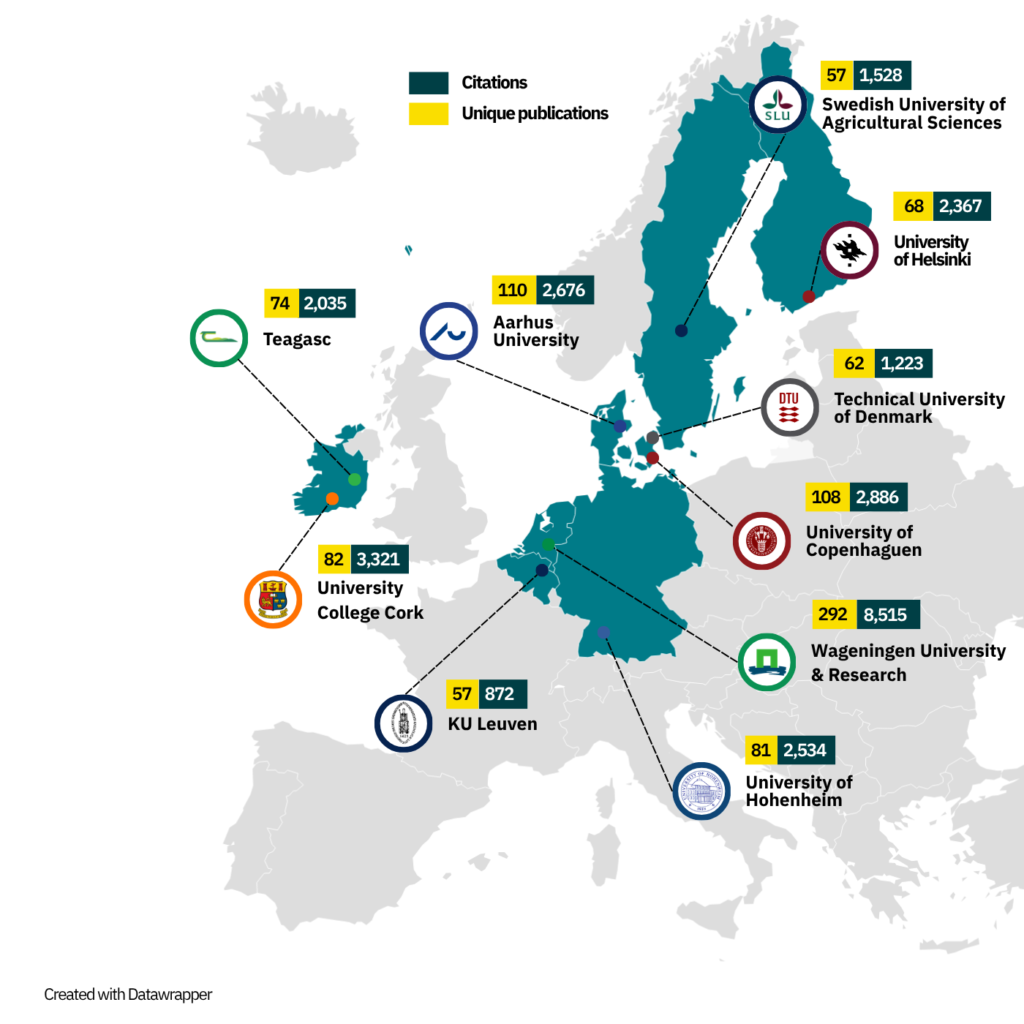
Plant-based research is the most established of the three alternative protein fields. Plant-based publications accounted for 66% of alternative protein publications in the years 2020-2025, highlighting the field’s relative maturity compared with fermentation and cultivated meat. This is further reflected in the broader diversity of institutions engaging in plant-based research, demonstrating a more well-developed ecosystem. This extensive distribution of hubs suggests that plant-based science has transitioned from being an emerging discipline to a more mainstream research focus within food science and biotechnology faculties across the region. Half of the research institutes in the top 10 of leading European plant-based research organisations are Nordic.
Leading institutions for plant-based protein research in Europe on the basis of unique publications in the period 2020-2025.
Fermentation
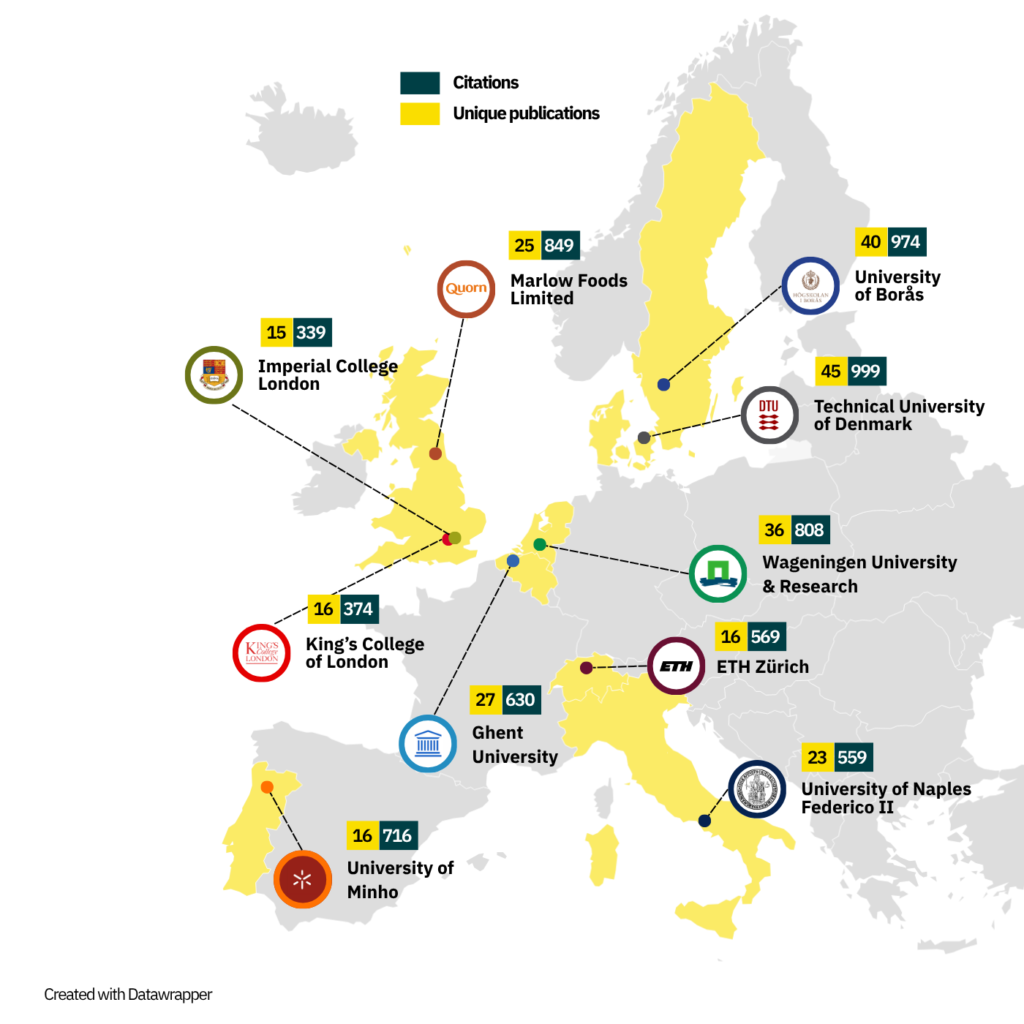
Fermentation has rapidly been gaining traction as a transformative technology in recent years, representing 15% of European alternative protein publications between 2020 and 2025. The strong funding landscape for fermentation in the Nordics aligns with the academic research activity in this space. Denmark is a clear leader, with DTU serving as the largest and most prominent research institution driving innovation in precision fermentation and biomass fermentation. Sweden also comes out strongly, with the University of Boras housing the Biotechnology research group at the Swedish Centre for Resource Recovery. While fermentation research is growing, it remains concentrated within a few key specialised hubs.
Leading institutions and companies for fermentation-made protein and ingredients research in Europe on the basis of unique publications in the period 2020-2025.
Cultivated meat
Cultivated meat remains the youngest and least widespread of the three fields, with 9% of European alternative protein publications in the years 2020-2025
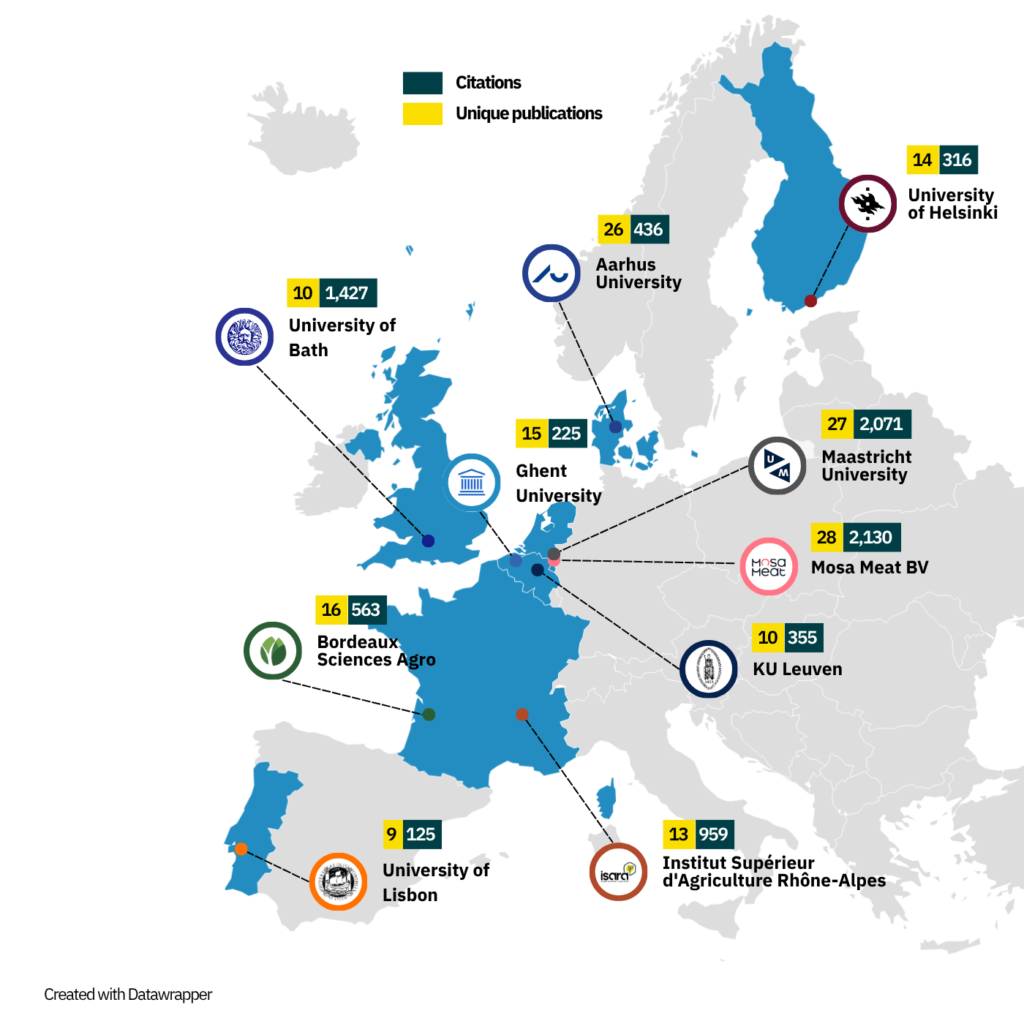
Aarhus University stands out as a leader in the space and serves as a critical research hub for cultivated meat in both the Nordics and Europe, with 26 unique publications Aarhus University has the third largest output in cultivated meat publications in Europe. In Finland, the University of Helsinki is emerging as a strong player with a specialisation in life cycle assessments (LCAs), which assess the projected environmental impacts of cultivated meat when compared to conventional agriculture. In Norway, Nofima is at the forefront of exploring cultivated meat production, contributing significantly to the field’s development in the region and participating in or leading several large-scale projects.
The relatively small number of research centres working on cultivated meat suggests a heavy reliance on specialised research groups, reinforcing the field’s early-stage nature. Funding for cultivated meat-specific research remains low across the region, but several initiatives do include both cultivated meat and precision fermentation within their scope, such as the CellFood Hub in Denmark and the ARRIVAL project in Norway.
Leading institutions and companies for cultivated meat and seafood research in Europe on the basis of unique publications in the period 2020-2025.
Nordic alternative protein research hubs
The below snapshot of Nordic alternative protein research hubs highlights some of the leading research institutions across the Nordic countries that are driving progress in alternative proteins. While not exhaustive, it captures a dynamic and growing ecosystem of R&I activity in Denmark, Sweden, Finland, Norway and Iceland.
Several Nordic institutions have developed distinctive areas of expertise, such as the University of Copenhagen in Denmark and the Swedish Agricultural University, which focus their research on the plant-based pillar and serve as hubs with high research outputs in their particular area. Other institutions host research groups looking at all three alternative protein pillars, such as the University of Helsinki or Nofima, which is running research projects like GreenPlantFood (plant-based), ARRIVAL (fermentation, cultivated meat), and Food4Cells (cultivated meat).
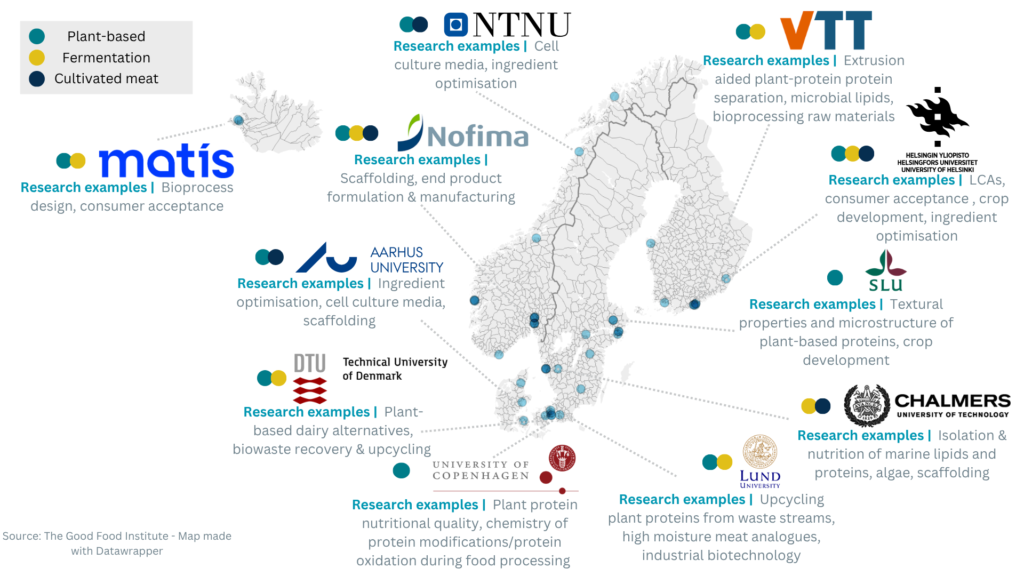
Alternative protein research in the Nordics is spread across a range of institutions – from technical universities and applied science institutes to life science hubs – and reflects the region’s long-standing excellence in fields critical to alternative proteins. These include fermentation and bioprocess engineering, cell and tissue biology, food chemistry, metabolic engineering, and agricultural sciences. Researchers are often adapting tools and insights from these foundational disciplines to solve the technical challenges facing alternative protein development. Explore the leading alternative protein research performing institutions across Denmark, Finland and Sweden by clicking on the drop-downs below.
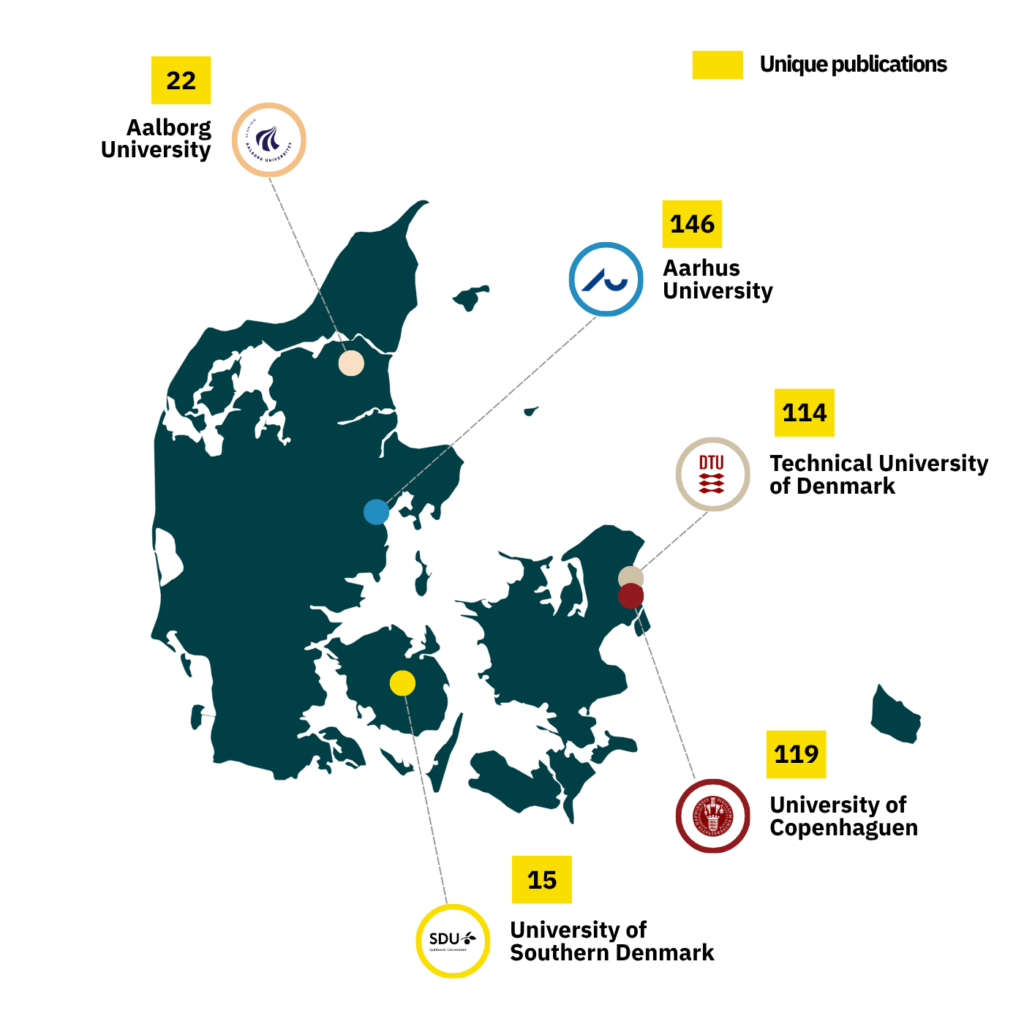
Denmark
Leading institutions for alternative protein research in Denmark on the basis of unique publications in the period 2020-2025.
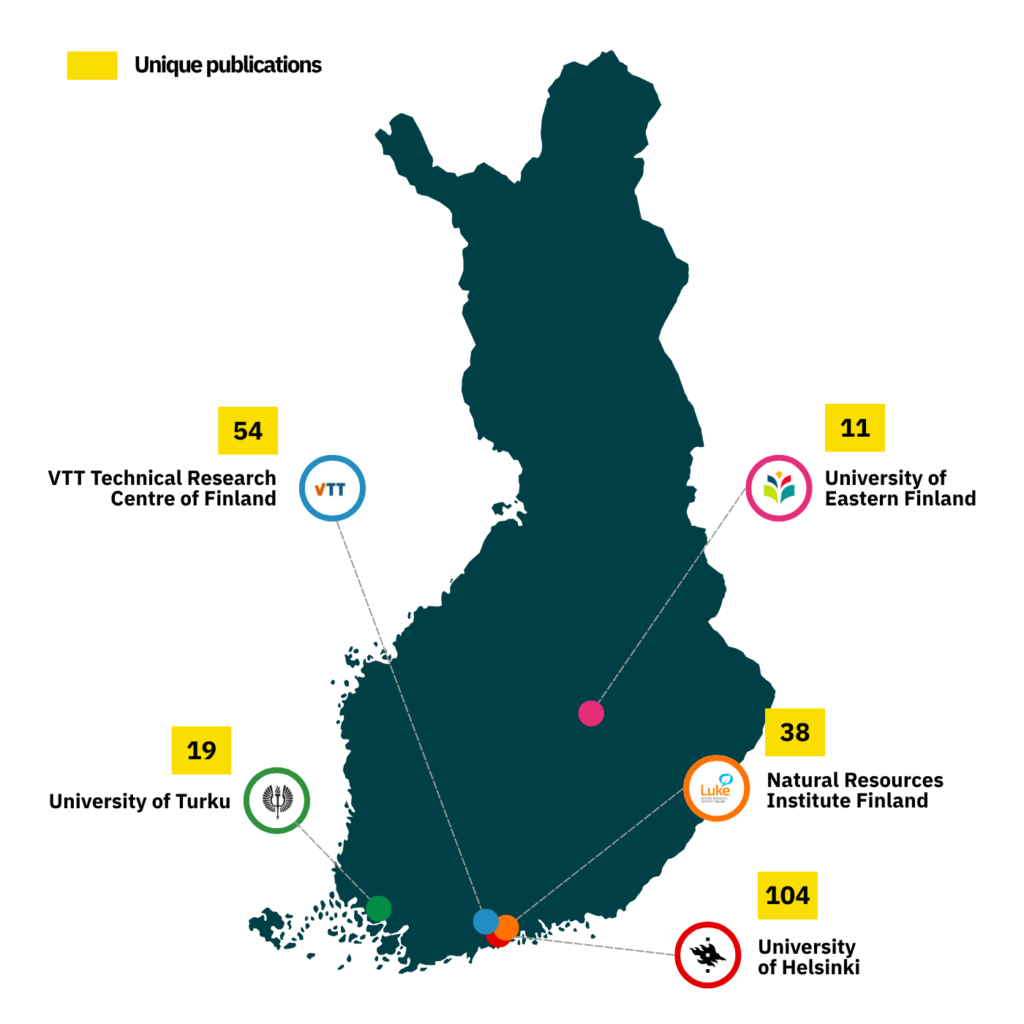
Finland
Leading institutions for alternative protein research in Finland on the basis of unique publications in the period 2020-2025.
Sweden
Leading institutions for alternative protein research in Sweden on the basis of unique publications in the period 2020-2025.
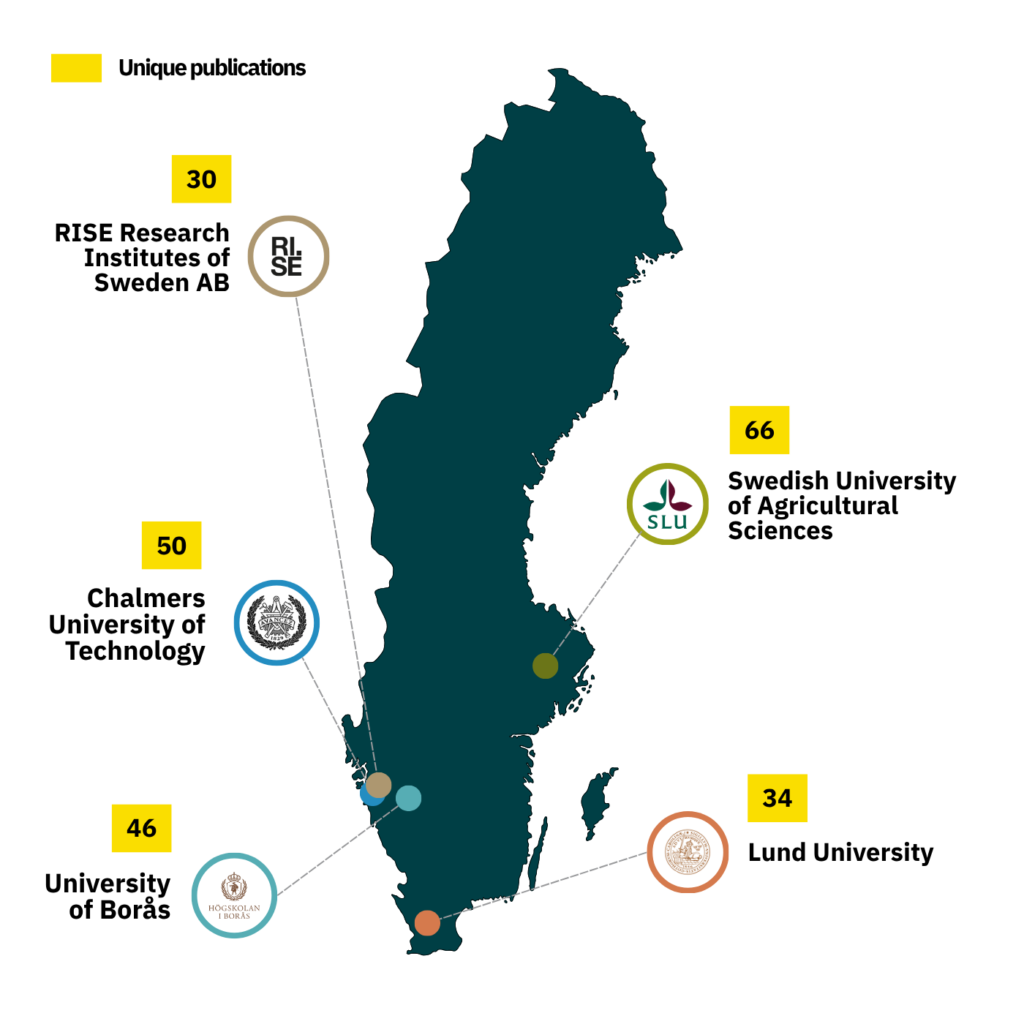
Dedicated centres of excellence
Besides research hubs, the Nordics are also home to a host of dedicated research centres that either focus specifically on alternative protein research and development or have it as part of their core mission. Click on the drop-downs below to find out more about some of these centres.
Aarhus University
Aarhus University in Denmark hosts multiple initiatives. Plant2Food, a €27 million open innovation platform funded by the Novo Nordisk Foundation, connects universities and industry to solve challenges in plant-based foods. In 2026, Plant2Food received a follow up grant of €20 million to extend their activities to 2031. The Novo Nordisk Foundation CO₂ Research Center (CORC) develops technologies for carbon capture and conversion to support sustainable solutions. While not directly focused on alternative proteins, CORC fosters cross-disciplinary research that enables projects like the CO₂-to-protein consortium. CORC’s involvement in this project highlights how the highly cross-disciplinary field of alternative protein research can and should intersect with adjacent scientific fields – bundling expertise to tackle cutting-edge research challenges and drive transformative innovation. CellFood Hub is bringing together different departments at Aarhus University to push forward the future of cultivated meat and ingredients.
KTH Royal Institute of Technology
KTH Royal Institute of Technology in Stockholm coordinates several food-system initiatives anchored by KTH FOOD, a cross-faculty research centre promoting sustainable and healthy food systems. Building on KTH FOOD’s circular food systems theme, KTH leads PLENTY, a Centre for a Symbiotic and Circular Food Provisioning funded by the Swedish Research Council Formas. This brings together academic institutions, public organisations and private companies with the vision to build a symbiotic and circular food system. PLENTY unites around 26 researchers with five academic partners and some 20 external partners. KTH also coordinates Blue Food – Centre for the Seafood of the Future, a national competence centre that develops sustainable Swedish seafood production in collaboration with around 70 partners, working to make better use of wild-caught fish and to advance aquaculture of fish, shellfish and algae. Among its aims, Blue Food investigates the effects of a blue protein shift on selected markers for human metabolic health, positioning aquatic foods, including algae, as part of the wider sustainable-protein landscape.
Lund University
Lund University in Sweden cofounded Biotech Heights, a collaborative research hub, together with Tetra Pak and Sweden’s innovation agency Vinnova in 2023. The hub offers state-of-the-art laboratories and flexible bioprocessing equipment designed to advance sustainable food production through bioprocess technology and fermentation. Fostering public-private partnerships, the hub enables researchers and industry stakeholders to collaborate on projects ranging from feasibility studies to scaling up production processes.
Lund University also hosts FORCE, a centre for food preparedness and competitiveness that brings together researchers from Lund University, SLU, KTH Royal Institute of Technology, and the AgriFood Economics Centre, and Swedish food producers, retailers, and public-sector partners. While FORCE has a broader focus than alternative proteins, it includes a strong focus on plant-based foods as part of a more resilient Swedish food system, noting that cereals, beans, and peas will play an important role. One work package focuses specifically on developing new plant-based foods from Sweden, including Nordic-adapted protein crops such as faba beans and peas. It also covers sustainable production technologies, the use of food sidestreams, meat and dairy analogues, market access, business models, and public-meal applications during crises.
Örebro University
Örebro University coordinates PAN Sweden, an interdisciplinary research centre established in 2021 with funding from Formas, the Swedish government research council for sustainable development. The centre unites several Swedish universities, the Research Institutes of Sweden (RISE), industry partners and public health organisations to advance plant-based protein research. PAN Sweden aims to elucidate the relationships between food processing, protein structure, bioavailability, digestion, fermentation, and health outcomes including gut, metabolic, and mental health.
Technical University of Denmark
The Technical University of Denmark (DTU) is home to the Novo Nordisk Foundation Center for Biosustainability and has been focusing on microbial foods. A 1 billion kroner (~€134 million) investment has been announced to launch a follow-up centre, DTU BRIGHT (Novo Nordisk Foundation Biotechnology Research Institute for the Green Transition). This new institute will also have microbial foods as one of three main focus areas, marking a major investment in the future of alternative proteins. DTU is also a partner of the Bezos Centre for Sustainable Proteins hosted at Imperial College London.
VTT Technical Research Centre
VTT Technical Research Centre of Finland is a key player in international initiatives on cellular agriculture and microbial fermentation, co-leading two bioeconomy projects worth nearly €20 million under the US National Science Foundation’s Global Centers programme. The first, the Biofoundry Project, focuses on developing industrial-scale bioproduction processes that use microbes to produce bio-based materials, replacing conventional fossil fuel-based versions. The second, the FoodID Project, aims to reduce the environmental impact of meat production by advancing cellular agriculture and plant-based food innovations.
Meet some of the leading alternative protein researchers in the Nordics:
Breaking down the boundaries: Meet the researchers working on a cross-border project to build Nordic alternative protein momentum
An international network linking Nordic researchers seeks to provide collaborative opportunities often missing in alternative protein science.

GFI research grants 2025: Meet next generation of European alternative protein innovators
The latest round of Good Food Institute’s (GFI) research funding programme has demonstrated that European researchers continue to lead the…

Meet the researcher: Growing a grassroots protein revolution with Mette Lübeck
A humble plant that grows in abundance across the planet is at the heart of a project aiming to transform…
Meet the researcher: precision fermentation fat
Across Europe, researchers are finding new ways of using well-established technologies to develop sustainable fat with the same the complex…

Meet the researcher: discovering the next big ingredients in plant-based protein with Karolina Östbring
The plant-based industry has only begun to scratch the surface of what ingredients can be used to create more sustainable…
Meet the researcher: filamentous fungi and seafood with Leonie Jahn
There needs to be more interaction between the worlds of food and science, according to a researcher working with a…
The Nordic alternative protein community: networks and events
Click on the drop-downs below to find out more about key networks and events in the region.
Agro Food Park
The Agro Food Park in Aarhus, Denmark, hosts conferences and networking events, creating an ecosystem where startups, industry leaders, and researchers can collaborate. Such environments are particularly important for alternative proteins, as they encourage the cross-disciplinary partnerships needed to tackle technical challenges in scaling production.
The Alt Protein Project
The Good Food Institute runs the Alt Protein Project (APP), establishing student groups at universities globally that organise conferences, develop educational resources, and much more. In the Nordics, two APP chapters are active at the Technical University of Denmark and the Norwegian University of Science and Technology.
The Cow Free Protein Network
The Cow Free Protein Network k focuses on cellular food production, bringing together experts from all parts of the value chain.
Food & Bio Cluster Denmark
The Food & Bio Cluster Denmark connects companies and knowledge institutions within the food and bioresources sector. The cluster organises regular thematic events and large-scale conferences, such as the Food & Bio Summit 2024 in Aarhus, the International Conference on Precision Fermentation of Milk Proteins 2024 in Aalborg and the Biosolutions Scale-Up Symposium together with the Danish Technological Institute in 2026. They coordinate the International Cellular Agriculture Network (ICAN), which brings together stakeholders from Denmark, Singapore and the United States to accelerate the development of cellular agriculture technologies. Gatherings such as these are essential for fostering dialogue between researchers and industry stakeholders, especially as precision fermentation gains traction as a key alternative protein production method.
Food 2.0
In Finland, the Food 2.0 initiative, sponsored by Business Finland and led by Valio, shows how industry-led initiatives can advance sustainable food technologies, including alternative proteins. By fostering collaborations between research institutions and industry players, Food 2.0 aims to develop new products that meet the growing demand for sustainable and health-focused food.
The International Cellular Agriculture Conference
The International Cellular Agriculture Conference works with partners from all over the Nordics to host a yearly summit. The conference moves from country to country, with the first edition being organised by VTT, the second by Aarhus University, and the 2026 edition by Lund University.
NCE Heidner Biocluster
In Norway, the NCE Heidner Biocluster focuses on the green bioeconomy and sustainable food production. This cluster brings together the entire green economy value chain and is thematically focused on sustainable proteins for feedstock.
Nordic Joint Committee for Agricultural and Food Research
The Nordics have an ecosystem of thematic networks funded by the Nordic Joint Committee for Agricultural and Food Research (NKJ), which periodically has calls open to alternative proteins that fund temporary networks such as Cultivated Meat – Nordic take, Cultivated muscle-cell based food, the Nordic Gastronomy and Sensory Network (NGSN) for Protein Transition and The Nordic Alternative Protein Knowledge and Innovation Network (NAPKIN).
START – Centre for Sustainable Agrifood Systems
The Danish START – Centre for Sustainable Agrifood Systems is a collaboration platform connecting agricultural and food researchers across Denmark, which includes novel food and feed as one of its key thematic areas. They organise the 2026 Green Mind Gathers conference, which will feature alternative protein themes and stakeholders.
What we need more of: building stronger, long-term networks to drive impact
Science thrives on collaboration, and for the Nordic alternative protein sector to reach its full potential, stronger and more enduring research networks are essential.
For plant-based research, which is relatively well-established, the focus should be on alignment: minimising redundancy, sharing best practices, and strategically directing resources to maximise impact. In contrast, fermentation and cultivated meat, still emerging fields, need stronger collaboration to pool expertise, share infrastructure, and attract funding. Building tailored research communities across these categories will help the region solidify its leadership and accelerate innovation in sustainable food systems.
The field needs more stable, long-term networks and hubs that bring together research projects, short-term collaborations, and cross-industry initiatives into a cohesive community. These networks should complement broader sustainability platforms, ensuring that alternative proteins remain a visible, distinct priority while benefiting from cross-sector collaboration. The field must move beyond scattered, short-term collaborations – instead securing government investment in lasting communities that foster innovation, share knowledge, and drive the Nordic region’s leadership in alternative proteins.
The Nordic Alternative Protein Knowledge and Innovation Network (NAPKIN), funded by the NKJ in 2025, is one example of major alternative protein stakeholders from each Nordic country working towards a more coherent and interconnected alternative protein ecosystem.
The Nordic patent landscape

“Researchers are often closest to the latest scientific advances and in tune with the technical bottlenecks that still need to be solved. Pairing that insight with an entrepreneurial mindset creates a powerful engine for innovation. In the Nordics, our greatest strengths are our strong public research institutions and a culture of innovation that go hand in hand. By bridging research and entrepreneurship, we can tackle the toughest challenges in sustainable protein production and bring forward real impact – faster.”
Professor Mette Lübeck, Vice Head of Research at Aalborg University’s Department of Chemistry and Bioscience
GFI Europe’s patent landscape analysis gives an overview of the state of the European alternative protein patent landscape from 2015 to 2025, finding that the number of patents published by European innovators in the field grew by 1,124% over this period.
Heat map of the number of unique patent families on alternative protein technologies per European country in the years 2015-2025 inclusive, and their percentage contribution to the overall European total.
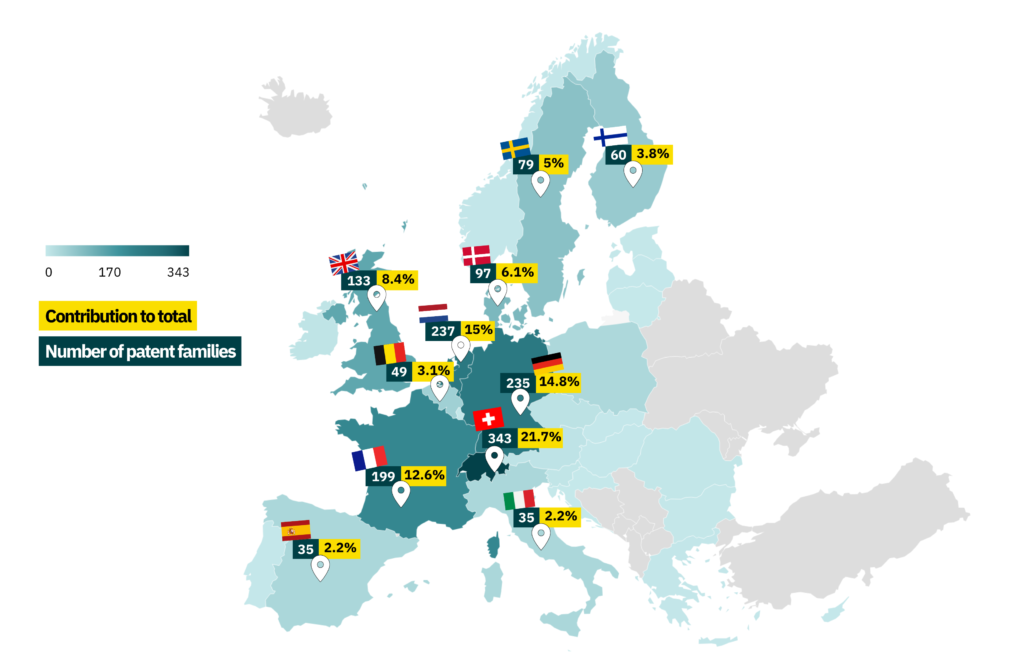
The Nordic region plays a significant role in the European alternative protein patent landscape, especially on a per capita basis. Denmark, Sweden, and Finland all rank within the top 10 for total unique patent families, placing sixth, seventh and eighth, respectively. This demonstrates that the Nordics are not only contributing significantly to alternative protein R&I but are also efficient in translating research to intellectual property.
Innovation across plant-based, fermentation and cultivated meat
Patents and patent families published in Nordic countries by alternative protein pillar in the years 2015-2025 inclusive.
| Country | Denmark | Finland | Norway | Sweden |
| Total unique patents | 433 | 412 | 10 | 358 |
| Total patent families | 97 | 60 | 3 | 79 |
| Contribution to total (Europe) | 6.1% | 3.8% | 0.2% | 5.0% |
| Plant-based families | 85 | 46 | 1 | 61 |
| Fermentation families | 8 | 10 | 1 | 14 |
| Cultivated families | 2 | 2 | 1 | 4 |
| Cross-cutting families | 2 | 3 | 0 | 0 |
When analysing field-specific patent activity, the Nordics exhibit distinct strengths:
- Plant-based: This is the region’s strongest field, with Denmark contributing 85 patent families (fifth overall), followed by Sweden with 61 (sixth) and Finland with 46 (seventh). In the private sector, Denmark’s Novonesis emerges as a key player, reflecting its strong focus on fermentation solutions for plant-based foods. Sweden’s Oatly also plays a major role, underscoring Sweden’s leadership in plant-based dairy.
- Fermentation: Nordic activity in this field is also notable. Sweden leads the region with 14 fermentation-related patent families, followed by Finland with 10, and Denmark with eight. Notably, Sweden leads the pack in fermentation patents while having the lowest public investment in this pillar in the Nordics, as more than half of fermentation patent families came from Mycorena, which was acquired by Belgian Naplasol in 2024. Finland’s Solar Foods stands out for its innovative fermentation processes using CO₂ to produce sustainable protein ingredients.
- Cultivated meat: There is relatively limited Nordic patent activity in this emerging field. Sweden has the most cultivated meat patents, held by companies Curve, Cellevate and Hooked Seafood. However, promising developments are underway. Aarhus University hosts the CellFood Hub, a dedicated centre of excellence for cultivated meat research, focusing on addressing key challenges in cultivated meat and seafood production.
The role of open innovation in advancing the Nordic landscape
A recurring challenge in the alternative protein sector is the historical prominence of private-sector research, which can hinder collaboration and slow progress. Universities and applied research organisations are generally underrepresented in the IP landscape, indicating a significant barrier in successful technology transfer and research translation. VTT Technical Research Centre of Finland is a rare example of a leading public institution performing strongly in patents. VTT holds five patent families spanning plant-based, fermentation, and cross-cutting technologies, reinforcing its role as a key driver of Nordic innovation and aligning with Finland’s strategic focus on fermentation. However, VTT is the exception, and this broader translation gap must be addressed to accelerate innovation and bring solutions to market faster.
The Plant2Food project, hosted by Aarhus University, exemplifies efforts to support Open Innovation in Science. Under this framework, research results are publicly accessible, promoting collaboration and knowledge-sharing, while still allowing private industry to pursue Intellectual Property-protected follow-up projects. This balance between openness and intellectual property generation fosters a more collaborative ecosystem, crucial for accelerating innovation and overcoming common industry challenges.
A look to the future
With strong public and philanthropic funding, merging top research with entrepreneurial drive, and a growing network of collaborative initiatives, the Nordics are already making outsized contributions to building a more sustainable food system.
But the work is far from over. To fully realise its potential, the region must deepen cross-border collaboration, expand long-term infrastructure, and ensure that funding is directed where it can unlock the greatest scientific breakthroughs. By aligning its strengths and bridging gaps between countries, disciplines, and sectors, the Nordic ecosystem can shape the future of food – not just in Europe, but worldwide.
Author

Ismaël Bawah
Science and Technology Community Coordinator
Ismaël works to grow and support the alternative protein scientific community across Denmark, Sweden, Finland, and Norway.
Explore more of our science resources


Research funding
Learn more about key projects and available research funding for alternative protein projects.

Open access tools and resources
Explore our library of free-to access resources on plant-based, cultivated and fermentation-made meat, seafood, eggs and dairy.

Research community
Join our community of researchers today to forge connections, find industry and academic collaborators, and learn about the latest science.