
Inside China’s biomanufacturing boom – and what it means for Europe’s protein race
A new report has provided the clearest evidence yet that China is using its well-honed industrial muscle to scale alternative proteins – and should serve as a wake-up call for European governments.
26 October 2026

A new report has provided the clearest evidence yet that China is using its well-honed industrial muscle to scale alternative proteins – and should serve as a wake-up call for European governments.
The region has been here before, inventing the science behind lithium-ion batteries and solar panels, and watching as China began producing them at a scale it could not match. China is now applying the same industrial policy behind that revolution to bolster its food security – but this time, Europe does not have to be left behind.
The report, published by the Good Food Institute Asia Pacific, was written by Australian biotech and geopolitics expert Dr Dirk van der Kley. His on-the-ground interviews revealed that China’s vast biomanufacturing industry – with its experienced technical talent, established supply chains and low operating costs – is rapidly pivoting towards producing foods using innovative fermentation methods.
This includes precision fermentation, used for decades to produce everyday ingredients such as rennet for cheesemaking and now being used to make animal-free dairy and egg proteins, along with biomass fermentation – a process similar to beer or yoghurt production that grows vast quantities of mycoprotein, which comes from fungus.
Following a well-trodden industrial playbook
The scale is striking. One company diversifying into this space is Fushine Biotech, a subsidiary of Fushine Pharmaceutical Company Ltd, which is currently constructing an industrial-scale facility and expanding its current 1,200-tonne mycoprotein capacity to a 20,000-tonne plant.
Australian startup Nourish Ingredients is partnering with Chinese biomanufacturing company Cabio Biotech, which has the capacity to formulate 170,000 tonnes of finished products containing Nourish’s fermentation-made fats.
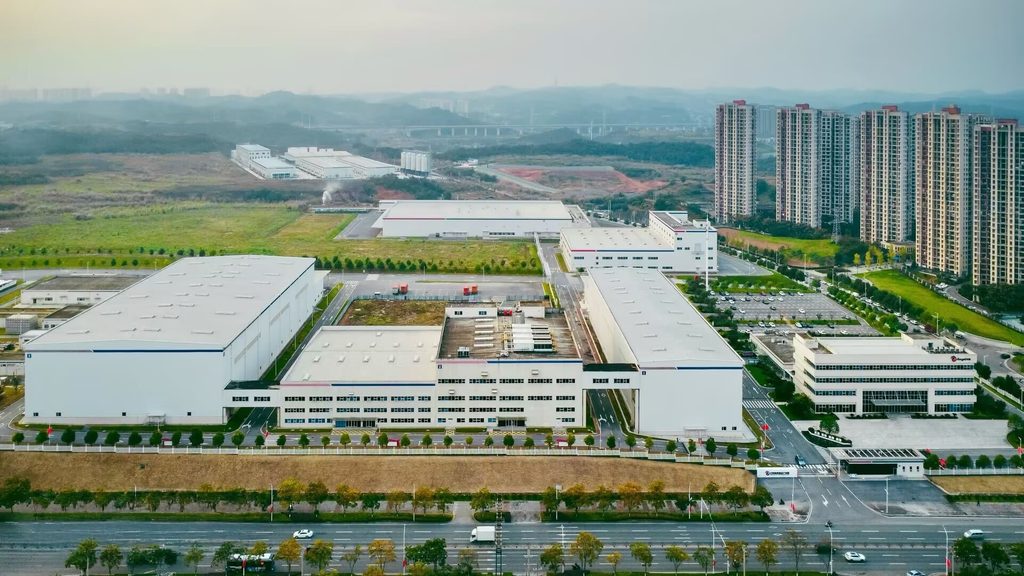
China’s industrial fermentation sector is following a well-trodden path, with companies establishing scale and cost competitiveness in mature industries before moving into adjacent, higher-value sectors.
Huawei, for example, was founded in the 1980s as a reseller of telecommunications switching equipment before becoming one of the world’s largest communications technology companies, while BYD started as a low-cost nickel-cadmium battery maker before evolving into the world’s largest EV company three decades later.
Government focus on protein innovation
The accelerating scale-up process is driven in part by the fact that building manufacturing plants in China is far cheaper than in other parts of the world – around 85% cheaper than in the United States – but this alone does not explain the rapid pace of progress.
The Chinese government has treated food security as a national and economic security issue since 2013, and the Building a Diversified Food Supply System report published by China’s State Council in 2024 included a call to “foster strategic emerging bio-industries and encourage the development of new types of food”.
The country’s trajectory has been modelled by Systemiq, whose recent China’s Food Future report projected that, with food security now embedded in its latest five-year plan, China’s food strategy could reshape global agricultural supply chains. It suggested Chinese soy imports could fall by up to 25% by 2030, and alternative proteins could account for up to 55% of China’s domestic animal protein demand by 2050.
Dr van der Kley’s interviews suggest that this may already be playing out on factory floors, raising serious questions for European alternative protein companies and for governments developing their own industrial policies.
Europe’s growing science base
Europe is entering the global transition to these foods from a position of considerable strength.
GFI Europe’s recent analysis found that Europe accounted for a fifth of global R&I investment in alternative protein development between 2020 and 2025, with more than 8,000 researchers across 1,000 institutions publishing 3,783 papers – output that grew 31% year on year. European research into plant-based food, cultivated meat and fermentation was even cited by Chinese researchers more than that of any other region over that period.
Europe has so far led on the science, but falls short in translating that science into scalable manufacturing capacity. Right now, the large-scale plants needed to produce these foods don’t exist in Europe, and the venture capital model that drove the startup-dominated sector’s early expansion is not suited to the upfront costs of building them.
Europe’s chance to fix the gap
The European Commission’s Biotech Act II, a landmark piece of industrial policy designed to build the region’s biomanufacturing sectors, presents a major opportunity to address this gap.
But discussions around its scope have been slow, and food may still be excluded entirely, just as global conflicts and a summer of drought, wildfires and heatwaves expose the fragility of supply chains.
Analysis by Systemiq set out the size of the economic prize if Europe realises the potential of its alternative protein expertise.
It found that treating protein diversification as a strategic priority could contribute €111 billion annually to the EU economy by 2040 and support 414,000 jobs. Doing this could also open up dynamic export markets and create new opportunities for farmers growing the legumes and pulses needed for plant-based meat, and crops such as sugar beet for fermentation.
To unlock this potential, the EU and member states must make an annual public investment of just €1.4 billion in R&I and scale-up infrastructure – a modest figure compared to the opportunities on offer, and one that would reinforce a research base Europe has already invested in building.
Public money, in the form of grants, public-private partnerships and blended finance, would give private capital the confidence needed to build the kind of facilities being constructed in China right now. Meanwhile, building transparent regulatory pathways would give European innovators the clarity they need to bring products to market efficiently.
The Biotech Act II will help decide whether the EU captures the benefits of its investment in alternative protein science. Europe has the research expertise needed to give it a head start in this race, but as developments in China reveal, competitors are catching up.
Acting now to scale up and build on Europe’s globally recognised science base will pay dividends in the decades to come, both for economic resilience and food security.
Failing to do so will condemn Europe to repeating its experience with earlier technologies – becoming mere clients of an industry it helped to create.
Author

Pauline Grimmer
Pauline mobilises public funding and other policy support to facilitate infrastructure development and scale up alternative proteins in Europe.