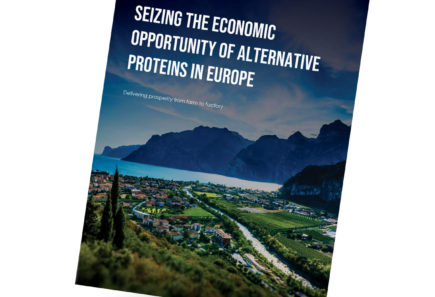

Research finds alternative proteins could boost EU economy by €111 billion by 2040
Elena WaldenAlternative proteins could add €111 billion a year to the EU’s economy by 2040 if treated as a strategic priority, new research shows.
Alternative proteins could add €111 billion a year to the EU’s economy by 2040 if treated as a strategic priority, new research shows.
In the world at large and for alternative proteins, 2025 has been a year of turbulence. Beneath the surface, however, the European alternative protein ecosystem has continued to mature.
Although our supermarkets bulge with more choice than ever, this masks an uncomfortable reality – our food system is becoming increasingly volatile.
New research has estimated that, given the right support, innovative ways of producing everyday foods using fermentation could add £9.8 billion (€11.2 billion) to the UK economy.
Double-digit growth of more affordable own-brand products has driven an increase in plant-based retail sales across four European countries.
The world’s largest conventional meat fair provided valuable insights into how alternative proteins are edging closer to the mainstream.
New research has found that 38% of German and UK adults intend to change their diets by eating more plant-based foods.
The latest investment figures show European privately held companies developing plant-based foods, cultivated meat, and fermentation raised nearly $509 million (€470 million) in 2024 – a 23% increase from the previous year.
Galicia takes a decisive step toward sustainable food production, positioning itself as a key player in plant-based protein manufacturing through a strategic alliance between the public and private sectors.