

Horizon Europe’s new calls: What alternative protein researchers need to know
Stella ChildA top-up to the EU’s flagship Horizon Europe programme has opened up new research calls offering ways of pushing food innovation towards the market.
A top-up to the EU’s flagship Horizon Europe programme has opened up new research calls offering ways of pushing food innovation towards the market.

A new report has provided the clearest evidence yet that China is using its well-honed industrial muscle to scale alternative proteins – and should serve as a wake-up call for European governments.
The European Food Safety Authority (EFSA) has highlighted a need to sustain scientific expertise to keep pace with emerging innovations such as cultivated meat and precision fermentation.

The European Commission’s latest strategy for food research includes positive references to diversifying protein supply and scaling up fermentation capacity, but fails to commit to funding the alternative protein research needed to achieve these aims.
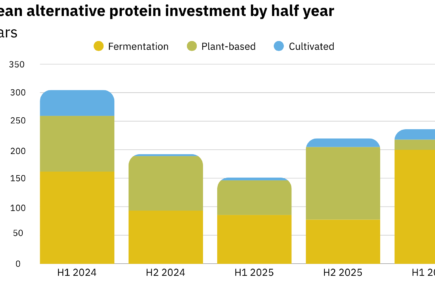
An analysis by GFI shows that fermentation companies led the pack in raising new capital in the first half of 2026. However, the picture is mixed and the number of deals has halved – private investment is now concentrated on fewer companies. Mixed financing models, in which private capital and public investment work together, are therefore gaining relevance.

A team at Wageningen University and Research in the Netherlands is asking whether the brewing industry could provide clues for how alternative proteins can scale up production.

An international network linking Nordic researchers seeks to provide collaborative opportunities often missing in alternative protein science.
Alternative proteins could add €111 billion a year to the EU’s economy by 2040 if treated as a strategic priority, new research shows.
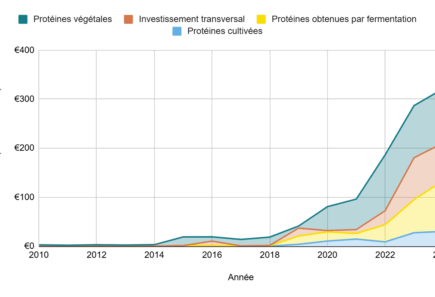
New analysis has revealed the rapid growth of Europe’s alternative protein research, with the number of studies published and public funding levels almost tripling over the last five years.

The launch of the world’s first master’s programme dedicated to alternative proteins marks another significant step in the development of protein diversification as an academic field.