

Novel foods milestone as new mycoprotein earns first EU approval
Lea SeyfarthThe European Commission and member states have now authorised Fermotein as a novel food – meaning it can now be sold across all EU member states.
The European Commission and member states have now authorised Fermotein as a novel food – meaning it can now be sold across all EU member states.
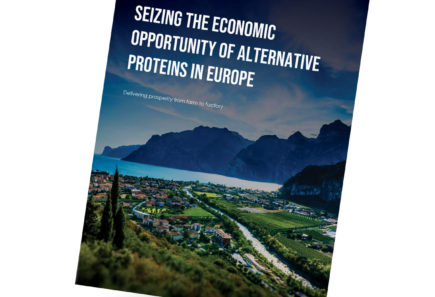
Alternative proteins could add €111 billion a year to the EU’s economy by 2040 if treated as a strategic priority, new research shows.

Nonprofit think tank the Good Food Institute Europe (GFI Europe) has welcomed plans in today’s Biotech Act to expand the advice regulators provide to innovators bringing new foods to market. But it has described plans to exclude Novel Foods from regulatory sandboxes as a 'missed opportunity'.

The EU’s new Bioeconomy Strategy has outlined plans that will support fermentation innovators in scaling up production and bringing food products to market.

New research has estimated that, given the right support, innovative ways of producing everyday foods using fermentation could add £9.8 billion (€11.2 billion) to the UK economy.

A new report from the FAO demonstrates for regulators and policymakers how existing food safety considerations and frameworks can be applied to precision fermentation. Here, we explore the key insights from this timely publication.
The UK government has invested £1.4 million in a new innovation hub, enabling the Food Standards Agency (FSA) to expand its expertise in new technologies including precision fermentation.

As the new European Commission takes office, they should consider a missing piece of the policy jigsaw that would help tackle many of the EU’s challenges.
