Lina Hartwig
Lina engages with journalists and advances protein diversification in Germany.
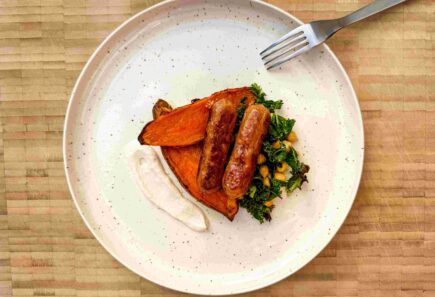
The first study of its kind has found that swapping processed meat with popular plant-based options leads to meaningful dietary improvements.
Precision fermentation promises to deliver next-generation developments – offering fats and proteins that can bring the taste and texture of meat and dairy to plant-based foods.
‘Burger’ and ‘sausage’ can still be used to describe plant-based meat products – but dozens of other everyday terms are to be banned under unnecessary restrictions that will confuse consumers, hurt the EU economy and jeopardise European resilience.
Priyansha works with startups and corporates to accelerate alternative protein commercialisation.
Continuing to meet the growing demand for meat with industrial farms is a recipe for disaster. Diversifying protein production is crucial to safeguard against new pandemics and antimicrobial resistance.
The Good Food Institute Europe recherche un·e responsable des affaires publiques pour orienter et piloter le travail de GFI dans le domaine des affaires publiques sur la diversification des protéines en France.
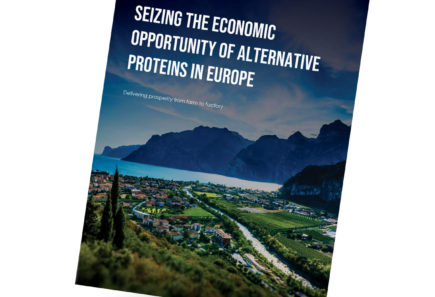
Alternative proteins could add €111 billion a year to the EU’s economy by 2040 if treated as a strategic priority, new research shows.
Leila supports GFI’s partnerships with European research funders.
Axel Lundberg writes about undertaking an epic cycle ride across Europe, paying tribute to a close friend while raising money for the Good Food Institute.
Nonprofit think tank the Good Food Institute Europe (GFI Europe) has welcomed plans in today’s Biotech Act to expand the advice regulators provide to innovators bringing new foods to market. But it has described plans to exclude Novel Foods from regulatory sandboxes as a 'missed opportunity'.
Discover the latest research projects selected for the GFI Research Grant Program, driving alternative protein innovation in Europe.
A background in food science convinced Dr Maija Greis that precision fermentation was crucial to finding the missing ingredient in developing animal-free foods with the authentic taste and texture of conventional meat and dairy.
In the world at large and for alternative proteins, 2025 has been a year of turbulence. Beneath the surface, however, the European alternative protein ecosystem has continued to mature.
The EU’s new Bioeconomy Strategy has outlined plans that will support fermentation innovators in scaling up production and bringing food products to market.
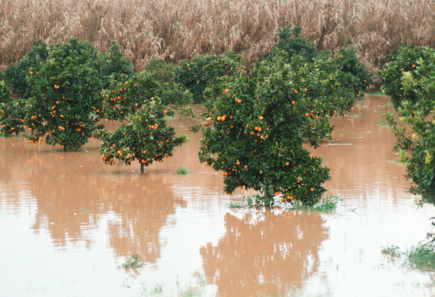
Spain demonstrates the cost of climate inaction – and the urgent need for Europe to invest in protein diversification.
In part five of our series to help startups in the alternative protein field grow, we explore how creative offtake strategies, like pre-orders, conditional contracts, and public procurement, can break the cycle of stalled investment.
Inès manages our digital communication channels, and works to raise the profile of Europe’s protein diversification ecosystem by developing accessible and engaging content for a broad range of stakeholders.
Our recent report takes an in-depth look at the achievements to date and the challenges ahead for Spain to consolidate its position as the leading hub in southern Europe in the alternative protein sector.
Although our supermarkets bulge with more choice than ever, this masks an uncomfortable reality – our food system is becoming increasingly volatile.
The UK Government’s new food strategy highlights alternative proteins as an economic growth opportunity that supports a more sustainable food system.

Explore Spain's diverse alternative protein ecosystem, and learn more about the researchers and companies that are making it possible.
The true cost of what ends up on our plates is often paid by people and ecosystems elsewhere. On the European Day of Foundations and Donors we look at the importance of building a food system that is more just, secure and sustainable.
New research has estimated that, given the right support, innovative ways of producing everyday foods using fermentation could add £9.8 billion (€11.2 billion) to the UK economy.
Une nouvelle analyse met en lumière la croissance rapide de la recherche sur la diversification des sources de production de protéines en Europe, le nombre d’études publiées et le niveau de financement public ayant presque triplé au cours des cinq dernières années.
New analysis has revealed the rapid growth of Europe’s alternative protein research, with the number of studies published and public funding levels almost tripling over the last five years.
Embracing the complexity of natural raw ingredients can help develop more nutritious, tastier and affordable plant-based products while challenging consumer concerns around ultra-processed foods.
Anne leads research to fill alternative protein knowledge gaps and strengthen the evidence underpinning our work.
The launch of the world’s first master’s programme dedicated to alternative proteins marks another significant step in the development of protein diversification as an academic field.
Why more nuance is needed to help drive meaningful change towards a healthier, more sustainable food system.

The UK government’s new outline for the upcoming food strategy has highlighted that alternative proteins can deliver economic growth.